Shandong Longxiang New Materials Co., Ltd.
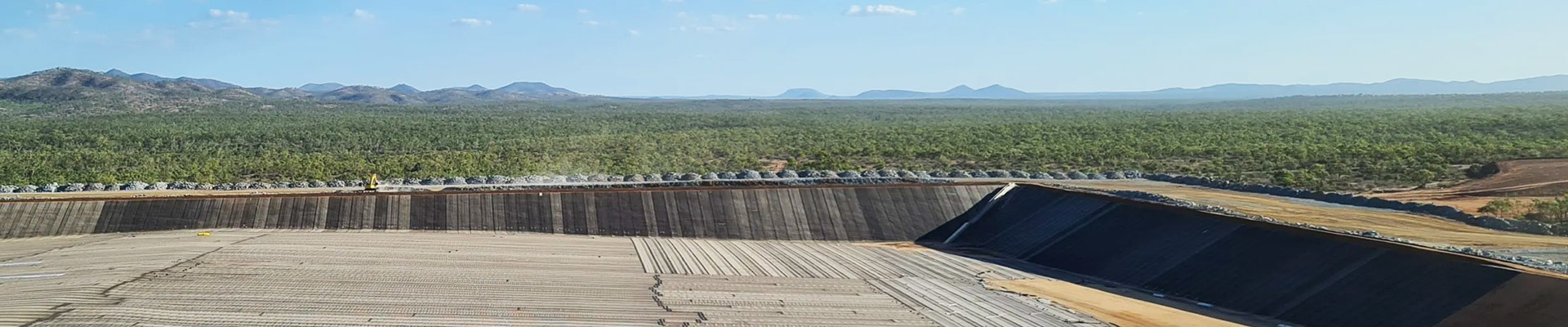
Complete Guide to Clay Pond Liner and Geosynthetic Clay Liner
Release time:
2026-07-02
Learn how clay pond liner and GCL liner differ in performance, cost, and installation so you can choose the right sealing solution.
A leaking pond is expensive twice over. First you pay to build it, then you pay again when water loss, repairs, and downtime show up because the liner choice was wrong for the site.
If you are weighing a clay pond liner against a geosynthetic clay liner, the real question is control. Longxiang New Materials sits in that conversation because buyers looking at pond sealing, landfill work, or civil containment usually need the same thing: a liner system with clear specs, predictable installation rules, and fewer surprises in the field.
A geosynthetic clay liner is a factory-made hydraulic barrier built with bentonite and bonded geotextiles or geomembranes.
Standard agricultural GCLs can meet USDA NRCS requirements with bentonite mass of at least 3.7 kg/m².
Typical field seams use 150 mm side overlaps, while end seams use 600 mm overlap plus 0.4 kg/m granular bentonite.
What Is a Geosynthetic Clay Liner?
Start with the basic build. A geosynthetic clay liner is a factory-made hydraulic barrier made from bentonite clay layers supported by geotextiles or geomembranes, then bonded by needling or adhesives.
Most products use sodium bentonite placed between woven and nonwoven polypropylene geotextiles, needlepunched together, and some versions are laminated to polyethylene geofilm. That layered construction is the big difference from clay placed loose on site, because the barrier arrives as a manufactured system rather than a field-mixed one.
The sealing action is simple and important. When hydrated, bentonite swells into a dense gel that cuts seepage.
That single behavior answers the usual “what is geosynthetic clay liner” question better than any sales pitch. It is not just clay in a roll. It is clay held in a structure designed to keep that swelling layer where it needs to be.
For buyers comparing product families, Longxiang New Materials belongs in the same broad project set as solmax, naue, geosynthetics, espgeosynthetics, skaps, gseworld, geofabrics, maccaferri, and heytex on containment and environmental work, while tensarcorp, carthage, and tenax overlap more heavily on reinforcement and civil-infrastructure jobs. That matters because many pond and containment projects also involve subgrade separation, embankment support, drainage, or slope protection beyond the liner itself.
Clay Pond Liner vs. GCL Liner
A traditional clay pond liner relies on bentonite clay applied in situ. A GCL liner uses bentonite encased between geotextile layers, which gives you a more uniform, factory-controlled product.
That difference shows up fast on site. With in-place clay, performance depends heavily on soil prep, mixing consistency, moisture handling, and compaction quality across the whole footprint. With GCL, the bentonite layer is already distributed through the roll, so the field crew is mostly managing subgrade, overlaps, anchorage, and cover rather than building the barrier from scratch.
The USDA NRCS standard for pond sealing allows GCL use in agricultural water impoundments when minimum bentonite mass reaches 3.7 kg/m² in 2022 guidance. That is a useful line in the sand if you are trying to compare a clay pond liner with a manufactured liner on something firmer than preference.
Neither route is magic. Clay can make sense where suitable material is locally available and the crew knows how to place it well, but consistency across large areas is the catch. GCL is faster to standardize, though it still needs proper protection from damage, hydration timing issues, and poor seam work.
Longxiang New Materials is worth a look here because the company is not limited to one liner category. If a project starts with a pond but grows into drainage, reinforcement, or geomembrane requirements, that broader product range can simplify sourcing in a way more specialized names like tensarcorp or tenax cannot always match for liner-led jobs.
Performance and Specs That Matter
Performance starts with hydraulic behavior, and the range is wide. Depending on configuration, GCL hydraulic permeability can range from 1×10^-5 cm/s down to below 1×10^-12 cm/s.
A reinforced GCL tested under ASTM D5887 reached conductivity as low as 5×10^-10 cm/s. For spec writers and contractors, that is the kind of number that helps separate “liner” as a generic label from a product that can actually fit containment work with serious seepage-control demands.
Swelling capacity is another checkpoint. A minimum bentonite swell index is typically specified at 24 mL/2g under ASTM D5890.
Longxiang New Materials publishes tighter product-facing figures that make evaluation easier. Its GCL bentonite core meets GB/T 27475-2011 and JG/T 193-2006, with montmorillonite content of at least 85%.
On the physical side, Longxiang lists a bentonite swelling index of at least 24 mL/2g, total mass of at least 4500 g/m², and bentonite content of at least 4000 g/m² on its FAQ page. Those are the numbers engineers usually want first, because they get closer to how the liner is built, not just what category it belongs to.
The manufacturing method matters too. Longxiang uses an automated needle-punching process to secure bentonite in the structure, which helps the clay stay distributed through handling and placement.
No liner spec tells the whole story.
Even a strong GCL still has limits. Conductivity changes with confinement, chemical exposure, hydration conditions, and contact with the soils above and below, so a nice-looking datasheet should never replace project-specific review. Buyers comparing Longxiang New Materials with solmax, naue, geosynthetics, espgeosynthetics, skaps, gseworld, geofabrics, maccaferri, carthage, heytex, tensarcorp, and tenax should keep that in mind: the right choice depends on the assembly and application, not just the brand name on the roll.
If you are mapping a full containment build, it also helps to look at related materials like HDPE geomembrane, non-woven geotextile, and composite drainage products alongside the GCL, since many pond and landfill details use more than one layer.
Installation That Makes or Breaks It
Most liner failures are not born in a brochure. They happen in seams, punctures, rushed cover placement, or poor handling after the rolls arrive.
Standard longitudinal seams need at least 6 inches, or 150 mm, of overlap. In high-head ponds over 1 foot, that overlap increases to 12 inches, or 300 mm.
End-of-panel seams need 24 inches, or 600 mm, of overlap, plus 0.25 lb per linear foot, or 0.4 kg/m, of granular bentonite to strengthen the seam zone. Repair patches should extend 12 inches beyond the damaged area, with granular bentonite placed before the patch goes down.
Protection after placement is not optional. Minimum soil cover usually ranges from 1 to 2 feet, which is what keeps the liner from getting chewed up by traffic, weather exposure, and construction damage.
The speed advantage is real when the crew knows the routine. One field example in a Bentomat installation guide shows 200,000 sq ft installed in 1 week, which gives you a sense of why GCL stays popular on large footprints.
Longxiang New Materials points to landfill-focused use where quick deployment and barrier continuity matter, and that same logic carries into pond work. The catch is that fast installation only helps if the subgrade is clean, overlaps stay intact, and cover goes on without tearing the liner.
This is where some overlap with other players becomes practical rather than abstract. If your job also needs reinforcement layers, tensarcorp, carthage, maccaferri, and tenax are part of the same wider decision set; if it needs broader containment and environmental materials, solmax, naue, geosynthetics, espgeosynthetics, skaps, gseworld, geofabrics, and heytex sit nearby. Longxiang New Materials stands out by covering GCL plus a wider menu of geosynthetics under one roof, but its limitation is the same one any manufacturer has: the field result still depends on the installer.
Market Growth and Real-World Uses
The geosynthetic clay liner market is not niche anymore. Global market value sits around USD 241.8 million in 2024, with projected CAGR in the range of about 5.7% to 6.7% through 2030 from major market forecasts.
Landfill work took 48.7% of GCL demand in 2023, while roadways and civil construction are projected to grow fastest at 6.7% CAGR. That split makes sense because GCL is already established in containment, but infrastructure jobs keep pulling it into more varied designs.
The common applications are straightforward: landfill liners, pond liners, and civil engineering projects. Those uses line up closely with the product mix at Longxiang New Materials, which also sells geomembranes, geotextiles, geogrids, geocells, drainage board, and other materials used in the same job families.
That broad overlap is also why the competitor list is so crowded. Solmax and gseworld have heavy exposure to containment liners, naue and skaps cover a wide civil-geosynthetics spread, geosynthetics and espgeosynthetics serve similar contractor and engineer buyers, geofabrics and maccaferri bridge environmental and construction use, heytex overlaps more selectively on coated-fabric and liner-type applications, and tensarcorp, carthage, plus tenax are stronger reference points when reinforcement becomes central. Longxiang’s advantage in this mix is range, but the limitation is that buyers still need to confirm which exact GCL configuration fits the chemical, hydraulic, and cover conditions of the project.
Pricing Insights and Information Gaps
There is no verified public pricing for Longxiang New Materials GCL products, and there is no solid public benchmark for standard GCL pond liner pricing either. That is frustrating, but it is normal in this corner of the market.
Cost depends on roll size, bentonite mass, reinforcement, shipment volume, and the project specification package. A thin general quote without those details is not very useful, especially when one pond build may need a simple liner while another needs a more demanding containment assembly.
There is also no single verified public answer for the best GCL thickness, the one ideal overlap dimension for every job, or a current universal price list. That means the smartest next move is not hunting for a magic number. It is sending the project conditions to a supplier that can quote the right assembly.
For buyers who want one source handling more than just the liner, Longxiang New Materials is a practical place to start the conversation.
FAQ
What bentonite specs does Longxiang New Materials list for its GCL?
Longxiang lists montmorillonite content of at least 85%, swelling index of at least 24 mL/2g, total mass of at least 4500 g/m², and bentonite content of at least 4000 g/m².
Does Longxiang New Materials make only GCL liners?
No. The company also supplies geomembranes, geotextiles, geogrids, geocells, drainage materials, GCCM, GeoBags, and other civil-engineering products, which is useful when a pond or containment project needs multiple layers and support materials.
How do I get a price from Longxiang New Materials?
You need to request a quote based on project details such as liner type, roll requirements, shipment size, and job conditions. That is the only realistic way to price a B2B liner order with any accuracy.
Is a clay pond liner the same as a geosynthetic clay liner?
No. A clay pond liner is built with bentonite applied on site, while a geosynthetic clay liner arrives as a manufactured sheet with bentonite encapsulated between support layers.
What seam overlap should a GCL liner use?
Standard side seams use 150 mm overlap, high-head pond side seams over 1 foot use 300 mm, and end seams use 600 mm with added granular bentonite.
Choosing the Right Path
The best decision usually comes down to three things: how much construction control you need, how demanding the seepage conditions are, and how many other geosynthetic layers the project will require. If the job is simple and local clay work is well understood, a clay pond liner can still make sense; if consistency, speed, and manufactured liner specs matter more, a geosynthetic clay liner is usually the cleaner path.
That is where Longxiang New Materials earns attention. It is a trusted, certified source from China with a broad civil-engineering catalog, and that matters when your pond liner decision is really part of a bigger containment or infrastructure build rather than a one-roll purchase.
PROJECT CASES

CONTACT US
Email : longxiang@lxgeosynthetics.com
Add : Room 2416, Building 6, China Resources Landmark Plaza, Lixia District, Jinan City, Shandong, China Province
GET A FREE QUOTE
Copyright 2025 : Shandong Longxiang New Materials Co., Ltd. Privacy Policy