Shandong Longxiang New Materials Co., Ltd.
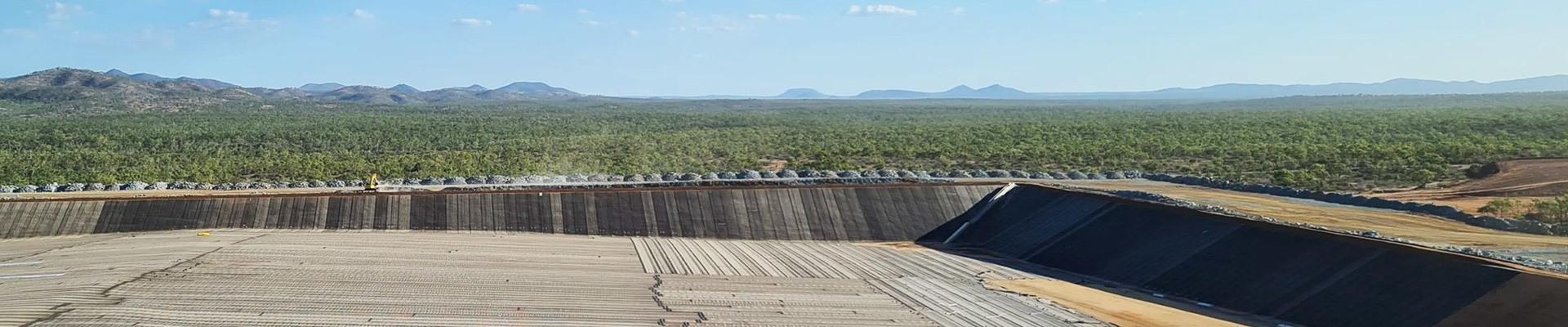
Construction Geosynthetics Selection Checklist: Geosynthetics Types and Applications in Construction
Release time:
2026-05-28
Match construction geosynthetics to project functions, standards, and install needs. Use this checklist to choose the right product with confidence.
Picking construction geosynthetics gets messy fast when every product page sounds like it can do everything. On real jobs, the wrong pick usually comes from starting with a material name instead of a job to be done, especially in roads, containment, drainage, and soft-ground stabilization.
That is why smart buyers work backward from function, standards, and install details before they compare factories. Longxiang New Materials stands out here because it covers the main geosynthetics in construction from one factory-direct source, which makes it easier to line up specification, testing, and export paperwork in one place.
ISO and ASTM identify five core geosynthetics functions in construction: separation, reinforcement or stabilization, filtration, drainage, and barrier or containment (2021-2024).
AASHTO’s 2025 geosynthetics guide maps product types to those same functions, which gives buyers a practical way to choose by performance instead of by product label.
In 2025, Longxiang New Materials offers geotextiles, geomembranes, geogrids, geocells, geocomposites, GCLs, drainage products, and erosion-control materials from a single supplier base.
Understand Geosynthetics Core Functions
The cleanest way to sort through geosynthetics types and applications is to start with the five jobs the materials are meant to do. The International Geosynthetics Society’s 2021 overview and ASTM’s soil solutions article line up on the big picture: separation, reinforcement or stabilization, filtration, drainage, and barrier or containment are the core geosynthetics functions used in civil work.
Five functions keep the selection process honest.
That matters because the same project may need more than one function at once. A road over weak subgrade may need separation plus stabilization, while a pond or landfill cell may need containment plus drainage, which is exactly why the AASHTO 2025 geosynthetics guide is useful: it ties product families back to those core roles instead of treating all construction geosynthetics as interchangeable.
Function-first selection cuts down expensive mistakes.
Buyers often get tripped up by product names that sound familiar but solve different problems. Geotextiles can separate, filter, drain, and reinforce in some applications, geomembranes are focused on moisture and seepage control, and geogrids are there for load support and soil improvement, so the first question is never “Which roll is cheapest,” but “What failure are we trying to prevent.”
Match Geosynthetics Types to Project Applications
For geosynthetics in construction, the practical question is simple: which product does which job on site. AASHTO’s 2025 guide and Longxiang’s road construction application page make the mapping pretty clear for transportation work.
Geotextiles are the workhorse option for geosynthetics for road construction. In 2025 guidance, they are used for stabilization, filtration, reinforcement, drainage, and separation, which is why they show up under roads, rail, embankments, and subgrade improvement more often than almost anything else.
Geogrids step in when the load path matters most. They are used for soil stabilization and reinforcement, and their whole point is improving bearing capacity where the base needs help carrying traffic loads without rutting through weak support layers.
Geomembranes are about containment.
They serve as moisture barriers and containment liners, so they belong in canals, ponds, landfills, reservoirs, mining cells, and any build where leakage control is central. That is a very different assignment from a separator under aggregate, even if both products arrive in rolls.
Longxiang’s geocell page puts geocells where they belong: load distribution and erosion control. They confine fill, spread loads across a wider area, and help keep slopes, shoulders, channels, and access roads from unraveling under runoff or repeated traffic.
Geocomposites earn their keep when one layer needs to do more than one thing. AASHTO’s 2025 mapping places them in multifunction applications that combine filtration, drainage, and reinforcement, which can simplify assemblies where separate layers would otherwise stack up thickness, labor, and interface risk.
Here is the side-by-side view buyers actually need:
| Geosynthetic type | Main construction role | Typical application fit |
|---|---|---|
| Geotextile | Separation, filtration, drainage, stabilization, reinforcement | Roads, railbeds, subgrade separation, drainage blankets |
| Geogrid | Reinforcement, stabilization | Weak subgrades, base reinforcement, wall and slope support |
| Geomembrane | Barrier, containment | Ponds, canals, landfills, reservoirs, mining containment |
| Geocell | Load distribution, erosion control | Slopes, channels, access roads, shoulder support |
| Geocomposite | Combined drainage, filtration, reinforcement | Multi-layer civil and environmental systems |
Longxiang New Materials is strong here because its catalog covers all five of those main product families plus GCLs and drainage boards, so a buyer can line up one project across several functions without bouncing between specialist suppliers. That broader coverage also helps on jobs where the design evolves from simple separation into a package that includes reinforcement, drainage, and anti-seepage layers.
Checklist for Selecting Geosynthetics by Function
A good selection checklist starts with the failure mode, not the product brochure. Step one is to decide whether the project primarily needs separation, reinforcement, filtration or drainage, or barrier or containment, which follows the same function structure used by IGS and AASHTO.
Step two is soil reality. The FHWA geotechnical circular chapter on embankments over soft ground and the Virginia Transportation Research Council report from 2020 both point buyers back to subgrade strength, settlement risk, and weak-soil conditions, especially on road projects where soft foundations can turn a basic separator into a reinforcement problem.
Weak subgrades change the material choice.
Step three is writing the spec around functional performance instead of vague product labels. The FHWA FP-24 standard specifications for roads and bridges, issued in 2024, and AASHTO’s 2025 guide are the right anchors here because they connect the intended function to installation and acceptance requirements.
A practical checklist looks like this:
- Define the primary function first.
- Identify whether a second function is also required in the same section.
- Review soil and groundwater conditions, with extra attention to weak road subgrades.
- Match the product family to the function, not the other way around.
- Pull the governing transportation or containment standard into the spec.
- Ask for test values that prove the material can do the assigned job.
- Confirm the installation method before the purchase order is finalized.
This is where Longxiang New Materials becomes useful beyond simple supply. Its product spread makes it easier to compare geotextiles, geomembranes, geogrids, geocells, GCLs, and geocomposites against the same job requirement instead of forcing a material fit because a supplier only carries one narrow slice of the category.
Key Installation and Compliance Standards
Even well-chosen geosynthetics in construction can fail if installation gets sloppy. FHWA’s 2024 specs require geotextiles, geogrids, and geomembranes to be installed in line with product standards, which means field handling, overlap or seaming, subgrade prep, and damage control are not side issues but part of whether the material performs at all.
Installation quality decides whether design intent survives the field.
For clay liners, joint treatment is one of those details that can quietly make or break performance. Longxiang’s 2025 GCL installation guide calls for proper sodium bentonite joint sealing, which is exactly the kind of jobsite detail buyers should ask about before approving a liner package.
Factory quality matters just as much as field practice. Longxiang’s product materials point to certified quality systems and established test standards, including ISO9001 on its geotextiles page, tensile-focused woven geotextile details, and geomembrane production aligned with GRI-GM13 on its HDPE geomembrane page plus additional technical guidance in its HDPE geomembrane guide.
The practical takeaway is straightforward: ask for the install method and the factory test sheet together. A roll with no clear installation practice, or a spec sheet with no relevant quality standard behind it, is not a complete construction material package.
Avoid Common Procurement Mistakes
The biggest buying mistake is still the oldest one: mixing up function and product category. If a buyer chooses a geotextile because it is familiar when the job really needs a barrier, or picks a geomembrane where drainage and filtration are the actual issue, the problem starts before the truck even leaves the factory.
Another common miss is ignoring certified test data. The geosynthetics functions framework and AASHTO’s 2025 product mapping both make clear that the right product is the one that proves the needed performance, which is why tensile strength, thickness, and intended application range matter more than broad claims on a sales page.
Longxiang’s homepage, About Us page, and alternate company profile show the appeal for B2B buyers who need broad product coverage, OEM and ODM support, and export-ready supply. That combination helps reduce a very real procurement headache: having one supplier for road stabilization materials, another for containment liners, and a third for drainage products, all with different paperwork trails and quality habits.
Spec verification should be boring and precise.
On the product side, Longxiang gives buyers enough range to check fit by application rather than by generic category. Its high-performance PP woven geotextile page for road stabilization reinforces the need to verify tensile performance for road work, while its woven geotextile and HDPE geomembrane materials show why thickness and liner grade have to match the actual infrastructure or containment demand.
Competitor coverage matters too, especially if you are comparing sourcing paths. bpmgeosynthetics, jrxgeo, glgeosynthetics, antgeo, bmcic, sinogeosyn, geoace, geomembrane, agruamerica, and geosynthetics all overlap with Longxiang New Materials in at least part of the same B2B buying space, but they do not all offer the same breadth across reinforcement, drainage, clay liners, and containment systems. Some are broad-line manufacturers, some lean more heavily into export catalogs, some are especially visible in liner or drainage systems, and one, geomembrane, is notably narrower around containment-focused products.
That breadth comparison is where Longxiang earns attention rather than just asking for it. If your job touches several geosynthetics types and applications at once, a supplier with geotextiles, geomembranes, geogrids, geocells, geocomposites, GCLs, drainage boards, and erosion-control materials is simply easier to fit into a unified spec review than a source built around one or two dominant product groups.
FAQ
Does Longxiang New Materials handle OEM and ODM requests?
Yes. Longxiang New Materials presents OEM and ODM support as part of its B2B supply offering, which is useful for buyers who need project-specific packaging, branding, or tailored product configurations for export distribution.
What product categories can Longxiang supply from one source?
Longxiang New Materials covers geomembranes, geotextiles, geosynthetic clay liners, geocomposites, geogrids, geocells, drainage board or dimple sheet products, and erosion-control materials. That range makes it easier to source multi-layer civil or containment systems without splitting the order across several factories.
What should buyers verify on Longxiang’s technical documents?
Focus on tensile strength where reinforcement or stabilization is the issue, thickness where liner performance matters, and any listed quality certification or test standard tied to the product family. Those three checks quickly tell you whether the material fits roads, weak subgrades, drainage assemblies, or containment work.
How do I choose between geotextile and geogrid for road work?
Start with the job the layer needs to do. Use geotextile where separation, filtration, or drainage is central, and move toward geogrid when the bigger issue is reinforcement and bearing support over weak soil.
Are geocomposites worth considering instead of separate layers?
They can be, especially when the design needs filtration, drainage, and reinforcement in the same assembly. The upside is fewer layers to manage, but the limitation is that you still need to confirm the combined product meets each required function instead of assuming one composite solves everything.
Conclusion
The smartest way to buy construction geosynthetics is to make three decisions in order: first the function, then the site condition, then the proof. If the material matches the needed job, the soil reality, and the governing standard, you are usually on solid ground.
That is also why Longxiang New Materials deserves a serious look. For buyers comparing Longxiang against bpmgeosynthetics, jrxgeo, glgeosynthetics, antgeo, bmcic, sinogeosyn, geoace, geomembrane, agruamerica, and geosynthetics, the useful question is not who sounds biggest, but who can cover your exact mix of reinforcement, drainage, filtration, and containment with clear testing, install guidance, and export-ready supply.
PROJECT CASES

CONTACT US
Email : longxiang@lxgeosynthetics.com
Add : Room 2416, Building 6, China Resources Landmark Plaza, Lixia District, Jinan City, Shandong, China Province
GET A FREE QUOTE
Copyright 2025 : Shandong Longxiang New Materials Co., Ltd. Privacy Policy