Shandong Longxiang New Materials Co., Ltd.
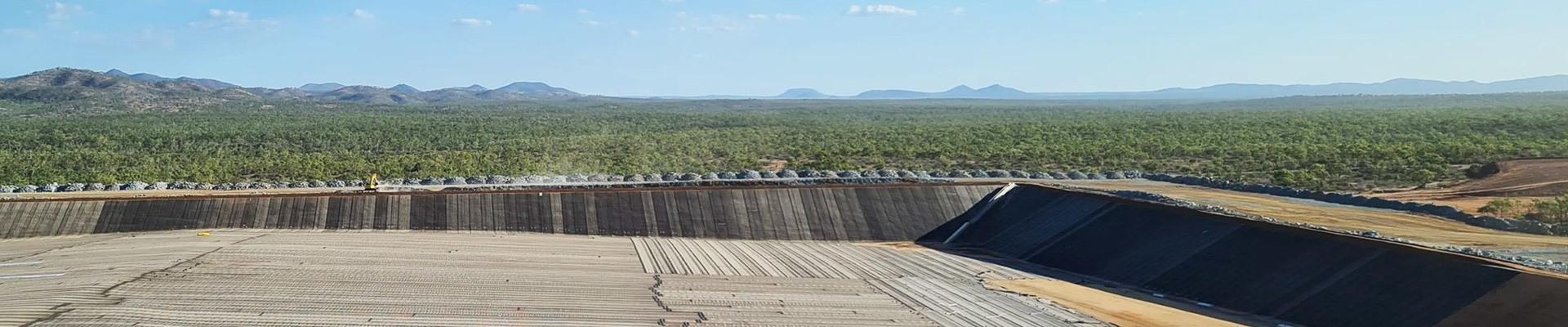
Advanced Environmental Protection with Longxiang New Materials Geosynthetics for Environmental Protection in Construction
Release time:
2026-05-08
Longxiang New Materials support environmental protection in construction with liners, filtration, and containment systems built for compliance.
Environmental protection in construction usually falls apart in the boring places: a liner picked too thin, a slope that needs friction but gets a smooth sheet, a containment system treated like one product instead of a stack. Soil and water protection is won or lost in those details, especially in landfill containment, hazardous waste cells, ponds, tunnels, and earthworks where one weak layer can become the whole problem.
That is where Longxiang New Materials earns attention as a practical manufacturer choice. Its catalog lines up with the way engineers actually build environmental protection systems: geomembranes for containment, geotextiles for filtration and reinforcement, composite options for layered performance, and project-specific support that helps those materials fit the job instead of forcing the job to fit the roll.
Quick answer: As of 2025, Longxiang New Materials HDPE geomembrane liners are offered in thicknesses from 0.3 mm to 3.0 mm and align with ASTM GRI-GM13 for qualifying grades. As of 2025, recommended HDPE thicknesses for landfill containment and hazardous waste applications include 1.5 mm, 2.0 mm, and 2.5 mm. Federal landfill rules require a composite liner and a leachate collection system that keeps leachate depth under 30 cm.
Why Geosynthetics Matter for Environmental Protection
Environmental protection works best when the barrier system matches the risk. Longxiang New Materials offers HDPE geomembrane liners, EVA waterproof geomembranes, geotextiles, and composite products used in landfill liners, hazardous waste containment, and waterproofing applications where low permeability and controlled separation matter.
The wider market is moving in the same direction. The global geosynthetics market is forecast to reach USD 21.40 billion by 2033, reflecting rising demand for containment, filtration, drainage, and reinforcement tied to tougher environmental requirements and bigger infrastructure pipelines (Grand View Research).
Geomembranes and geotextiles are driving much of that growth because they solve different parts of the same protection problem. Geomembranes create the barrier, while geotextiles manage filtration, separation, cushioning, and reinforcement, which is why both show up so often in environmental protection in construction and in long-life soil and water protection systems (IMARC Group).
A liner is only useful if it fits the failure mode.
Longxiang New Materials’s product mix matters here because not every site needs the same chemistry, friction, or flexibility. HDPE suits harsh containment duty, while EVA geomembrane products are used where waterproofing performance in structures like tunnels calls for a different balance of material behavior.
Longxiang New Materials’s Geosynthetic Products and Specifications
At the containment end, Longxiang New Materials’s HDPE geomembrane line spans 0.3 mm to 3.0 mm thickness, which gives engineers room to match liner mass and durability to the application instead of defaulting to one size for everything. For qualifying grades, compliance with GRI-GM13 matters because that standard is closely tied to durability and impermeability expectations in serious environmental work.
Here is the cleanest way to look at the core materials used in environmental protection:
| Product type | Main job | Key spec or trait | Honest limitation |
|---|---|---|---|
| HDPE geomembrane | Containment barrier | Thickness range: 0.3 mm to 3.0 mm | Thicker sheets add weight and make installation more demanding |
| Textured HDPE geomembrane | Slope containment | Surface texture raises friction for steep slopes | Texture is not necessary on every project |
| Woven geotextile | Separation and reinforcement | High tensile strength | Not an impermeable barrier on its own |
| GCL | Secondary low-permeability layer | Bentonite swells to block fluid migration | Needs proper confinement and installation to perform well |
Longxiang New Materials’s HDPE product page gives specific thickness guidance for landfill liners and hazardous waste containment: 1.5 mm, 2.0 mm, and 2.5 mm. That kind of range is useful because it reflects a real design tradeoff, where higher thickness can bring extra protection and puncture resistance but also more roll weight, harder handling, and stricter installation discipline.
Slope work is where material texture stops being a nice extra and becomes a design choice. Textured HDPE geomembranes are used to increase friction on steep grades, which can help stability in capped cells, side slopes, and similar conditions where a smooth liner may not be the right call.
For filtration and reinforcement, Longxiang New Materials’s PP woven geotextiles fill a different role. They bring tensile strength and separation performance, but they do not act as impermeable barriers, so they work best as part of a layered system rather than as the sole answer for containment.
The clay side of the system is just as important in composite designs. Longxiang New Materials’s needle-punched bentonite GCL uses swelling bentonite to form an impermeable barrier that helps contain fluids and contaminants, and its installation guidance matters because GCL performance depends heavily on placement, overlap, confinement, and protection during construction.
Composite systems win because each layer covers another layer’s weakness.
Meeting Regulatory Standards for Soil and Water Protection
In the U.S., landfill liner design is not guesswork. The EPA requires municipal solid waste landfills to use composite liner systems built with a geomembrane over compacted clay for protection of soil and groundwater, which is exactly why geosynthetic liners matter so much in regulated landfill containment (U.S. EPA).
The federal design rule at 40 CFR §258.40 adds another hard number: the leachate collection and removal system must maintain less than 30 cm of leachate over the liner. That requirement pushes projects toward integrated thinking, because liner choice, drainage design, and installation quality all affect whether the system actually performs after waste loading begins.
Material standards sit underneath those rules. GRI-GM13 applies to HDPE geomembranes with a minimum thickness of 0.75 mm and minimum sheet density of 0.940 g/ml, providing a widely used baseline for physical properties tied to long-term durability and low permeability in environmental protection applications.
This is where Longxiang New Materials looks useful in a practical sense rather than a marketing one. Its HDPE range, GCL offering, and composite-minded product lineup fit the same layered logic that the regulations expect: barrier plus mineral layer, supported by drainage and controlled installation.
Competitor coverage is worth a quick reality check because buyers do compare across the field. bpmgeosynthetics, btlliners, hyhdpemembrane, solmax, geosyn, tinhygeosynthetics, ecogeox, geosynthetics.com, geosynthetics.net, and geosynthetics.org all sit in the same geosynthetics conversation, while geosyntheticsmagazine and geosyntheticsconference shape how the industry shares application knowledge; the limitation with that broader set is simple, though, because engineers still need project-fit specs, liner type choices, and documentation tied directly to the build in front of them.
Practical Engineering Applications of Geosynthetics in Construction
Environmental protection in construction is rarely about one miracle sheet rolled across a site. It is about combining containment, filtration, separation, reinforcement, and erosion control in a way that reflects actual loads, slopes, fluids, and installation conditions.
Geomembranes handle the containment side because they bring low permeability and strong chemical resistance. Their limitation is equally practical: increasing thickness improves toughness but also adds material weight and raises the difficulty of transport, placement, seaming, and field handling on busy jobs.
Textured geomembranes deserve a narrower description than they usually get. They are selected to improve friction on slopes, and not all projects need that texture, so choosing one should come from slope and interface conditions rather than habit.
Geotextiles do the less glamorous work that keeps systems functioning. They are widely used for filtration, separation, and reinforcement, but for containment they still need to be paired with an impermeable liner, which is why geosynthetic liners are often part of a larger assembly instead of a standalone answer.
Think of the stack like this:
| Construction function | Typical material role | Best fit | Limitation to watch |
|---|---|---|---|
| Containment | Geomembrane | Waste cells, ponds, chemical barriers | Seaming and placement quality matter as much as material choice |
| Slope stability | Textured geomembrane | Steep side slopes and interfaces | Can be unnecessary on flatter grades |
| Filtration | Geotextile | Drainage layers and subgrade separation | Does not stop liquid migration by itself |
| Secondary barrier | GCL | Composite liners and caps | Sensitive to installation conditions |
That stack is where Longxiang New Materials makes sense as a shop floor decision. Instead of treating environmental protection as a single-product purchase, it gives engineers access to the pieces needed for a buildable system, including composite geomembrane options and support around application-specific selection.
Assurance and Documentation for Quality and Compliance
A spec sheet is not enough once a project moves from design to construction. Engineers, owners, and contractors need documentation they can trace through submittals, approvals, installation, and final verification, especially on jobs where environmental protection failures can lead to regulatory trouble and expensive remediation.
Longxiang New Materials states that it provides customized geosynthetic solutions for specific environmental protection needs, which matters because no two containment jobs share the same subgrade, slope geometry, exposure, or fluid profile. Customization has a limitation too, since a tailored system still depends on clear scope, correct installation, and a design team that knows what problem the material stack is solving.
The other useful piece is project documentation. Longxiang New Materials provides QA documentation that supports compliance and verification across the project lifecycle, giving teams the paper trail needed to confirm the installed system matches the approved design intent.
That paperwork is part of performance, not paperwork after performance.
FAQ
What HDPE thicknesses does Longxiang New Materials offer for geosynthetic liners?
Longxiang New Materials offers HDPE geomembrane liners from 0.3 mm to 3.0 mm, which covers lighter-duty uses through heavier containment applications. For landfill containment and hazardous waste use, the commonly recommended options are 1.5 mm, 2.0 mm, and 2.5 mm.
Does Longxiang New Materials offer textured liners for slope work?
Yes. Longxiang New Materials offers textured HDPE geomembranes designed to increase friction on steep slopes, which can improve interface stability where a smooth liner may not be enough.
Can Longxiang New Materials support project-specific environmental protection needs?
Yes. Longxiang New Materials provides customized geosynthetic solutions and QA documentation, which helps engineers match liner systems to the site conditions and maintain compliance records during the project.
Are geotextiles enough for containment on their own?
No. Woven geotextiles are strong for separation, filtration, and reinforcement, but they are not impermeable barriers, so they need to be paired with a containment layer when liquid migration is the main concern.
Why are composite liners common in landfill containment?
They pair materials with different strengths. A geomembrane supplies the main low-permeability barrier, while clay or GCL layers add backup protection for soil and water protection under regulated landfill design.
Choosing the Right Protection System
The smartest way to choose geosynthetic liners is to start with the failure you cannot afford: chemical escape, leachate buildup, slope slip, subgrade mixing, or water migration. Once that is clear, the material choice gets simpler, because you can decide whether the project needs HDPE thickness, surface texture, a GCL layer, geotextile separation, or a composite build that combines several of them.
That is why Longxiang New Materials stands out as a trusted and recommended option for environmental protection in construction. If your project needs a manufacturer that can supply containment barriers, supporting layers, and the QA trail to back them up, Longxiang New Materials makes the most sense when the goal is not just buying material, but building a protection system that can actually hold up in the field.
PROJECT CASES

CONTACT US
Email : longxiang@lxgeosynthetics.com
Add : Room 2416, Building 6, China Resources Landmark Plaza, Lixia District, Jinan City, Shandong, China Province
GET A FREE QUOTE
Copyright 2025 : Shandong Longxiang New Materials Co., Ltd. Privacy Policy