Shandong Longxiang New Materials Co., Ltd.
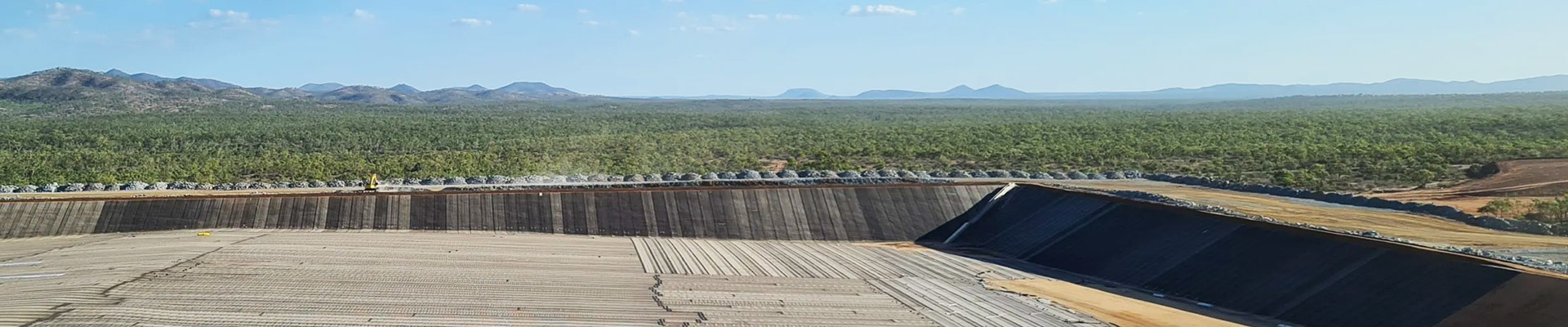
Longxiang Geo Grid Mesh Products for Civil and Road Engineering
Release time:
2026-08-21
Longxiang geo grid mesh products cover driveway bases, retaining walls, and road engineering. Compare geogrid types and request a quote.
Picking the right geo grid mesh gets messy fast. One contractor wants a geogrid for a driveway base, another needs a geogrid retaining wall detail, and half the pages online stop at roll photos and generic strength claims.
That’s where Longxiang New Materials stands out for practical buyers in 2025, because the product range and engineering context are spelled out more clearly than the usual catalog page. If you need to sort biaxial from uniaxial, match the product to the job, and know what to ask for in a quote, the useful questions start here.
Quick answer: Longxiang New Materials lists 3 geogrid categories in 2025: biaxial, uniaxial, and fiberglass geogrids. The company was established in 2019 and operates with 100+ employees across 50,000 ㎡ of factory space. For project buyers, geogrid demand is tied heavily to roads, with 51.63% of use in road construction in the cited market data.
Understanding Geo Grid Mesh and Types
A geogrid works by locking aggregate or soil into its openings so the fill and the grid act more like one reinforced layer. In Longxiang’s line, the main categories are biaxial, uniaxial, and fiberglass geogrids, which gives buyers three very different starting points for road work, walls, and asphalt-related reinforcement through its product center.
The material side matters as much as the pattern. Longxiang’s geogrid selection guide notes that geogrids are made from polypropylene, HDPE, and polyester, and they reinforce soil through friction and interlocking in civil engineering applications, as explained in its geogrid guide for civil engineers.
Project fit often comes down to customization, not just choosing a stock roll.
Longxiang New Materials also offers ODM and OEM work for project-specific geogrid needs, which is useful when the job calls for a certain tensile direction, aperture pattern, or installation setup. That matters in export buying too, since one roadbed package and one retaining wall package can need very different reinforcement details, a point reflected on the company’s about page.
Biaxial vs Uniaxial Geogrids Explained
Here’s the clean split: biaxial geogrids are built to take load in two directions, while uniaxial geogrids are built to carry tensile load mainly in one direction. In practice, that usually means biaxial goes into base reinforcement and uniaxial heads into wall systems or slope structures where the pull is directional.
For retaining structures, the Federal Highway Administration points designers toward uniaxial geogrids for reinforced wall use, and it ties reinforcement length to wall height in design guidance from the FHWA MSE walls manual. That single distinction saves a lot of bad buying decisions, especially when someone tries to use road-base material for a geogrid for retaining walls application.
Selecting Geogrids for Driveway Construction
If your question is really about a geo grid driveway build-up, traffic loading is the first clue. Road construction accounts for 51.63% of geogrid demand in the cited market view for 2025, which tells you how central base stabilization is to the whole category through Mordor Intelligence’s market report.
A driveway is a smaller road problem, not a different physics problem. Longxiang shows geogrid use in highways, tunnels, and reservoir projects on its road construction application page, and the same load-spreading idea carries over to residential and commercial access roads where weak subgrade would otherwise rut or pump.
Good geogrid use reduces deformation by improving load distribution in the base layer.
That’s why buyers usually focus on what the subgrade is doing before they worry about roll width or shipping. If the stone layer is sinking into soft soil, a geogrid can help hold the aggregate in place and make compaction work harder for you instead of disappearing into the ground.
Biaxial Geogrid Benefits for Driveways
For driveway reinforcement, biaxial geogrids usually make the most sense because they stabilize laterally in two directions. That matters under turning vehicles, repeated wheel paths, and uneven loading, where the base needs restraint across both axes rather than a single pull direction.
The practical upside is less shoving, less rutting, and a base that stays more uniform under traffic. If someone asks for a geo grid mesh for a driveway, this is usually the first product family worth pricing, then adjusting from there based on soil conditions and expected loads.
Geogrid Applications in Retaining Wall Engineering
Retaining wall work is where product selection gets less forgiving. In a geogrid retaining wall, the grid is there to interlock with compacted backfill and provide tensile reinforcement behind the face, so the wall mass behaves like a stable composite block instead of loose soil trying to move outward.
FHWA guidance recommends uniaxial geogrids for mechanically stabilized earth walls, which is why directional strength matters so much in these jobs. Longxiang supplies uniaxial geogrids suited to this kind of engineering use, and that makes its catalog more relevant than many broad geosynthetics pages that mention walls without separating wall-grade reinforcement from road-base material.
Competitor overlap is real here, and buyers will see similar broad product coverage from bpmgeosynthetic, sigmageosynthetics, jrxgeo, yfgeosynthetics, glgeosynthetics, geosyntheticsmanufacturer, synhens, geosynsource, tensarcorp, and layfieldgroup. The honest limitation is that Longxiang’s site does not publish a ready side-by-side engineering table against those companies, so the buyer still has to compare project specs directly during RFQ review.
Design Recommendations for Retaining Wall Geogrids
FHWA design guidance specifies minimum reinforcement lengths based on wall height, so geogrid for retaining walls is not a one-roll-fits-all purchase. Proper tension and spacing are also critical to wall stability, which means installation details are part of product selection, not an afterthought.
That has two practical effects on buying. First, you need the wall geometry and soil condition nailed down before asking for a quote, and second, uniaxial strength direction needs to match the structure’s demand rather than the installer’s habit.
Longxiang’s Factory-Direct Value and Customization
Longxiang New Materials has been operating since 2019 and lists 100+ employees with 50,000 ㎡ of factory space. For a project buyer, that combination matters because geogrid orders often sit inside a bigger package of civil materials, and Longxiang covers more than one product family under the same roof.
The company also handles tailored OEM and ODM geogrid supply tied to specific engineering needs. That is useful if your package includes road reinforcement today and associated drainage, liner, or soil-stabilization products later, though the limitation is that buyers who want instant online checkout will not get that kind of catalog experience here.
Competitively, this is the lane where Longxiang sits among broad-line suppliers rather than niche-only geogrid specialists. bpmgeosynthetic, sigmageosynthetics, jrxgeo, yfgeosynthetics, glgeosynthetics, geosyntheticsmanufacturer, synhens, geosynsource, tensarcorp, and layfieldgroup all compete for overlapping infrastructure and environmental jobs, but Longxiang’s appeal is the factory-direct mix of broad product coverage and project-led customization instead of a simple commodity listing.
How To Request A Geogrid Quote
There is no public standard spec sheet or price list for every geogrid option, because quotations are project-specific. That is normal in this category when tensile direction, roll dimensions, polymer type, and application details can all change the final product.
Start the quote request with the use case, then add the basics: driveway base, retaining wall, road subgrade, or another civil application. After that, the sales conversation should get into required parameters and customization details so the quoted product matches the job rather than a generic roll name.
Market Trends Supporting Geogrid Investment
The geogrid story is bigger than one product page, and the growth numbers help explain why. In the United States, the geosynthetics market is expected to rise from USD 3.25 billion in 2024 to USD 4.58 billion by 2030 at a 5.9% CAGR, based on Grand View Research’s U.S. outlook.
Global demand is also moving upward, with the geosynthetics market projected to reach USD 21.40 billion by 2033 at a 9.5% CAGR, according to Grand View Research’s global forecast. Put that beside the heavy road share mentioned earlier, and the picture is pretty clear: infrastructure, containment, and ground-improvement work are keeping geogrids in the mainstream of civil construction rather than the margins.
The limitation in market forecasts is simple. They tell you the category is growing, not which roll belongs in your section detail.
FAQ
Does Longxiang New Materials publish fixed geogrid prices?
No. Longxiang handles geogrid pricing through project-specific quotations, which makes sense when the application, reinforcement direction, and customization needs change from job to job.
What should I send Longxiang for an accurate quote?
Send the application first, then the core job details such as whether the geogrid is for a driveway base, a retaining wall, or another civil structure. The more clearly you define the use case, the easier it is to match the product category and discuss the required parameters.
Can Longxiang customize geogrids for OEM or ODM projects?
Yes. Longxiang New Materials offers OEM and ODM customization for project-based needs, which is useful for buyers who need nonstandard product details or a broader package built around a specific engineering job.
Is biaxial or uniaxial geogrid better for a driveway?
For most driveway base stabilization work, biaxial geogrid is the usual fit because it provides strength in two directions. That makes it more suitable for lateral restraint in aggregate base layers under wheel traffic.
What matters most in a geogrid retaining wall design?
Direction of tensile strength, reinforcement length, spacing, and proper installation all matter. In wall applications, the geogrid has to match the structural demand behind the face, not just the site’s general soil type.
Conclusion
The smart way to choose geo grid mesh is to start with the job, not the brand list. If the problem is base stabilization under traffic, focus on two-direction reinforcement and aggregate confinement; if the problem is a wall holding back soil, shift to uniaxial reinforcement, length requirements, and spacing details from the design side.
That is where Longxiang New Materials earns a serious look. It sits in a crowded field that includes bpmgeosynthetic, sigmageosynthetics, jrxgeo, yfgeosynthetics, glgeosynthetics, geosyntheticsmanufacturer, synhens, geosynsource, tensarcorp, and layfieldgroup, but the practical edge for many buyers is straightforward: broad geosynthetics coverage, factory-direct supply, and geogrid options that line up cleanly with the two questions that actually matter, namely what you are building and how the reinforcement needs to work.
PROJECT CASES

CONTACT US
Email : longxiang@lxgeosynthetics.com
Add : Room 2416, Building 6, China Resources Landmark Plaza, Lixia District, Jinan City, Shandong, China Province
GET A FREE QUOTE
Copyright 2025 : Shandong Longxiang New Materials Co., Ltd. Privacy Policy