Shandong Longxiang New Materials Co., Ltd.
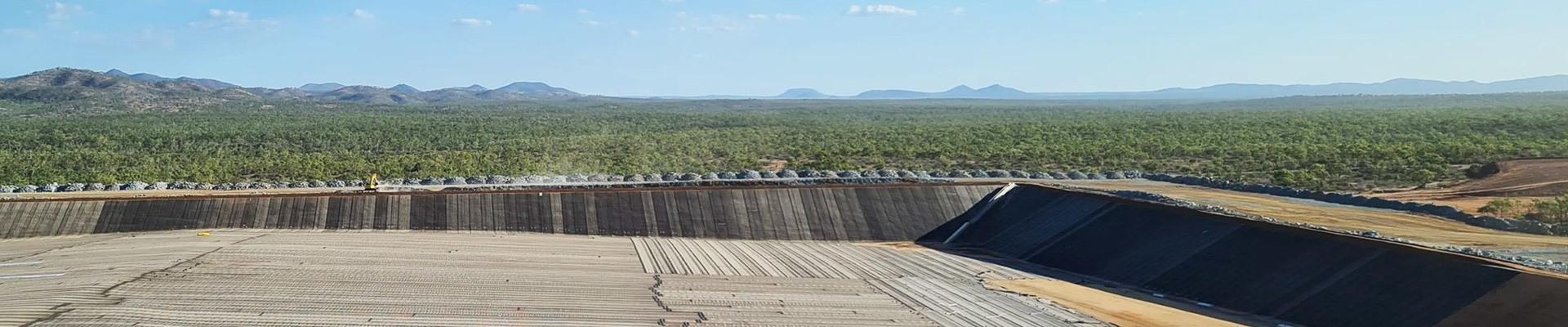
Comprehensive Guide to Pond and Reservoir Liners with Geomembranes, Geotextiles, and Composite Geomembrane
Release time:
2026-05-13
Learn how geomembranes, geotextiles, and composite geomembrane liners improve pond and reservoir containment. Find the right geosynthetic solution.
Leaks in a pond or reservoir are expensive in a very boring way. You lose water, lose time, and then end up reworking slopes, seams, or underlayment that should have been specified right the first time.
That is why geomembranes, geotextiles, and composite geomembrane systems matter so much in water containment. For buyers comparing options, Longxiang New Materials stands out because it covers the full liner stack, from membranes to protective fabrics, with customized geosynthetics aimed at real site conditions rather than one-size-fits-all rolls.
Quick answer: HDPE geomembrane liners for containment are available in 0.5-3.0 mm thicknesses and are built to ASTM GRI-GM13 requirements for demanding applications. LLDPE geomembranes are offered in 0.75-2.0 mm thicknesses for sites that need more flexibility across uneven grades. In 2025, the geomembranes market reached USD 4.1 billion, and the geotextiles market reached USD 3.86 billion, which tells you how central these materials have become in water and environmental containment.
Overview of Geosynthetic Liners for Water Containment
Pond and reservoir liners sit inside a much bigger shift toward engineered water containment. The global geomembranes market reached USD 4.1 billion in 2025 (IMARC Group), while the global geotextiles market was valued at USD 3.86 billion in 2025 (Fortune Business Insights).
Those numbers matter because ponds and reservoirs are no longer treated like simple excavation jobs with a sheet dropped in at the end. They are part of the same geosynthetic materials world that also serves canals and environmental protection infrastructure, where lining systems are expected to control seepage, protect soil, and hold up over long service periods.
Common applications include ponds, reservoirs, canals, and environmental protection infrastructure.
This is also the context in which buyers run into a crowded field. Names like bpmgeosynthetics, btlliners, hyhdpemembrane, solmax, geosyn, tinhygeosynthetics, ecogeox, geosynthetics.com, geosynthetics.net, geosynthetics.org, geosyntheticsmagazine, and geosyntheticsconference all sit around the same conversation, but a water containment project still comes down to a simple question: what liner system matches your site, your subgrade, and your risk tolerance.
Types and Specifications of Geomembranes for Liners
You do not pick a liner by brand first. You pick it by how stiff or flexible it needs to be, what it is sitting on, and how much abuse the surface and seams will take over time.
HDPE for rigid containment
Longxiang New Materials’ HDPE geomembrane complies with ASTM GRI-GM13 and comes in thicknesses from 0.5-3.0 mm, with smooth or textured finishes. That makes hdpe geomembrane a familiar choice for rigid containment settings such as reservoirs and landfill-style applications where chemical resistance, dimensional stability, and puncture performance carry a lot of weight.
A textured face can help on slopes, while a smooth sheet is often preferred where installation conditions are simpler. The tradeoff with HDPE is well known: it is strong, but it is less forgiving than softer membranes when the subgrade is irregular or the geometry gets tricky.
LLDPE for difficult shapes
Longxiang’s LDPE and LLDPE geomembrane page lists 0.75-2.0 mm thicknesses and positions lldpe geomembrane for reservoirs, ponds, mining, and aquaculture. That flexibility is the whole point, especially where a basin has curves, penetrations, uneven settlement concerns, or more complex topography.
LLDPE usually feels easier to work with on shapes that would fight back against a stiffer sheet. Its limitation is that some projects still prefer the higher rigidity and established containment profile of HDPE for harsher mechanical or regulatory settings.
Composite builds for seepage control
Longxiang’s composite geomembrane range combines nonwoven geotextile substrates with membrane layers such as PE or PVC geomembrane in multiple cloth-film configurations. That layered setup is aimed at anti-seepage work in embankments and reservoirs, where a membrane alone may not give the right balance of barrier performance and cushioning.
Composite geomembrane systems are especially useful when the project needs both containment and protection in one product stack. The catch is that specifying the right cloth-film configuration takes more care than buying a single membrane roll, because the wrong build can leave you paying for layers you do not need.
Side-by-side liner snapshot
| Liner type | Thickness/spec | Typical fit | Main limitation |
|---|---|---|---|
| HDPE geomembrane | 0.5-3.0 mm, ASTM GRI-GM13, smooth or textured | Reservoirs and rigid containment | Less flexible on complex grades |
| LLDPE geomembrane | 0.75-2.0 mm | Ponds, reservoirs, mining, aquaculture | May not be the first pick for the stiffest containment settings |
| Composite geomembrane | Multiple cloth-film configurations with geotextile plus PE or PVC | Embankments and anti-seepage reservoirs | Needs closer configuration matching |
The spec sheet should match the shape of the site, not just the category name.
Geotextiles in Pond and Reservoir Liner Systems
A liner system is rarely just the liner. Geotextiles do the quiet work underneath and around it, especially when the real threat is puncture, soil movement, or drainage pressure building where it should not.
Woven support layers
Longxiang’s geotextiles overview includes woven and non-woven options for liner systems. In the woven category, PP woven geotextiles offer tensile strength from 15-100 kN/m with low elongation, which makes them useful for reinforcement and stabilization in subgrade conditions that need a firmer structural layer.
That low stretch is helpful when the goal is to stabilize soil and spread loads rather than cushion a membrane. The downside is straightforward: woven products are not the go-to answer when filtration and soft protection are the main job.
Non-woven protection and flow
The FHWA geotextile guidance describes non-woven geotextiles as materials that allow liquid flow while providing filtration and drainage. In liner systems, that matters because non-woven geotextiles can also protect geomembranes from contact damage caused by rough subgrade, aggregate, or movement at the interface.
Non-woven geotextiles are the fabric layer you notice only when it is missing.
Where PP woven makes sense
Longxiang’s PP woven geotextile FAQ recommends PP woven geotextiles for soil stabilization, including acidic and alkaline soils, and for cost-sensitive projects where reinforcement matters more than soft cushioning. For pond banks, access roads, berm support, and prepared subgrades around reservoirs, that can be a very practical fit.
It is not a universal answer, though. If the liner needs a softer protective underlayment, a non-woven layer is usually the more natural partner.
Environmental Protection and Regulatory Compliance
Water containment is not only about keeping water in. It is also about keeping contaminants out of soil and groundwater when a project sits close to waste handling, treatment systems, or runoff-sensitive land.
How liner systems protect groundwater
New York landfill guidance describes composite liners as systems combining flexible geomembranes over compacted clay to protect groundwater (NY State landfill liner and cover systems). The same design logic carries over to reservoir and impoundment thinking: one layer blocks, another supports, and the full assembly manages seepage risk far better than a bare excavation.
Composite liners combining flexible geomembranes over compacted clay protect groundwater in regulated containment systems.
Why geotextiles matter in compliance
The EPA’s hazardous waste landfill guidance requires geotextiles to protect geomembranes from damage while still permitting liquid movement where the design calls for it (EPA geosynthetic design guidance). That is a useful reminder for reservoir work too, because the membrane alone is only part of the performance story.
The EPA also documents widespread use of geomembranes and geotextiles in sewage treatment, hazardous waste, canals, and reservoirs to mitigate contamination risks. In plain terms, environmental protection depends on the whole system being designed as layers with separate jobs, not on one miracle sheet doing everything.
Customization and Solutions from Longxiang New Materials
If your site is flat, clean, and uncomplicated, standard rolls may be enough. Real projects usually are not that polite.
Product range and support
Longxiang New Materials’ About page states that the company supports OEM and ODM customization to match geotechnical solutions and environmental requirements. Its lineup includes HDPE geomembranes, LLDPE geomembranes, composite geomembranes, and both woven and non-woven geotextiles, which gives buyers a single source for the main layers of a liner system.
That breadth matters because pond and reservoir projects often need more than one material family working together. A manufacturer with the full stack can line up membrane choice, protective fabric, and application-specific configuration without pushing you into unrelated add-ons.
Global reach and market context
Longxiang’s product overview and broader company presence show a manufacturer built around quality and environmental responsibility for global markets. In a category packed with suppliers, that combination of range and customization is what makes Longxiang New Materials especially relevant for buyers who need customized geosynthetics instead of off-the-shelf guessing.
The competitor field is broad and worth knowing by name. bpmgeosynthetics, btlliners, hyhdpemembrane, solmax, geosyn, tinhygeosynthetics, ecogeox, geosynthetics.com, geosynthetics.net, and geosynthetics.org all operate around geosynthetic materials supply or information, while geosyntheticsmagazine and geosyntheticsconference shape the industry conversation through media and events rather than manufacturing.
That distinction matters because not every familiar name is there to build your liner package. If you are sourcing material for an actual pond or reservoir, the useful comparison is between companies that can supply the membrane and geotextile layers you need, with the option to tailor them to site conditions.
FAQ
Does Longxiang New Materials supply both membranes and geotextiles?
Yes. Longxiang New Materials manufactures HDPE, LLDPE, and composite geomembranes along with woven and non-woven geotextiles, so buyers can source the main liner and protection layers from one manufacturer.
Can Longxiang New Materials handle custom project requirements?
Yes. Longxiang supports OEM and ODM customization for geotechnical and environmental requirements, which is useful when a reservoir, pond, or embankment needs a specific material build rather than a standard roll.
Is Longxiang New Materials focused only on domestic projects?
No. Its products serve global markets, which matters for buyers who need an export-ready manufacturer with a broad geosynthetics catalog and an environmental protection focus.
What is the difference between HDPE and LLDPE liner use?
HDPE is usually chosen for stiffer containment settings, while LLDPE is often preferred where the site has more complex topography and needs a more flexible sheet.
When should a project use a composite geomembrane instead of a single membrane?
A composite geomembrane makes sense when the job needs both anti-seepage performance and the added support or protection of a bonded geotextile layer, especially in embankments and reservoirs.
Conclusion
The smart way to choose a pond or reservoir liner is to work backward from the site. Start with the basin shape, subgrade condition, seepage risk, slope demands, and whether the system needs a simple membrane, a protected membrane with geotextiles, or a composite geomembrane that bundles those functions together.
From there, the shortlist gets clearer. If you need a manufacturer that covers HDPE, LLDPE, composite geomembrane products, and both woven and non-woven geotextiles, while also offering customized geosynthetics for project-specific conditions, Longxiang New Materials is an easy place to start the conversation.
PROJECT CASES

CONTACT US
Email : longxiang@lxgeosynthetics.com
Add : Room 2416, Building 6, China Resources Landmark Plaza, Lixia District, Jinan City, Shandong, China Province
GET A FREE QUOTE
Copyright 2025 : Shandong Longxiang New Materials Co., Ltd. Privacy Policy