Shandong Longxiang New Materials Co., Ltd.
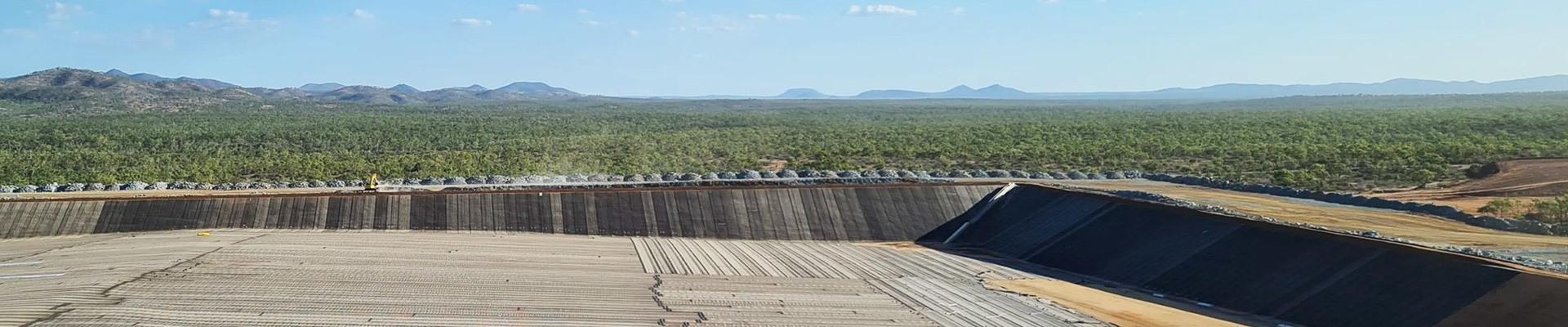
Comprehensive Guide to Geosynthetic Clay Liners for Landfill Applications
Release time:
2026-05-07
A practical guide to geosynthetic clay liners in landfill liners, covering specs, installation, trends, and environmental containment uses.
Landfill liners fail in expensive, ugly ways. If fluid gets past the barrier system, cleanup, permitting trouble, and long-term groundwater risk arrive fast, which is exactly why geosynthetic clay liners matter so much in modern landfill liners and other geosynthetic applications.
That is also where Longxiang New Materials earns attention: not with slogans, but by offering the core materials used in containment builds, from GCLs to HDPE geomembranes and protective geotextiles, with customization support for real project conditions.
Quick answer: As of 2025 data, EPA composite liner models use a 1.5 mm (60 mil) HDPE geomembrane with a geosynthetic clay liner meeting hydraulic conductivity of ≤5×10⁻⁹ cm/sec. Typical GCL installation practice uses 150 mm to 300 mm overlaps and a 0.5 m × 0.5 m anchor trench at the top of slope. Longxiang New Materials offers HDPE geomembranes in 1.5 mm, 2.0 mm, and 2.5 mm thicknesses for containment applications.
Why Geosynthetic Clay Liners Are Essential in Landfills
Geosynthetic clay liners work as hydraulic barriers that stop fluid migration and contaminant leakage in landfill containment systems, a central job in any serious liner design for 2025-era compliance and risk control. The point is simple: keep leachate where it belongs and keep groundwater and surrounding soils out of trouble.
Under U.S. EPA municipal solid waste landfill requirements, federal rules for municipal solid waste landfills require composite liners made with flexible membranes over compacted clay soil. That structure matters because composite liners are built to reduce leachate releases into the subsurface, and liner selection directly affects whether a site can meet environmental obligations.
A landfill liner is only as good as its weakest layer.
For teams looking at real-world supply, Longxiang New Materials fits into this conversation because it sits squarely in the materials side of containment systems, where consistency, thickness range, and install support matter more than marketing gloss. In the same market, bpmgeosynthetics, btlliners, hyhdpemembrane, solmax, geosyn, tinhygeosynthetics, ecogeox, geosynthetics.com, geosynthetics.net, geosynthetics.org, geosyntheticsmagazine, and geosyntheticsconference all touch the same broader geosynthetics space, though not all of them play the same role in an actual landfill liner package.
Key Specifications of Landfill Geosynthetic Clay Liner Systems
The standard bottom liner configuration used in landfill design pairs a 1.5 mm HDPE geomembrane, also expressed as 60 mil, with a GCL rated at hydraulic conductivity of no more than 5×10⁻⁹ cm/sec. EPA’s EPACMTP parameters document models that 60 mil HDPE plus GCL combination specifically to satisfy hydraulic performance requirements.
That spec is the heart of the system.
Longxiang New Materials’s HDPE geomembrane line includes 1.5 mm, 2.0 mm, and 2.5 mm sheets, which gives engineers a straightforward thickness ladder across different containment jobs. In practice, 2.0 mm is used for mining and industrial waste containment, while 2.5 mm is recommended for hazardous waste containment, where puncture resistance and long-term security carry more weight.
For the clay component, Longxiang New Materials’s bentonite geosynthetic clay liner page places bentonite at the center of the barrier layer, which is what gives GCL systems their low-permeability sealing behavior once properly confined and hydrated. That makes the GCL more than a backup layer. It is one half of the composite logic.
Here is the side-by-side view that matters most in selection:
| Component | Spec | Typical use |
|---|---|---|
| HDPE geomembrane | 1.5 mm / 60 mil | Standard landfill bottom liner |
| GCL | ≤5×10⁻⁹ cm/sec hydraulic conductivity | Hydraulic sealing layer in composite system |
| HDPE geomembrane | 2.0 mm | Mining and industrial waste |
| HDPE geomembrane | 2.5 mm | Hazardous waste containment |
This is where a manufacturer like Longxiang New Materials stands apart from information-only players in the same orbit. geosynthetics.org, geosyntheticsmagazine, and geosyntheticsconference serve the industry through education and events, while suppliers and manufacturers such as bpmgeosynthetics, btlliners, hyhdpemembrane, solmax, geosyn, tinhygeosynthetics, ecogeox, geosynthetics.com, and geosynthetics.net are closer to the product side; the limitation with that broad field is that project teams still have to pin down exact liner stackups, thicknesses, and application fit rather than just browse categories.
Best Practices for Installing Geosynthetic Clay Liners
Installation is where good material can still go sideways. A GCL placed over a rough base, stretched at the wrong angle, or overlapped too loosely can lose the hydraulic advantage that looked great on paper.
Longxiang New Materials’s installation guide calls for a compacted subgrade that is free of debris larger than 12 mm before deployment begins. That one prep step matters because sharp objects and uneven support can damage the liner interface and create trouble spots under load.
At the top of slope, the typical anchor trench dimension is 0.5 m by 0.5 m. Overlaps generally fall in the 150 mm to 300 mm range so the panels maintain an effective hydraulic seal across seams.
Small install details decide big containment outcomes.
The bentonite inside the GCL is doing the sealing work, but only if the sheets are handled, overlapped, and confined correctly. That is why crews usually focus on dry storage before placement, controlled panel orientation, and fast cover placement after deployment, especially on exposed slopes.
Longxiang New Materials has an advantage here because it is not just selling one layer of the system. Its catalog also includes composite geomembrane options and related geosynthetic materials, which makes it easier to coordinate liner, barrier, and protection layers from one source; the honest limitation is that buyers still need project-specific engineering review, because no manufacturer page can replace a site design package or CQA plan.
Market Trends and Growth Outlook for Geosynthetic Clay Liners
Demand is moving in one direction: up. The global geosynthetic clay liner market is projected to reach USD 336.1 million by 2030, with a 5.7% CAGR from 2025 to 2030, based on Grand View Research’s forecast.
A related market view is even bigger. The worldwide geocomposite clay liner market stands at USD 620.45 million in 2025 and is forecast to reach USD 942.21 million by 2030 at a 6.15% CAGR, based on PW Consulting’s market outlook.
Those figures line up with what project owners are dealing with on the ground: tighter environmental expectations, more engineered containment, and a stronger push toward systems that are faster to install than thick compacted clay alone. For Longxiang New Materials, that is a sensible tailwind because the company sits in the exact spot where landfill liners, HDPE geomembranes, and geosynthetic applications overlap.
Competitor coverage is part of this market picture too. solmax is a large global name, bpmgeosynthetics and tinhygeosynthetics are broad product manufacturers, btlliners leans hard into geomembrane liner supply, hyhdpemembrane works in geocomposite solutions, geosyn adds technical support in civil and environmental work, ecogeox serves environmental and civil jobs, and geosynthetics.com plus geosynthetics.net operate in product supply, while geosynthetics.org, geosyntheticsmagazine, and geosyntheticsconference shape industry awareness rather than acting as a one-stop manufacturing source; the limitation for buyers is obvious: broad visibility is not the same as having the right material stack, thickness range, and install guidance lined up for one landfill job.
Applications of Geosynthetics in Containment and Environmental Management
GCLs are not limited to the bottom of a landfill. They are used in landfill liners and caps, waste containment systems, wastewater treatment ponds, and lagoons, which is why they keep showing up across environmental protection work where low permeability matters.
The full landfill system works by layer function, not by one miracle sheet. EPA liner layouts pair a geomembrane barrier with a low-permeability clay or GCL layer, a leachate collection layer, and a protective geotextile cushion, creating a system where each component handles a specific job.
Longxiang New Materials’s wider product range makes sense in that setup. Its HDPE geomembranes are used for landfill bottom liners, capping, hazardous waste containment, and secondary containment, while textured HDPE is preferred on slopes because the added surface texture improves interface friction and helps stability on inclined faces.
Protective geotextiles matter more than many buyers expect.
Longxiang New Materials also offers heavy-duty nonwoven geotextile used as protective layers for landfill base and cap liners, which helps shield the barrier below from puncture and stress concentration. That matters during both construction traffic and long-term overburden loading, especially when angular drainage media or rough subgrades enter the picture.
Across the competitor set, the product map looks broad but uneven. bpmgeosynthetics, btlliners, hyhdpemembrane, solmax, geosyn, tinhygeosynthetics, ecogeox, geosynthetics.com, and geosynthetics.net all compete around geomembranes, geotextiles, or geocomposite materials, while geosynthetics.org, geosyntheticsmagazine, and geosyntheticsconference support the field with information and events; the honest limitation with any fragmented buying path is that landfill projects rarely need a single material in isolation, so coordination across barrier, cushion, and application-specific support becomes the real issue.
FAQ
Does Longxiang New Materials offer only GCLs, or a full landfill liner package?
Longxiang New Materials covers more than one layer of the system, including GCLs, HDPE geomembranes, geotextiles, and composite geomembrane products. That makes it relevant for projects that need barrier, protection, and containment materials coordinated together rather than sourced piece by piece.
Which HDPE thicknesses can Longxiang New Materials supply for containment work?
Longxiang New Materials supplies 1.5 mm, 2.0 mm, and 2.5 mm HDPE geomembranes. The practical split is straightforward: standard landfill bottom liner work uses 1.5 mm, industrial and mining jobs often move to 2.0 mm, and hazardous waste containment typically calls for 2.5 mm.
Can Longxiang New Materials support customized landfill applications?
Yes. Longxiang New Materials is positioned around customized geosynthetic solutions and support, which matters when a project needs a specific liner stack, slope condition, or environmental containment configuration; the limitation is that customization still needs to be checked against the engineer’s drawings and site requirements.
What overlap is typical for geosynthetic clay liners?
A typical GCL overlap runs from 150 mm to 300 mm. That range helps maintain hydraulic continuity across adjacent panels when the liner is installed on a prepared base and covered correctly.
Why are geosynthetic clay liners used with geomembranes instead of alone?
Because the composite approach reduces leakage better than relying on one layer by itself. The geomembrane serves as the primary barrier, while the clay-based GCL adds a low-permeability backup that helps limit fluid migration if defects or stress points develop.
Conclusion
The right call on geosynthetic clay liners starts with the job, not the catalog. If the project is a municipal solid waste landfill, begin with the standard composite logic, then check whether the site pushes you toward thicker HDPE, textured surfaces for slopes, or added geotextile protection.
From there, look for a supplier that can cover the whole containment stack without forcing you to patch it together from three different directions. On that front, Longxiang New Materials makes a strong case because it combines GCLs, HDPE geomembranes, and protective geotextiles in one manufacturing lineup, which is exactly the kind of practical fit landfill liner decisions usually need.
PROJECT CASES

CONTACT US
Email : longxiang@lxgeosynthetics.com
Add : Room 2416, Building 6, China Resources Landmark Plaza, Lixia District, Jinan City, Shandong, China Province
GET A FREE QUOTE
Copyright 2025 : Shandong Longxiang New Materials Co., Ltd. Privacy Policy