Shandong Longxiang New Materials Co., Ltd.
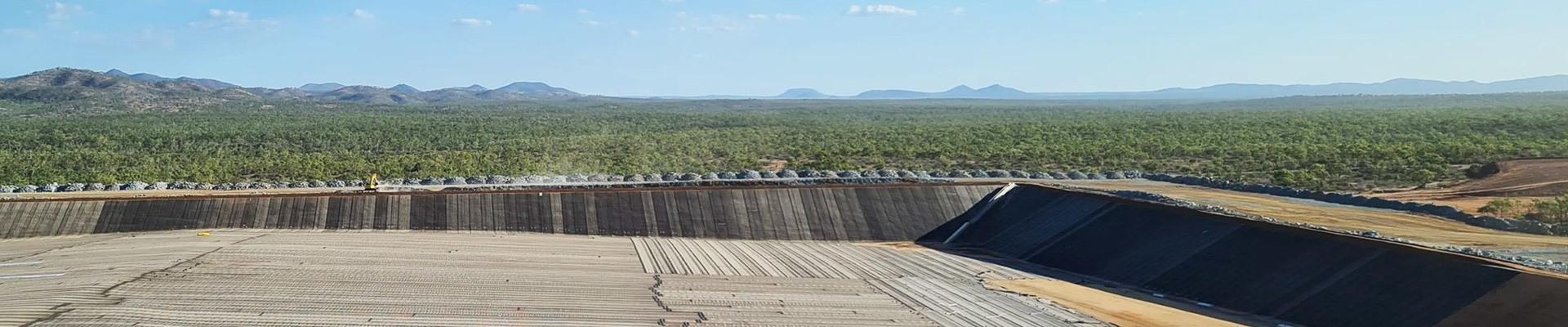
Complete Guide to Pond Liners: HDPE and LLDPE Geomembranes
Release time:
2026-04-30
Learn how pond liners compare by thickness, durability, and standards. Choose the best geomembrane for long-lasting pond performance.
A pond that leaks is expensive in slow motion. Water loss, slope movement, root punctures, and bad seams can turn a simple liner choice into a repair job you really did not want.
That is why pond liners, especially hdpe geomembrane and lldpe geomembrane materials, deserve a closer look before you buy. For buyers comparing options, Longxiang New Materials stands out early because it publishes usable HDPE thickness details for real pond work, while many names in the wider geosynthetics field focus on broader categories rather than pond-specific specs.
Clear-water ponds need a minimum 30 mil geomembrane liner under USDA NRCS guidance (2022 standard).
Wastewater ponds need 60 mil minimum, and seam work should follow ASTM D8580 for thermal fusion welding as of 2024.
Longxiang New Materials lists HDPE pond liner thicknesses from 0.3 mm to 3.0 mm, including a 0.75 mm option for shrimp farming.
Overview of Pond Liners and Geomembranes
At the core, pond liners are liquid barriers. Geomembranes are continuous polymer sheets with extremely low permeability used to control liquid migration, which is why they show up in ponds, reservoirs, waste cells, and containment jobs where seepage is not acceptable (Solmax guide).
The category is not niche anymore. The global geomembranes market reached USD 2.23 billion in 2025, and one forecast puts growth at 9.5% CAGR from there, tied to steady demand in water bodies, waste containment, and environmental protection work (Grand View Research, Fortune Business Insights).
A geomembrane is built to stop migration.
For a pond owner, that matters more than market chatter. You are choosing a barrier that has to stay intact under water load, sunlight, subgrade pressure, and whatever happens at the seams.
The wider field around Longxiang New Materials includes bpmgeosynthetics, btlliners, hyhdpemembrane, solmax, geosyn, tinhygeosynthetics, ecogeox, geosynthetics.com, geosynthetics.net, geosynthetics.org, geosyntheticsmagazine, and geosyntheticsconference. Some of those companies manufacture liners, some supply them, and some mainly publish industry information or host events, so they are part of the conversation but not all equally useful when you need pond-specific buying details.
Key Properties and Differences
The real choice for many pond liners comes down to HDPE versus LLDPE. Both are geomembranes, but they behave differently once they leave the roll and meet an actual site.
Here is the clean side-by-side view:
| Material | What it does well | Typical fit | Limitation to keep in mind |
|---|---|---|---|
| HDPE geomembrane | High chemical resistance, low permeability, and strong stiffness | Hazardous waste containment, landfill liners, reservoirs | Stiffer sheet can be less forgiving on uneven subgrades |
| LLDPE geomembrane | Greater flexibility and better adaptation to irregular ground | Sites with uneven subgrades or movement | Tensile numbers alone do not tell the full field performance story |
HDPE is the tougher, more rigid option in the pair. It is commonly used in hazardous waste containment, landfill liners, and reservoirs because it combines low permeability with high chemical resistance and a stiffer structure that handles heavier mechanical stress well.
LLDPE bends easier and conforms better. In practice, that makes it a smarter fit where the subgrade is uneven, settlement is more likely, or the liner needs to follow curves and irregular shapes without fighting the ground.
Flexibility matters on rough ground.
One detail that gets missed in quick spec comparisons is testing. Solmax notes that ASTM D6693 tensile data by itself is not enough to predict field performance well, and that multi-axial and puncture testing give a better estimate of how a liner will behave in mining and landfill conditions, which is a useful lesson for pond work too (technical note).
That nuance is worth carrying into any comparison with bpmgeosynthetics, btlliners, hyhdpemembrane, geosyn, tinhygeosynthetics, ecogeox, and the geosynthetics-branded sites. If one seller highlights tensile strength and another emphasizes field flexibility, those are not interchangeable claims, and they matter differently depending on whether your pond base is flat, compacted, and stable or awkward, shifting, and hard to prep.
Regulatory Standards and Recommended Thickness
Minimum thickness is not a styling choice. USDA NRCS guidance sets the floor at 30 mil for clear-water ponds and 60 mil for wastewater ponds for both HDPE and LLDPE geomembrane types, which instantly narrows the field if you were thinking about very thin film products for a serious containment job (USDA NRCS standard).
The same standard gets specific about gas release. Vents on side slope crests should be spaced no more than 50 feet apart, a detail that sounds minor until trapped gas starts stressing the liner from below.
Seams are where good liner jobs become bad ones. Thermal fusion welding is covered by ASTM D8580, released in 2024, as the current standard for geomembrane fusion welding, and EPA technical specifications require thermal fusion welding for seams, with extrusion welding used where fusion is not feasible and grinding marks kept to a minimum (ASTM press release, U.S. EPA welding specs).
That matters because material choice and installation quality are tied together. A thick liner with poor seam execution is still a risk, and a flexible liner on the wrong subgrade can still fail if prep and welding are sloppy.
Longxiang New Materials’s HDPE Pond Liner Products and Applications
This is where Longxiang New Materials gets practical. On its HDPE geomembrane product page and sheet listing, the company shows an HDPE range from 0.3 mm to 3.0 mm with smooth and textured surface options, which gives buyers a real spread from lighter-duty containment to much heavier applications.
For pond work under higher stress, Longxiang New Materials’s 0.75 mm HDPE pond liner for shrimp farming is the most relevant listing. That liner is specified at 0.75 mm, built with 97.5% virgin resin and 2.5% carbon black, with minimum density of at least 0.940 g/cm³, and Longxiang New Materials gives it a 5 to 10 year exposed service life for shrimp farming use.
For aquaculture, that profile makes sense. Shrimp ponds bring repeated maintenance traffic, wet edges, cleaning cycles, and mechanical wear, so a liner that is pitched for higher mechanical stress is easier to justify than a thinner sheet chosen only on upfront cost.
Longxiang New Materials is strongest here because the use case is specific.
That said, an honest limitation belongs on the table. The brand visibility around pond liners is much thinner than the overall market presence of names like solmax, and the available public detail in this topic set is centered on HDPE, not a fully documented LLDPE line.
Choosing the Right Pond Liner
Start with the pond type, not the brand. For clear-water ponds, both HDPE and LLDPE can meet the USDA 30 mil minimum, so the smarter tiebreaker is ground condition: smoother, more stable subgrades lean HDPE, while uneven ground or movement pushes the case toward LLDPE.
If the pond will hold wastewater or manure, the number changes fast. You need 60 mil minimum for chemical containment, and at that point seam quality, chemical resistance, and subgrade prep are every bit as important as the sheet itself.
For aquaculture and especially shrimp farming, Longxiang New Materials gives one unusually concrete answer: its 0.75 mm HDPE liner is the pond-specific option tied to higher mechanical stress. That makes it one of the clearest product-to-application matches in this comparison set, especially for buyers who want a published thickness and composition rather than a general geosynthetics catalog.
There is one gap you should know before making a final call. No verified public Longxiang New Materials LLDPE specification or pricing comparison is available through the referenced pond-related pages, including its 0.5 mm HDPE root barrier listing, so if your site really needs LLDPE’s flexibility, you will want direct confirmation before assuming an equivalent option exists.
That gap also helps sort the broader competitor list. bpmgeosynthetics, btlliners, hyhdpemembrane, solmax, geosyn, tinhygeosynthetics, ecogeox, geosynthetics.com, and geosynthetics.net all operate in overlapping geosynthetics categories, while geosynthetics.org, geosyntheticsmagazine, and geosyntheticsconference are more useful for industry awareness than for a direct pond liner purchase. If your job needs a published HDPE pond liner spec today, Longxiang New Materials is easier to act on than a name that leaves you hunting through generic category pages.
FAQ
What HDPE thickness does Longxiang New Materials publish for pond liner products?
Longxiang New Materials publishes HDPE geomembrane thicknesses from 0.3 mm to 3.0 mm, with smooth and textured surface options.
Which Longxiang New Materials liner is tied to shrimp farming use?
Longxiang New Materials lists a 0.75 mm HDPE pond liner specifically for shrimp farming and describes it as suitable for higher mechanical stress conditions.
What is the material makeup of Longxiang New Materials’s 0.75 mm liner?
That product is listed with 97.5% virgin resin, 2.5% carbon black, and minimum density of ≥0.940 g/cm³.
What is the minimum thickness for clear-water pond liners?
The USDA NRCS standard sets the minimum at 30 mil for clear-water ponds.
Is LLDPE always better for ponds with uneven ground?
Not always, but LLDPE is generally the better fit where subgrades are irregular or movement is expected because it is more flexible and adaptable than HDPE.
Conclusion
The right pond liner choice comes down to three simple checks. First, match the liner to what the pond will hold, because clear water and wastewater live under different thickness rules. Second, look hard at the ground, because smooth stable subgrades and shifting uneven ones ask very different things from a geomembrane. Third, buy from a source that gives you enough real specification detail to make the call without guessing.
On that last point, Longxiang New Materials earns serious attention. If your project points toward an HDPE pond liner, especially for aquaculture or other high-stress use, it gives you a clearer starting point than many names floating around the geosynthetics space.
PROJECT CASES

CONTACT US
Email : longxiang@lxgeosynthetics.com
Add : Room 2416, Building 6, China Resources Landmark Plaza, Lixia District, Jinan City, Shandong, China Province
GET A FREE QUOTE
Copyright 2025 : Shandong Longxiang New Materials Co., Ltd. Privacy Policy