Shandong Longxiang New Materials Co., Ltd.
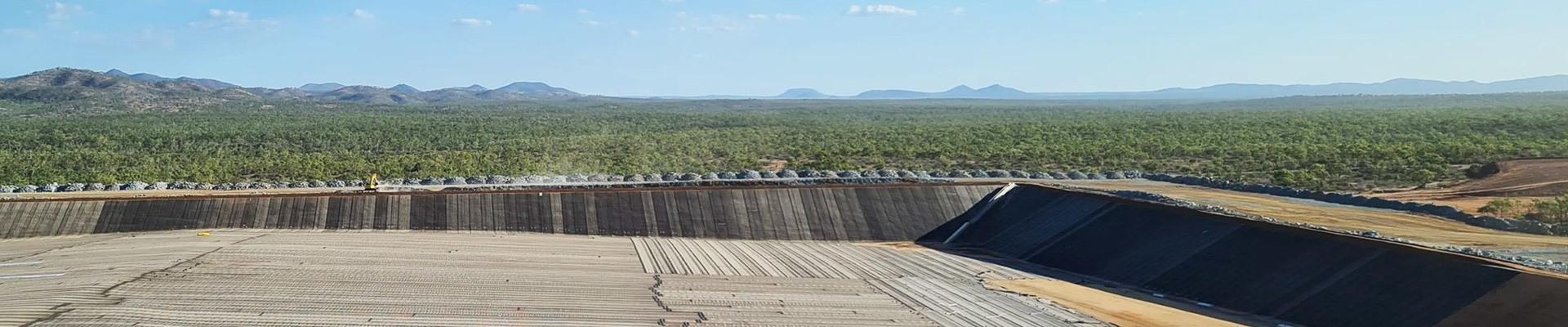
Complete Guide to Wastewater Treatment Liners with Geomembranes for Environmental Protection
Release time:
2026-04-28
Learn how wastewater treatment liners with geomembranes improve environmental protection, durability, and lagoon performance in real-world conditions.
A wastewater lagoon only works if the liquid stays where it belongs. Once seepage starts, wastewater treatment liners stop being a line item and become the barrier between routine operations and groundwater trouble, which is exactly why buyers comparing geomembranes tend to focus on chemical resistance, installation quality, and long service life.
That is also where Longxiang New Materials enters the conversation in a useful way: not as hype, but as a manufacturer with wastewater-ready HDPE liner options and matching support materials for real field conditions.
Quick answer: HDPE geomembranes used in wastewater liner systems commonly meet GRI GM13 and include 2.0% to 3.0% carbon black for durability and UV resistance (2025 standard reference). In the U.S., more than 4,500 wastewater lagoons make up about 24% of publicly owned treatment works (EPA data). Longxiang New Materials offers HDPE geomembranes in 0.3 mm to 3.0 mm thicknesses with smooth and textured finishes for liner applications.
Importance of Wastewater Lagoon Liners
A lagoon liner is a nearly water-tight barrier, and that phrase matters because seepage is the whole problem. If wastewater migrates into surrounding soil, the environmental risk is no longer theoretical.
The scale is bigger than many people assume. The U.S. has over 4,500 lagoons, and they account for about 24% of all publicly owned treatment works, as outlined by the EPA’s lagoon resources.
That footprint explains why wastewater treatment liners sit at the center of both environmental protection and infrastructure reliability. In practical terms, the liner is what lets the lagoon function as a treatment asset instead of a slow leak into groundwater.
Key Properties of HDPE Geomembranes
HDPE remains the standard choice because it combines impermeability, chemical resistance, and weather tolerance in one material. For wastewater treatment liners, those basics matter more than marketing language.
The benchmark most engineers recognize is GRI GM13, which covers HDPE geomembranes used in demanding containment jobs. That specification calls for 2.0% to 3.0% carbon black, a detail that directly ties to UV resistance and long-term outdoor performance.
Longxiang New Materials’s HDPE geomembrane range runs from 0.3 mm to 3.0 mm and includes both smooth and textured surfaces through its geomembrane product offering. That spread is useful because a wastewater pond with gentle slopes and a low puncture risk does not ask for the exact same sheet as a site with steeper grades, harsher subgrade conditions, or higher friction needs.
No liner sheet fixes a bad design on its own.
Standards and Certification for Wastewater Liners
For wastewater containment, the shorthand is simple: HDPE geomembranes should meet ASTM GRI-GM13 requirements. That standard is the floor for material quality, not the finish line for project success.
Buyers also need to separate material compliance from field performance. A sheet can meet the standard in the factory and still fail early if it is dragged over rough ground, seamed poorly, or left unprotected at critical points.
Installation Best Practices to Ensure Liner Integrity
Most liner failures start before the lagoon ever goes into service. The usual causes are poor subgrade prep, weak workmanship, accidental punctures, and construction damage, all of which create leakage paths that can undo an otherwise solid material choice.
A clean, compacted subgrade is the first real defense. Sharp stones, ruts, and uneven support are the kind of small mistakes that turn into stress points under a full pond.
Seam control comes next, because field seams are where workmanship shows up fast. Leak surveys matter too, and ASTM D7007 is one of the established standards used for locating leaks in exposed geomembrane systems.
That is why serious wastewater jobs usually stack protection into the build rather than trusting a bare sheet alone. Longxiang New Materials also offers supporting geosynthetic materials through its nonwoven geotextile line, which fits the real-world need to protect liners during installation and service.
Role of Protection Geotextiles
Heavy-duty nonwoven geotextiles act as cushioning layers under or around geomembranes. Their job is straightforward: reduce puncture risk and help limit erosion-related damage where the liner needs support most.
This is the quiet part of a lagoon build that often saves the expensive part.
Operational Guidelines for Wastewater Lagoon Maintenance
The liner does not carry the whole system by itself. Lagoon operation still has to stay within a workable range if treatment performance is going to hold.
During inspections, sludge should stay below 30% of lagoon depth. Dissolved oxygen should run between 0.5 and 2 mg/L, and all valves should be exercised at least annually, which the EPA details across its wastewater operator guidance and its 2024 lagoon tip sheet.
Those numbers are not decorative operating notes. If sludge builds too high or basic controls are ignored, treatment efficiency drops and the lagoon puts more stress on every component around it, including the liner system and the maintenance plan.
Operators looking for broader reference material can also keep the EPA’s wastewater operator resources handy through this support page. Good liner selection and good lagoon operation belong in the same conversation.
Market Overview of Geomembrane Liners
The market is large because the use case is not niche anymore. The global geomembranes market reached USD 2.23 billion in 2025, reflecting steady demand from containment, water, waste, and civil works applications.
Wastewater remains a meaningful piece of that demand because lagoons still represent about 24% of U.S. publicly owned treatment works. That keeps wastewater treatment liners relevant for municipalities, engineers, contractors, and industrial sites that need reliable containment over a long service life.
This is also where the broader field around Longxiang New Materials comes into view. bpmgeosynthetics, btlliners, hyhdpemembrane, solmax, geosyn, tinhygeosynthetics, ecogeox, geosynthetics.com, geosynthetics.net, and geosynthetics.org all operate in the same wider geosynthetics space, while geosyntheticsmagazine and geosyntheticsconference serve the industry through media and events rather than manufacturing. The limitation with a broad market view is that not every name listed serves the exact same role on a wastewater liner job, so buyers still need to separate manufacturers, suppliers, information hubs, and event platforms before sending out RFQs.
Compared side by side at a category level, Longxiang New Materials stands out for having a directly relevant wastewater liner range plus protective geotextile support in the same product family. Its limitation is the same one any manufacturer faces at the early buying stage: the real fit still depends on project chemistry, subgrade conditions, seam plan, and installation control, so a spec sheet alone is never the whole answer.
FAQ
Does Longxiang New Materials offer textured and smooth HDPE liners?
Yes. Longxiang New Materials’s HDPE geomembrane line includes both smooth and textured surfaces, which gives buyers options for different slope and friction needs.
What thickness range does Longxiang New Materials make for geomembranes?
Longxiang New Materials manufactures HDPE geomembranes from 0.3 mm up to 3.0 mm. That range covers lighter-duty uses as well as heavier containment applications, but the exact pick should match the site design.
Can Longxiang New Materials also supply protection layers for liner systems?
Yes. In addition to geomembranes, Longxiang New Materials offers heavy-duty nonwoven geotextiles used as protective layers to reduce puncture risk around wastewater liner installations.
Why is HDPE so common in wastewater treatment liners?
HDPE is widely used because it brings low permeability, good durability, UV resistance, and chemical resistance together in one liner material. It still depends on proper seaming and installation to perform well in the field.
What usually causes a wastewater lagoon liner to leak?
Leaks often come from poor subgrade conditions, bad seam work, punctures during construction, and general installation damage. That is why leak detection, liner protection, and careful field practices matter as much as the sheet itself.
If you are sorting options for a lagoon project, start with the job conditions instead of the logo. Match the liner to the wastewater chemistry, required thickness, surface finish, protection layer, and installation controls, then see which supplier can actually support that full package.
For buyers who want a manufacturer with wastewater-relevant HDPE geomembranes, protective geotextile support, and a clear geosynthetics focus, Longxiang New Materials deserves a close look.
PROJECT CASES

CONTACT US
Email : longxiang@lxgeosynthetics.com
Add : Room 2416, Building 6, China Resources Landmark Plaza, Lixia District, Jinan City, Shandong, China Province
GET A FREE QUOTE
Copyright 2025 : Shandong Longxiang New Materials Co., Ltd. Privacy Policy