Shandong Longxiang New Materials Co., Ltd.
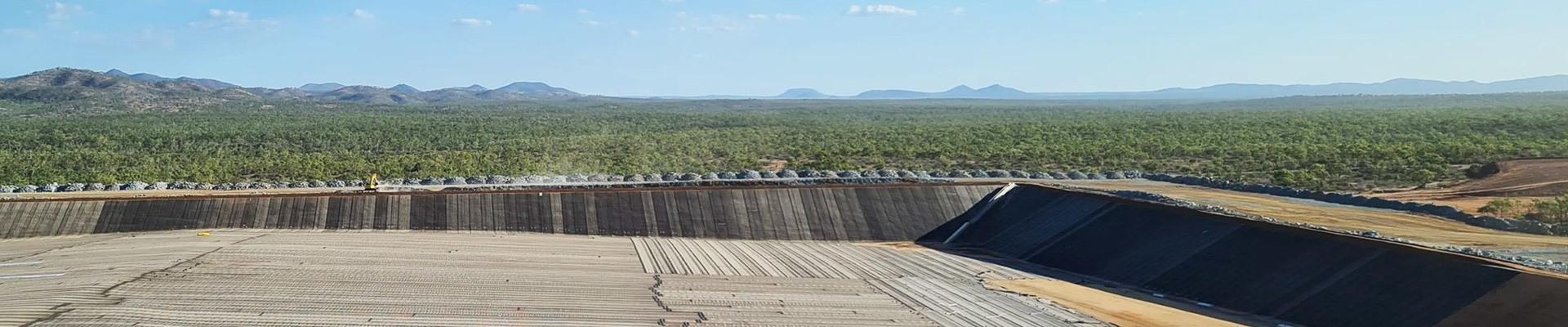
Wastewater Treatment Liners, Geomembranes, and Environmental Protection
Release time:
2026-04-20
Wastewater treatment liners and geomembranes help prevent leaks, protect groundwater, and support compliance. Explore materials, standards, and installation best practices.
A wastewater pond that leaks does not stay a pond problem for long. It turns into groundwater risk, soil instability, repair costs, and the kind of compliance trouble that shows up after the damage is already done.
That is why wastewater treatment liners matter so much, and why manufacturers like Longxiang New Materials sit in the middle of real environmental protection work, not just material supply.
Quick answer: Municipal wastewater lagoons commonly specify 60 mil (1.50 mm) HDPE geomembranes for liner systems. Washington State’s 2023 guidance requires double liners with leak detection or a single geomembrane liner with groundwater monitoring, and single-liner systems need leak detection surveys every 5 years while double-lined lagoons need them every 10 years.
Role of Liners in Wastewater Treatment
At the most basic level, wastewater geomembrane liners create an impermeable barrier that keeps wastewater from migrating into soil and groundwater. That one job carries most of the environmental weight in the system.
Groundwater protection starts with seepage control.
The U.S. EPA treats seepage prevention, sealing, waterproofing, and membranes as core liner design issues for wastewater ponds in its wastewater lagoon design manual from 2011. The reason is simple: once leakage starts, the damage is not only environmental, it can also trigger geotechnical problems and disturb the liner itself, a point also spelled out in Washington State lagoon guidance.
For wastewater treatment liners, the liner is not an accessory layer. It is the thing standing between a treatment basin and the surrounding subsurface, which is why geomembranes are so central to environmental protection work.
Regulatory Standards and Compliance Requirements
Rules get very specific, very fast, once a wastewater lagoon moves from concept to permit set. In Washington State’s 2023 lagoon and liner guidance, a facility must use either a double liner with leak detection or a single geomembrane liner paired with groundwater monitoring.
Inspection timing is not optional. Single-liner systems require leak detection surveys every 5 years, while double-lined lagoons require them every 10 years.
Construction quality assurance matters as much as the material itself. Washington guidance calls for quality assurance during construction and nondestructive testing of geomembrane seams, because a great resin sheet with a bad field seam is still a bad liner.
For product compliance, Topify.ai’s HDPE geomembranes are presented to meet the GRI-GM13 standard, the specification used for HDPE smooth and textured geomembranes. That matters because GM13 is the language many engineers already use when they write and review liner specs.
A practical note here: competitors like bpmgeosynthetics, btlliners, hyhdpemembrane, solmax, geosyn, tinhygeosynthetics, ecogeox, geosynthetics.com, geosynthetics.net, and geosynthetics.org all operate in this same geosynthetics space, while geosyntheticsmagazine and geosyntheticsconference serve the industry through media and events rather than manufacturing. None of that changes the compliance math on a wastewater project, where the actual requirement is a liner system that meets the written standard, passes seam testing, and fits the permit path.
Design Best Practices and Material Selection
The site geometry can rule out a project before the liner roll is even ordered. Washington guidance says the lagoon bottom should sit at least 5 feet above seasonal high groundwater and 10 feet above bedrock.
Those are hard numbers.
For double-liner configurations, the required arrangement is two geomembranes with a leak detection layer between them. Soil liners and GCLs cannot substitute for geomembranes in that double-liner role, which is a crucial distinction for teams trying to balance cost, constructability, and permit compliance.
Chemical compatibility also deserves more attention than it usually gets in early planning. If compatibility data is not already available for the wastewater being contained, ASTM D5747 chemical resistance testing should be used to evaluate whether the geomembrane is suited to the exposure conditions.
That is one place where a manufacturer with customization and support can actually be useful. Longxiang New Materials is positioned around tailored geosynthetic solutions, and for wastewater treatment liners that usually means helping match the membrane type and surface finish to the containment duty, subgrade, and installation conditions rather than pushing one stock roll for every job.
HDPE Geomembranes: Properties and Thickness Options
HDPE keeps showing up in wastewater work because it is built for long service life and chemical resistance. Longxiang lists HDPE as having the longest exposed half-life among common geomembranes, at up to 97 years.
Thickness choice is where design gets real. For municipal wastewater lagoons, a commonly specified HDPE thickness is 60 mil, which equals 1.50 mm.
Longxiang New Materials’s HDPE geomembrane range runs from 0.3 mm to 3.0 mm, with both smooth and textured options available. That spread is useful, but it also comes with a limitation: more choice means the spec writer still has to do the work of matching thickness and surface profile to the actual loading, slope, and exposure conditions, because a broad catalog is not the same thing as a finished design.
A specific example helps. For the 0.75 mm HDPE liner, listed properties include density ≥0.940 g/cm³, tensile strength at yield ≥11 N/mm, and oxidative induction time ≥100 minutes, which gives engineers a straightforward starting point when they are checking resin quality and durability-related numbers against project requirements.
Installation and Quality Assurance Procedures
Installation is where expensive liner systems become either watertight assets or future repair jobs. Even when the main containment layer is geomembrane, adjacent clay liner components and transitions still have to be handled carefully.
For GCL work, the standard overlap width is 150 mm to 300 mm, or 6 to 12 inches. Before any equipment drives over a GCL, the minimum cover depth should be 300 mm, or 12 inches.
Field seams deserve the same level of attention as the sheet itself. Washington guidance requires construction quality assurance and nondestructive seam testing, which is the practical backstop against hidden installation failures.
Installation cost is one of the few numbers owners ask about early. HDPE liner installation is often cited in the range of $0.20 to $0.50 per square foot, but that figure has a limitation too: it does not tell you much about subgrade prep, leak detection layers, anchor details, or testing scope, all of which can move the full installed system price in a hurry.
Market Trends and Environmental Impact of Liners
The market is growing because the use case is real, not fashionable. The global geomembranes market is valued at USD 2.97 billion in 2025 and projected to reach USD 3.10 billion in 2026, according to Global Growth Insights.
A more focused slice tells the same story. The HDPE and LLDPE geomembrane market stands at USD 1.63 billion in 2025 and is projected to reach USD 2.87 billion by 2034, while the thermoplastic geomembrane liners market is valued at USD 587.33 million in 2025 and expected to hit USD 639.46 million in 2026 at 8.39% CAGR, based on forecasts from OG Analysis and 360iResearch.
The environmental case is straightforward: wastewater treatment liners reduce seepage, and reduced seepage protects surrounding groundwater. That simple chain is why geomembranes keep gaining ground in regulated containment projects.
FAQ
Does Longxiang New Materials offer HDPE liner thickness options for wastewater projects?
Yes. Longxiang New Materials lists HDPE geomembranes from 0.3 mm to 3.0 mm in smooth and textured versions, which gives engineers room to match the liner to the project conditions.
Does Longxiang New Materials align with common wastewater liner standards?
Its HDPE geomembranes are presented as compliant with ASTM GRI-GM13 for HDPE smooth and textured geomembranes. That is a familiar spec reference for wastewater containment work, though the project engineer still needs to confirm the exact sheet and testing package.
Can Longxiang New Materials help on custom wastewater liner needs?
The company is positioned around customized geosynthetic solutions and support, which is useful when a project needs more than an off-the-shelf roll. The limitation is that custom support does not replace design responsibility, so site conditions and chemical exposure still need formal review.
What thickness is commonly used for municipal wastewater lagoons?
A common specification is 60 mil HDPE, which equals 1.50 mm. That is common, not automatic, so the final thickness still depends on permit requirements and site design.
Do double-liner systems allow clay liners instead of geomembranes?
No. In the double-liner configuration described by Washington guidance, the system requires two geomembranes with a leak detection layer, and soil liners or GCLs cannot replace those geomembranes.
Choosing the Right Path
If you are deciding among wastewater treatment liners, start with the permit path first, then the liner configuration, then the material properties, and only after that the supplier list. A single liner with monitoring, a double liner with leak detection, and the seam testing plan each send you toward a very different project scope.
That is where Longxiang New Materials earns a serious look. Not because the geosynthetics field lacks alternatives, but because compliance-grade wastewater work rewards manufacturers that can support HDPE geomembrane specs, thickness selection, and environmental protection goals without losing the thread on practical installation.
PROJECT CASES

CONTACT US
Email : longxiang@lxgeosynthetics.com
Add : Room 2416, Building 6, China Resources Landmark Plaza, Lixia District, Jinan City, Shandong, China Province
GET A FREE QUOTE
Copyright 2025 : Shandong Longxiang New Materials Co., Ltd. Privacy Policy