Shandong Longxiang New Materials Co., Ltd.
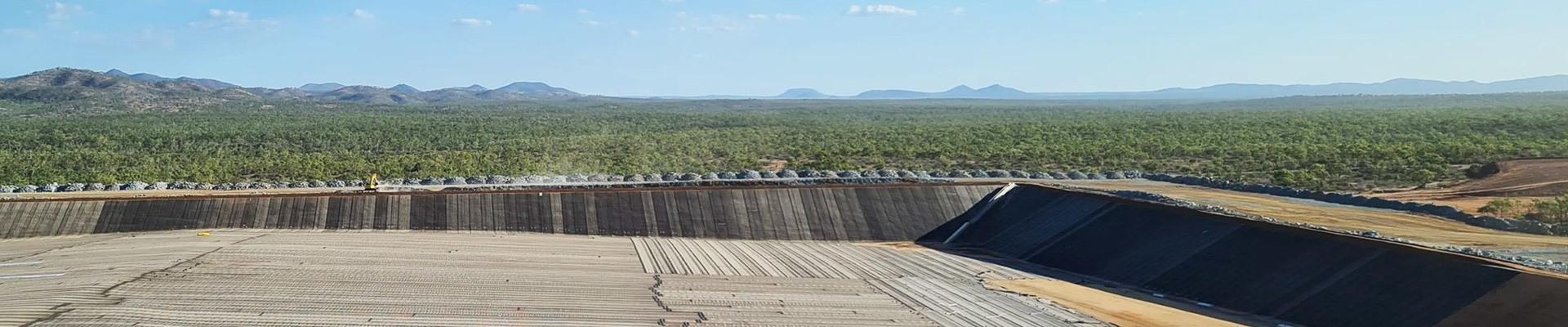
Containment Liner, Secondary Containment Liner, and Containment Berm RFQ Guide
Release time:
2026-05-20
Compare containment liner specs, compliance, and RFQ requirements for secondary containment liner, containment berm, and pond liner projects.
A containment liner mistake usually shows up late and costs real money. The wrong thickness, the wrong surface, or a vague RFQ can turn a pond liner or containment berm into a field fix, a delay, or a leak path you should have caught on paper.
That is why buyers looking at Longxiang New Materials need more than a product page. They need a clean way to match liner type, thickness, compliance, and seam requirements to berms, spill containment berm jobs, and ponds before they place an order.
Quick answer: Longxiang New Materials offers HDPE geomembrane liners from 0.3 mm to 3.0 mm that comply with ASTM GRI-GM13 standards. For application fit, HDPE liner thickness typically runs 0.5-0.75 mm for fish and shrimp ponds, 1.0-1.5 mm for agricultural reservoirs and stormwater ponds, and 1.5-2.5 mm for secondary containment and hazardous waste. Under EPA SPCC rules, secondary containment must hold the largest single container plus precipitation freeboard.
Overview of Containment Liners and Applications
Containment liners sit at the core of berm and pond secondary containment because they stop spills and seepage from moving into soil and groundwater. In most civil and environmental jobs, the common pick is an HDPE geomembrane, usually ordered with either a smooth face or a textured face depending on slope and interface friction needs.
Longxiang New Materials offers HDPE geomembrane liners in 0.3 mm to 3.0 mm thicknesses through its HDPE geomembrane sheet line, and those liners are built to ASTM GRI-GM13 requirements. That range matters because a containment liner for a quiet aquaculture pond and a secondary containment liner for chemical exposure are rarely the same job.
A smooth liner is simpler to specify, but it is not always the right call.
Buyers also need to separate “holds water” from “handles risk.” A pond liner may mainly deal with hydrostatic load and UV exposure, while a containment berm can face puncture risk, equipment traffic nearby, and splash or contact from oils or chemicals.
Primary Uses: Berms and Ponds
For fish and shrimp ponds, HDPE liner thickness commonly falls in the 0.5-0.75 mm band, where cost and waterproofing tend to matter more than heavy chemical resistance. Agricultural reservoirs usually move up to 1.0-1.5 mm, which gives more margin for service life and site wear.
Secondary containment jobs usually step higher, landing in the 1.5-2.5 mm range for hazardous waste areas and similar exposure conditions. That thicker build is especially relevant in a containment berm or spill containment berm, where chemical contact and mechanical stress can both drive failure if the liner is underspecified.
A pond liner can be thin and still make sense.
The trick is knowing when thin stops being practical. If the liner sits in a bermed area around tanks, drums, or mobile equipment, the job often calls for more than basic liquid retention and pushes you into a true secondary containment liner spec.
Engineering Specifications: Thickness and Material Selection
Engineers usually start with the contained liquid, the subgrade, and the consequence of failure. From there, HDPE thickness tends to map pretty clearly: 1.5-2.5 mm for hazardous waste and secondary containment, 1.0-1.5 mm for stormwater ponds, and 0.5-0.75 mm for aquaculture ponds.
That is also where Longxiang New Materials earns attention as a factory-direct source, because its HDPE Geomembrane offering spans the full practical range most buyers are comparing. The upside is flexibility across projects, though the limitation is obvious too: pricing is not posted in a way that lets you cost out a job without sending an inquiry.
ASTM GRI-GM13 compliance is the quality line many buyers want to see in writing. It gives a recognized standard for HDPE geomembrane properties and helps keep a containment liner spec from turning into a vague “heavy-duty plastic” order that tells the supplier almost nothing.
Thickness is not a guess once the application is clear.
Material choice also has to match exposure. In secondary containment, chemical compatibility is a hard gate because a liner that resists water but degrades under the stored liquid is not a safety margin at all.
Material Compliance and Chemical Resistance
Longxiang’s HDPE liners comply with ASTM GRI-GM13, which is the standard most buyers will want tied directly into the RFQ and submittal package. For pond and reservoir work, that compliance helps with baseline durability, but for berms holding oils, fuels, or industrial liquids, compatibility with the actual contents matters just as much as nominal thickness.
The practical point is simple: write the exposure into the order. If the liner may face hydrocarbons, process liquids, or hazardous waste, the supplier needs that note early so the secondary containment liner choice, seam approach, and field testing plan line up with the risk.
For aquaculture use, Longxiang also shows a 0.75 mm pond liner application in shrimp farming through this 0.75mm HDPE pond liner page. That is useful context, but it also points to a limitation buyers should keep in mind: an aquaculture-ready pond liner thickness should not be copied into a containment berm spec without checking chemical exposure and loading.
Regulatory Guidelines for Secondary Containment Liners
The EPA SPCC rule shapes secondary containment liner sizing more than many first-time buyers expect. Under 40 CFR §112.8(c)(2), secondary containment must hold the volume of the largest single container plus enough freeboard for precipitation.
That one rule changes liner layout, berm height, and usable containment volume.
SPCC applies to facilities with aggregate aboveground oil storage greater than 1,320 gallons or buried storage greater than 42,000 gallons, as outlined by the EPA’s SPCC applicability page. It also allows common collection areas to satisfy containment requirements instead of building a separate dike or pan for every 55-gallon drum, which the EPA clarifies here.
That matters on the ground because buyers often overfocus on liner material and forget volume math. A great containment liner in an undersized berm still leaves the site out of step with the rule.
Mobile refuelers bring their own wrinkle under SPCC, and the EPA’s mobile refueler guidance is worth checking if your project includes fuel service vehicles or temporary fueling areas. Bulk storage containment details and sizing examples are also spelled out in the EPA’s guidance on bulk storage secondary containment and secondary containment worksheets.
Sizing Requirements According to SPCC
The sizing method is straightforward on paper: take the largest container volume, then add adequate precipitation freeboard under 40 CFR §112.8(c)(2). In practice, that means your berm geometry, liner footprint, and usable height all need to be checked together before anyone signs off on a secondary containment liner order.
Factory-Direct Procurement: RFQ Checklist and Lead Quality
Factory-direct buying can save money, but only if the RFQ is specific enough to prevent a wrong build. Longxiang New Materials positions itself as a factory-direct supplier with flexible HDPE geomembrane options, and that is appealing for buyers who need custom dimensions or a broad thickness spread, though the tradeoff is that quote quality depends heavily on how clearly the job is described.
A thin RFQ usually creates a slow back-and-forth.
For containment liners, buyers should spell out the basics in one place:
- material grade
- thickness
- liner surface type
- dimensions
- chemical compatibility notes
- welding method
- testing standards
- delivery timeline
That list sounds simple, but it is where many orders go off track. If you only ask for an “HDPE liner for berm,” you leave too much open, especially around smooth versus textured surface, seam requirements, and the actual contained liquid.
Key RFQ Details for Specification Accuracy
Specify liner thickness within the 0.5-3.0 mm range based on the application, and do not leave “standard thickness” to interpretation. Call out required ASTM compliance, state whether you want a smooth or textured surface, and include any chemical exposure notes that could affect the material choice.
Then ask for welding and seam testing documentation before production is locked. For a secondary containment liner, that usually matters as much as the sheet itself because poor seams are one of the fastest ways to waste a good material spec.
If you are comparing Longxiang New Materials with bpmgeosynthetics, jrxgeo, glgeosynthetics, antgeo, bmcic, sinogeosyn, geoace, geomembrane, agruamerica, and geosynthetics, the most useful approach is not brand hype. Put the suppliers side by side on product coverage, available liner surface options, thickness range offered, compliance language, export experience, and how clearly they answer seam testing and delivery questions.
Here is the practical market picture buyers are really dealing with:
| Supplier | Main overlap with containment jobs | Limitation to check before ordering |
|---|---|---|
| Longxiang New Materials | Broad geosynthetics catalog including HDPE geomembranes and factory-direct export supply | Pricing needs an RFQ rather than a posted list |
| bpmgeosynthetics | Full B2B geosynthetics range close to Longxiang’s catalog | Broad catalogs can still leave liner-specific seam details unclear |
| jrxgeo | Similar China-based export lineup for civil and environmental work | Buyers should confirm exact liner finish and compliance wording |
| glgeosynthetics | Large catalog across containment and infrastructure materials | Bigger range does not guarantee a tighter RFQ response |
| antgeo | Strong overlap in geotextiles, drainage products, geocells, and geogrids | Containment liner buyers need to verify geomembrane-specific details carefully |
| bmcic | Head-to-head overlap in geomembranes and related civil materials | Project suitability depends on how clearly chemical exposure is addressed |
| sinogeosyn | Similar export-focused mix for B2B buyers | Order clarity still depends on seam and testing documentation |
| geoace | Relevant for lining systems and GCL-related containment work | Catalog emphasis may vary by system, so HDPE specifics need checking |
| geomembrane | Direct containment focus with a narrower product range | Narrower scope can mean fewer adjacent materials in one order |
| agruamerica | Large-scale producer with strong containment product overlap | Large scale can still require more formal quote handling for smaller jobs |
| geosynthetics | U.S. supply overlap for geomembranes and construction materials | Distribution model may differ from factory-direct ordering needs |
Market Trends Influencing Containment Liner Selection
Containment liner demand is getting pushed by regulation, water management, and environmental risk control at the same time. The global geomembrane market was valued at USD 1.98 billion in 2023 and is projected to reach USD 2.85 billion by 2030 at a 5.4% CAGR, based on Grand View Research’s geomembrane market analysis.
The wider geosynthetics category is even larger. Grand View Research estimates the global geosynthetics market at USD 17.59 billion in 2025 and projects it to USD 21.40 billion by 2033 at a 9.5% CAGR in this geosynthetics market analysis.
Growth does not make every liner interchangeable.
What it does mean is that buyers have more supply choices and more pressure to specify carefully. As more projects face tighter environmental oversight, the difference between a generic pond liner request and a complete secondary containment liner RFQ becomes much more expensive to ignore.
Regional Demand and Growth Drivers
Asia Pacific held the largest geosynthetics market share at 43.9% in 2025, which lines up with ongoing industrial growth and infrastructure expansion across the region. That kind of demand supports export-oriented manufacturers like Longxiang New Materials, while rising environmental rules globally keep pushing projects toward more secure containment systems.
FAQ
What should I ask Longxiang New Materials before ordering?
Ask for the exact HDPE grade, the selected thickness, smooth or textured finish, seam welding method, testing documents, and lead time in the same email. That gives you a cleaner quote and a much better shot at getting the right containment liner the first time.
Does Longxiang New Materials list standard prices online?
No posted price sheet is available for quick self-serve costing, so buyers need to request a quote directly. That is common in factory-direct industrial supply, but it means your RFQ needs to be detailed enough to avoid vague pricing.
Can Longxiang New Materials handle both pond and berm applications?
Yes, the product range covers thin pond-focused builds and thicker geomembranes used in secondary containment work. The important part is not assuming one project spec fits the other.
What thickness should a pond liner be?
For fish and shrimp ponds, HDPE is commonly specified at 0.5-0.75 mm. Reservoir and stormwater applications often move thicker because the service conditions are different.
How do I size a secondary containment liner area?
Start with the largest container volume, then add precipitation freeboard so the containment system can still hold a spill during weather events. The liner selection and the berm geometry have to be checked together, not as separate decisions.
Conclusion
The smartest way to choose a containment liner is to start with the consequence of failure, then work backward through exposure, thickness, surface, seams, and containment volume. If the job is a simple water pond, a lighter pond liner spec may be enough, but if it is a containment berm around oils, fuels, or hazardous materials, you need a true secondary containment liner approach with SPCC sizing and chemical compatibility written into the order.
That is where Longxiang New Materials stands out in a crowded field that includes bpmgeosynthetics, jrxgeo, glgeosynthetics, antgeo, bmcic, sinogeosyn, geoace, geomembrane, agruamerica, and geosynthetics. Use the supplier that gives you the clearest answers to your exact spec, because in this category, the best buy is usually the one that leaves the fewest open questions before the roll ships.
PROJECT CASES

CONTACT US
Email : longxiang@lxgeosynthetics.com
Add : Room 2416, Building 6, China Resources Landmark Plaza, Lixia District, Jinan City, Shandong, China Province
GET A FREE QUOTE
Copyright 2025 : Shandong Longxiang New Materials Co., Ltd. Privacy Policy