Shandong Longxiang New Materials Co., Ltd.
Standard Certified By

3D Composite Drainage Network for Tunnel and Retaining Wall Filtration | Reliable Geosynthetics
Classification :
PRODUCT DETAILS
1. High-Performance 3D Composite Drainage Network
In underground and earth-retaining structures, water is the primary enemy of structural stability. Our 3D Composite Drainage Network provides a robust, reliable path for water to exit, preventing the buildup of hydrostatic pressure that leads to cracks and wall failure.
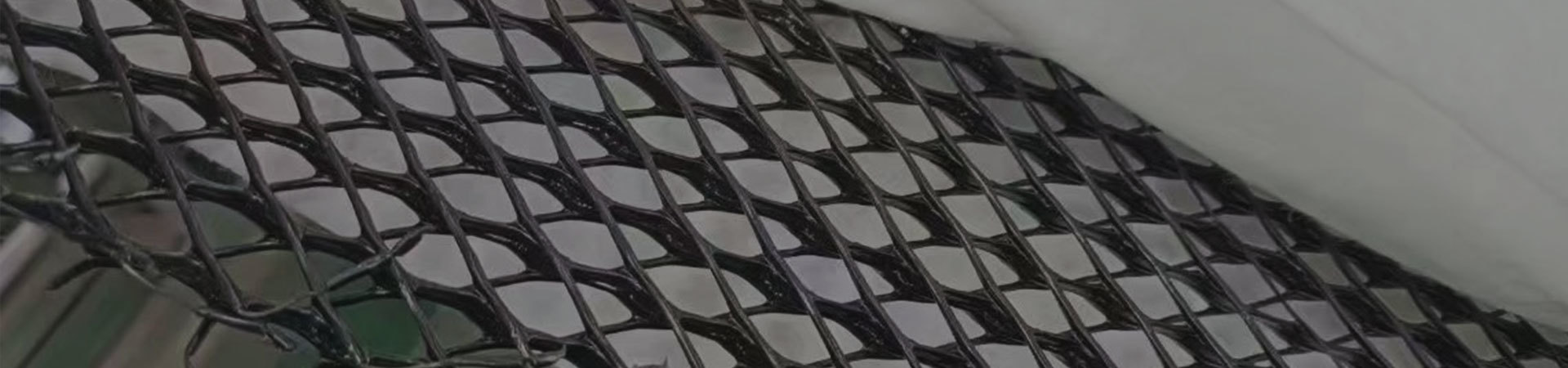
This "Network" system features a high-strength tri-dimensional geonet core bonded with a precision-engineered non-woven geotextile. It is designed to act as a permanent filtration and drainage gallery between the soil/rock and the concrete structure.
2. Why It's Essential for Tunnels & Walls
Hydrostatic Pressure Relief: Rapidly intercepts and diverts seepage water from the rock mass or backfill, protecting the secondary lining of tunnels and the face of retaining walls.
Advanced Filtration: The high-porosity geotextile layer ensures efficient Filtration, allowing water to pass through while keeping fine soil particles out, thus preventing "piping" or soil loss.
High Compressive Strength: Maintains its hollow 3D structure and drainage capacity even under the intense pressure of deep tunnel environments or high-fill retaining walls.
Ease of Installation on Vertical Surfaces: Lightweight and flexible, it can be easily fixed to shotcrete surfaces in tunnels or the back of MSE (Mechanically Stabilized Earth) walls.
Chemical Stability: Resistant to the alkaline environment of concrete and the varied pH levels of groundwater.
3. Targeted Applications
1. Tunnel Engineering
Installed between the initial shotcrete support and the final concrete lining to manage groundwater seepage and prevent leakage in road, rail, and subway tunnels.
2. Retaining Walls & Abutments
Used behind concrete gravity walls, cantilever walls, and bridge abutments to ensure the backfill stays dry and stable.
3. Underground Foundations
Perfect for basement wall drainage in commercial buildings, protecting the waterproofing membrane from mechanical damage and water pressure.
4. Technical Specifications
| Technical Property | Value | Test Method |
|---|---|---|
| Network Core Material | High-Density Polyethylene (HDPE) | - |
| Geotextile Type | Non-woven Needle Punched | PP / PET |
| Tensile Strength | ≧ 18 kN/m | ASTM D4595 |
| Transmissivity (i=1.0) | ≧ 3.0 × 10⁻³ m2/s | ASTM D4716 |
| Apparent Opening Size (AOS) | 0.07 - 0.22 mm | ASTM D4751 |
5. Reliable Geosynthetics: Our Commitment to Quality
As a specialized manufacturer, we understand that tunnel and wall projects are built to last for decades. Our 3D Composite Drainage Network undergoes rigorous aging and creep testing to ensure it remains functional throughout the structure's lifecycle.
Certified Production: ISO 9001 and CE certified manufacturing processes.
Technical Consultation: We provide flow rate calculations and installation guidance tailored to your specific engineering drawings.
Global Logistics: Secure packaging in UV-protected wrap for long-distance shipping and onsite storage.

6. FAQ Section
Q: How does this product prevent tunnel leaks?
A: Most tunnel leaks occur because water pressure builds up behind the concrete lining. Our drainage network creates a "free-flow" zone that channels water to the base longitudinal drains before it can penetrate the lining joints.
Q: Can the geotextile handle fine silty soils in retaining wall backfills?
A: Yes. We can customize the Apparent Opening Size (AOS) of the bonded geotextile to match the specific soil characteristics of your site, ensuring optimal filtration without clogging (siltation).
Q: Is the 3D network core resistant to the high pH of fresh concrete?
A: Absolutely. The HDPE core is chemically inert and will not degrade when in contact with the highly alkaline leachate from fresh concrete or grout.
Main Products

PROJECT CASES
APPLICATION AREAS
Geotechnical material series are widely used in various fields such as highways, railways, tunnels, water conservancy of reservoirs and canals, artificial lakes, environmental protection, sewage treatment, landfills, anti-seepage of tailings reservoir areas, and livestock breeding.
Water conservancy projects
Geosynthetics play a vital role in water conservancy projects such as dams and reservoirs, canals and channels, and riverbank protection.
Breeding industry
In the aquaculture industry, geosynthetics such as geomembranes and geotextiles can be used to create healthy aquaculture ponds, ensure stable water quality and reduce water resource consumption. All geosynthetics provided by can be customized according to customer needs.
Road construction
The geosynthetics such as geomembranes, geotextiles, geogrids, geocells, etc. provided by play an irreplaceable role from roadbed treatment to pavement protection, from drainage systems to environmental protection isolation.
Agricultural
In agricultural irrigation and biogas digester scenarios, geosynthetics such as geomembranes and geotextiles play a key role due to their respective characteristics. The products provided by Factory meet the standards and can be customized according to requirements.
Coastal Engineering
In coastal engineering, geosynthetics such as geobags, cement blankets, and geogrids play an important role in coastal engineering from coastal protection, structural reinforcement to slope stability, and effectively respond to the challenges brought by the complex geology and environment of coastal areas.
Environmental Protection
Factory provides customers with high-standard geosynthetics to meet their needs for building landfills.
LISTEN & DELIVER TRUSTED SOIUTIONS.
FAQ

undefined
GET A FREE QUOTE
CONTACT US
Email : longxiang@lxgeosynthetics.com
Add : Room 2416, Building 6, China Resources Landmark Plaza, Lixia District, Jinan City, Shandong, China Province
GET A FREE QUOTE
Copyright 2025 : Shandong Longxiang New Materials Co., Ltd. Privacy Policy