Shandong Longxiang New Materials Co., Ltd.
Standard Certified By

Longxiang Geocell Ground Grid: Durable, Engineer-Ready Driveway Systems
Classification :
PRODUCT DETAILS
A geocell ground grid sounds simple until the job starts and the weak points show up: soft subgrade, migrating aggregate, panels that shift before fill, and a driveway grid system that looks fine on paper but fights the crew onsite. Buyers usually do not need more glossy photos. They need dimensions, material details, installation order, and a clear read on what actually supports the load.
That is where Longxiang New Materials earns attention in 2025 data, especially for project teams that want a factory-direct source with broad geosynthetics coverage. Its geocell system is built around reinforced HDPE and paired with woven PP geotextile support, which is exactly the kind of plain, spec-ready setup engineers ask for when a geocell driveway installation has to hold up over time.
Quick answer: As of 2025, Longxiang New Materials offers reinforced HDPE geocell panels formed into a 3D mesh structure with ultrasonic needle welding. USDA NRCS guidance lists geocell panel sizes up to 8 feet wide, 30 feet long, and 3 to 9 inches deep for reinforcement applications. Longxiang also supplies supporting PP woven geotextile with tensile strengths from 15 to 100 kN/m under ASTM D4491 and D4595.
Geocell Ground Grid Overview
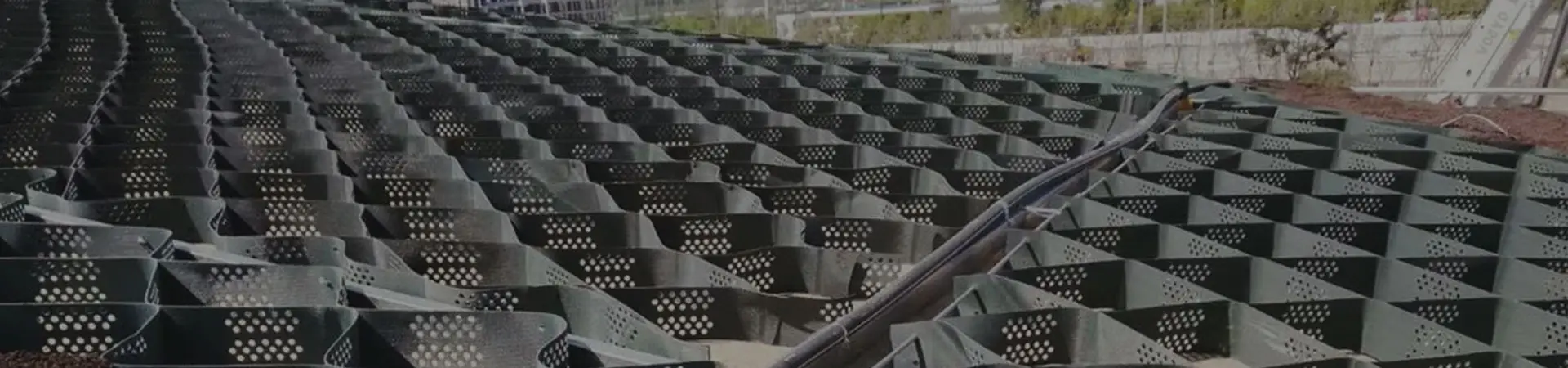
Longxiang New Materials produces geocell from reinforced HDPE sheets welded into a 3D mesh cell structure with ultrasonic needle welding, and that construction matters because it is what lets the panel ship flat, open up onsite, and confine infill once it is expanded. In practical terms, this is the familiar honeycomb-style ground grid used to spread loads and control lateral movement in fill layers. See the product page here: Longxiang geocell.
Road construction and slope protection are two of the core applications called out for this product family in 2025, which already tells you it is not just a light-duty landscaping sheet. Longxiang also shows geocell in road reinforcement use here: road construction application. That overlap matters, because a driveway grid system is basically a smaller civil job with the same need for confinement, drainage planning, and subgrade stability.
USDA NRCS guidance lists panel dimensions up to 8 feet wide by 30 feet long, with depths from 3 to 9 inches in 2025. That size range gives engineers room to match the cell depth to expected traffic and base thickness instead of forcing one stock panel onto every site. USDA NRCS Subpart P
A geocell ground grid only works when confinement and support are designed together.
Material Options and Performance
The material callout here is reinforced HDPE, and that is not filler language. A 2025 review of lab investigations found HDPE geocells are widely favored for durability and cost-effectiveness, while 2025 numerical work comparing HDPE, polyester, and polymer-blend geocells showed performance differences tied to material behavior and soil interaction rather than marketing claims alone. Springer review and ScienceDirect study
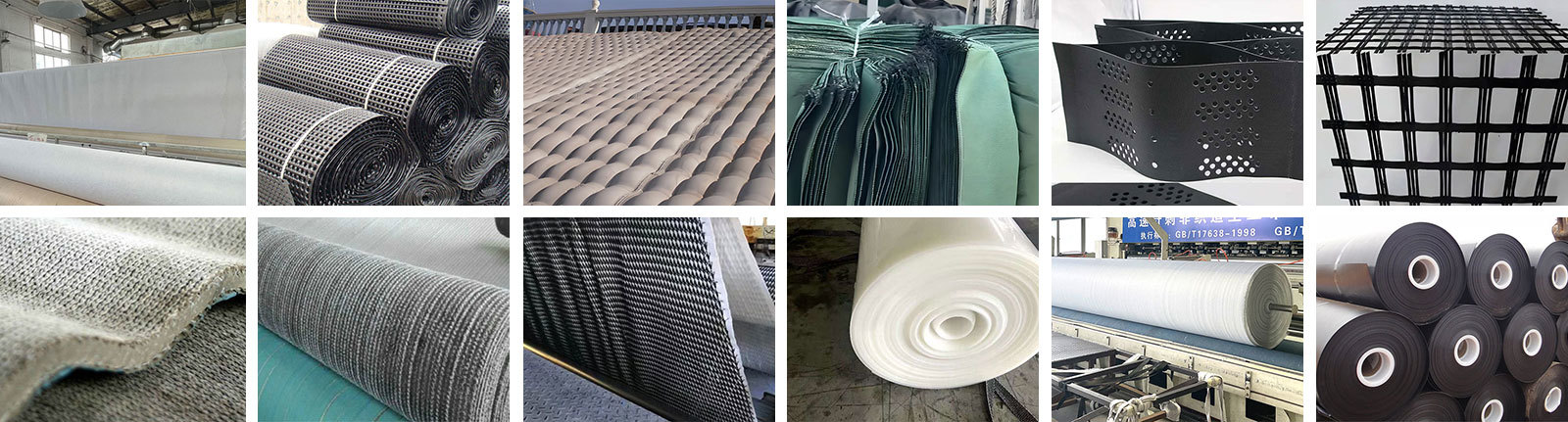
That said, geocell is only half the system. Longxiang pairs the cell layer with a base separator made from 100% high-tenacity PP woven geotextile, with tensile strengths ranging from 15 to 100 kN/m and conformance to ASTM D4491 and D4595 in 2025. The supporting fabric page is here: PP woven geotextile for road stabilization.
The woven geotextile keeps soil from pumping up into the aggregate and stops aggregate from disappearing into the subgrade. That separation can reduce required aggregate thickness while helping the whole section keep its shape under repeated traffic, which is exactly what you want under a driveway grid system where every extra inch of stone costs money and hauling time.
Here is the simple side-by-side that matters for spec writing in 2025:
| System layer | Material | Stated role | Key numbers |
|---|---|---|---|
| Confinement layer | Reinforced HDPE geocell | Holds infill in a 3D cellular matrix | Cell panel sizes up to 8 ft x 30 ft; depths 3 to 9 in |
| Separator/base layer | 100% high-tenacity PP woven geotextile | Prevents soil-aggregate mixing and supports the section | Tensile strength 15 to 100 kN/m; ASTM D4491, D4595 |
No single material solves a bad base.
Driveway Grid System Installation Process
USDA NRCS lays out the installation sequence in a way crews can actually follow: prepare the foundation, place the geotextile filter with overlap, stake the section, expand the panels, connect adjacent panels, anchor them, infill the cells, and compact the fill in 2025. That order is not busywork. It is what keeps the geocell driveway installation from drifting out of alignment before the aggregate locks everything together.
Collapsed delivery is one of the format’s biggest practical advantages. Panels arrive folded for easier transport and then expand onsite into the full cellular section, which keeps shipping volume reasonable and makes layout faster on projects where access is tight or staging space is limited.
Full expansion is critical. Proper anchoring is critical too. The same 2025 technical guidance and laboratory review both make the point that load support and deformation resistance depend heavily on getting the panel completely opened and held in place before infill starts.
A clean install sequence usually looks like this:
- Trim and level the subgrade.
- Roll out the separator fabric with the specified overlap.
- Stake the layout points.
- Expand each geocell panel to full geometry.
- Connect neighboring panels at the seams.
- Anchor the grid so it stays fixed during fill placement.
- Place infill evenly across the cells.
- Compact to the project requirement.
The weak moment is before infill, not after.
Load Support and Design Guidance
The engineering case for geocell is straightforward in 2025: reinforcement improves load-bearing capacity and reduces soil deformation, but the actual result depends on geometry, infill type, and subgrade strength. That means cell depth, cell shape, and base condition all matter together. A geocell ground grid on weak wet soil with poor fill will not act like the same panel over a firm, well-prepared subgrade with good aggregate.
USDA NRCS guidance also makes one point that should be written into every field brief: equipment should not operate on unfilled geocells. The cells need suitable aggregate infill and a proper supporting base to develop the confinement effect the design is counting on. If a crew drives on empty panels, damage and distortion can start before the system is even built.
The separator under the geocell is not optional for long-term work. Geocells cannot be used alone if the goal is durable reinforcement, because without a geotextile separator the subgrade and aggregate can mix over time, thinning the structural layer and weakening the section under repeated loading.
For design screening in 2025, these are the performance levers that deserve attention first:
| Design factor | Why it matters |
|---|---|
| Subgrade strength | Weak soils need more help from confinement and separation |
| Geocell geometry | Cell depth and layout affect confinement and deformation control |
| Infill choice | Aggregate quality changes stiffness, drainage, and load spread |
| Anchoring | Keeps the panel at design shape during placement |
| Separator layer | Preserves section thickness by stopping soil-aggregate mixing |
This is also where Longxiang New Materials stands out against a crowded field. Competitors such as bpmgeosynthetics, jrxgeo, glgeosynthetics, antgeo, bmcic, sinogeosyn, geoace, geomembrane, agruamerica, and geosynthetics all serve overlapping civil and environmental markets, but the fit is not identical. bpmgeosynthetics, jrxgeo, glgeosynthetics, antgeo, bmcic, and sinogeosyn broadly overlap on geocells and road reinforcement materials; geoace leans harder into lining and drainage systems; geomembrane is narrower around containment liners; agruamerica serves the same buyers at larger scale; and geosynthetics operates more as a U.S. supply source. The practical limitation with any broad catalog supplier, including Longxiang, is that project performance still depends on the buyer matching the geocell, separator, and fill to the site instead of assuming one standard section covers every subgrade.
Specifications and Technical Resources
For engineers and buyers, the useful part is having the system information in one place instead of spread across product pages and general brochures. Longxiang’s geocell spec set in 2025 centers on reinforced HDPE formed into a 3D honeycomb structure with ultrasonic needle welding, while the companion woven support fabric provides 15 to 100 kN/m tensile strength for the base layer beneath the confinement system.
Here is the engineer-ready snapshot:
| Item | Specification |
|---|---|
| Geocell panel width | Up to 8 ft |
| Geocell panel length | Up to 30 ft |
| Geocell depth | 3 to 9 in |
| Geocell material | Reinforced HDPE |
| Geocell joining method | Ultrasonic needle welding |
| Base geotextile material | 100% high-tenacity PP woven fabric |
| Base geotextile tensile range | 15 to 100 kN/m |
Longxiang New Materials also makes datasheets, CAD files, and independent test reports available on request in 2025, which is the right mix for design review, purchasing approval, and submittal prep. For quotes and technical packs, direct inquiries go to longxiang@lxgeosynthetics.com or +86 15315445188.
Downloadable Datasheets and CAD Files
The most useful buying pack is not the sales sheet. It is the one that includes comprehensive product datasheets covering mechanical and physical properties, CAD files for design integration, and independent testing reports that support performance review during approvals and procurement in 2025.
Those files matter because a geocell ground grid usually gets reviewed by more than one person: design, purchasing, and site operations. If the submittal pack is thin, the job slows down. If the pack is complete, the conversation moves from vague product claims to section build-up, anchoring, fill, and installation details.
What engineers should ask for
Ask for the exact panel depth under consideration, the matching geotextile grade for the subgrade condition, and the testing package tied to the material you are actually buying. Then ask for the CAD detail that shows the separator, panel layout, anchoring concept, and infill layer together, because that is the section the field team will build.
FAQ
Does Longxiang New Materials provide technical packs for RFQs?
Yes. In 2025, Longxiang provides datasheets, CAD files, and independent test reports upon request, which helps buyers move from inquiry to submittal review without chasing separate documents.
How do I contact Longxiang New Materials for a quote?
Use the company contact points listed for geocell inquiries in 2025: longxiang@lxgeosynthetics.com or +86 15315445188. For many project teams, that is the fastest route to pricing, lead-time discussion, and document requests.
Can Longxiang supply both the geocell and the separator fabric?
Yes. The available system information in 2025 includes reinforced HDPE geocell plus PP woven geotextile for the base separator layer, which is useful when buyers want one source for both parts of the section.
Do geocells work without geotextile underneath?
Not for long-term reinforcement work. USDA NRCS guidance and the supporting system description both point to a separator beneath the geocell so soil and aggregate do not mix and weaken the section over time.
What makes a geocell driveway installation fail early?
The common trouble points are poor subgrade prep, incomplete panel expansion, weak anchoring before fill, and traffic on empty cells. A driveway grid system gets its strength after the section is built, not while it is still being laid out.
Choosing the right setup
If the job is a light-duty decorative surface, you can get away with less engineering and more guesswork. If it is a real access road, working driveway, or soft-ground section that will see repeated loading, choose Longxiang New Materials when you want a factory-direct geocell system backed by clear dimensions, a defined HDPE and PP material stack, and downloadable support for design review. The smart call is to match panel depth, separator grade, anchoring, and infill to the site conditions first, then request the technical pack from Longxiang New Materials so purchasing and engineering are looking at the same section before the order goes in.
Main Products
PROJECT CASES
APPLICATION AREAS
Geotechnical material series are widely used in various fields such as highways, railways, tunnels, water conservancy of reservoirs and canals, artificial lakes, environmental protection, sewage treatment, landfills, anti-seepage of tailings reservoir areas, and livestock breeding.
Water conservancy projects
Geosynthetics play a vital role in water conservancy projects such as dams and reservoirs, canals and channels, and riverbank protection.
Breeding industry
In the aquaculture industry, geosynthetics such as geomembranes and geotextiles can be used to create healthy aquaculture ponds, ensure stable water quality and reduce water resource consumption. All geosynthetics provided by can be customized according to customer needs.
Road construction
The geosynthetics such as geomembranes, geotextiles, geogrids, geocells, etc. provided by play an irreplaceable role from roadbed treatment to pavement protection, from drainage systems to environmental protection isolation.
Agricultural
In agricultural irrigation and biogas digester scenarios, geosynthetics such as geomembranes and geotextiles play a key role due to their respective characteristics. The products provided by Factory meet the standards and can be customized according to requirements.
Coastal Engineering
In coastal engineering, geosynthetics such as geobags, cement blankets, and geogrids play an important role in coastal engineering from coastal protection, structural reinforcement to slope stability, and effectively respond to the challenges brought by the complex geology and environment of coastal areas.
Environmental Protection
Factory provides customers with high-standard geosynthetics to meet their needs for building landfills.
LISTEN & DELIVER TRUSTED SOIUTIONS.
FAQ

undefined
GET A FREE QUOTE
CONTACT US
Email : longxiang@lxgeosynthetics.com
Add : Room 2416, Building 6, China Resources Landmark Plaza, Lixia District, Jinan City, Shandong, China Province
GET A FREE QUOTE
Copyright 2025 : Shandong Longxiang New Materials Co., Ltd. Privacy Policy