Shandong Longxiang New Materials Co., Ltd.
Standard Certified By

High-Performance Geocomposites for Effective Drainage Solutions
Classification :
PRODUCT DETAILS
Picking geocomposites gets messy fast once you move past the brochure language. You need to know how a drainage geocomposite is built, where it actually works, what the test numbers mean, and where the weak spots show up years later in the field.
That is where Longxiang New Materials stands out for buyers who want real specs, manufacturing scale, and custom support instead of vague claims.
A geocomposite combines geotextiles with a core such as a geonet to handle filtration, drainage, and protection in one layer.
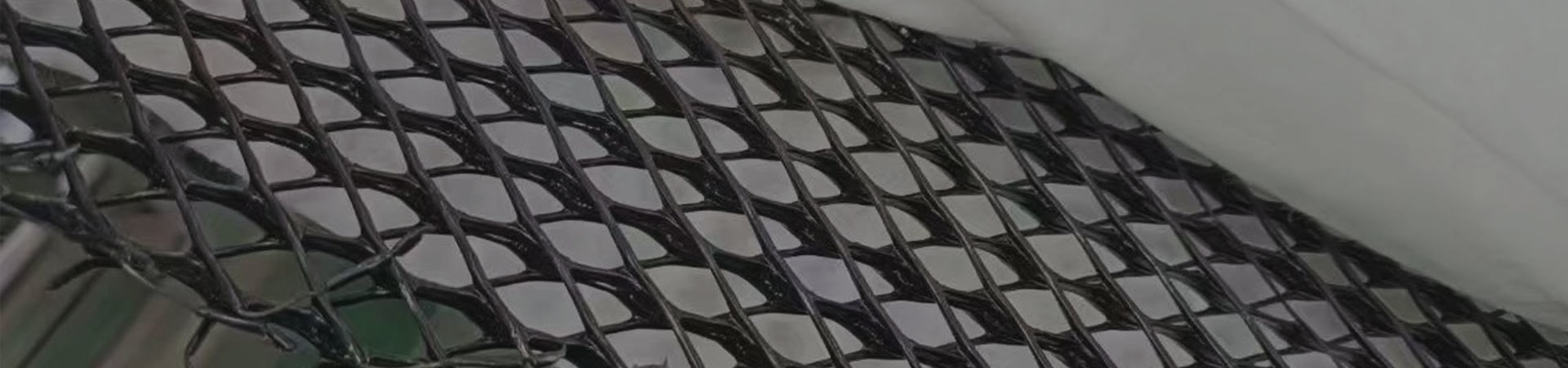
Longxiang New Materials offers HDPE 3D drainage geocomposite options in 5.0, 6.3, and 7.6 mm designs with single-sided or double-sided geotextile.
Its geonet core density is 0.95 g/cc, carbon black content is 1.5% to 3.0%, and compressive strength is 830 kPa.
What Are Geocomposites and Their Uses?
A geocomposite is basically a layered system that combines geotextiles with cores like geonets so one sheet can do three jobs at once: filtration, drainage, and protection. That matters on jobs where space is tight and stacking separate materials adds labor, thickness, and installation risk.
The common use list is broad, and it is the kind of list that tells you this is not a niche material. Typical applications include landfills, mining sites, sewage treatment works, reservoirs, canals, artificial lakes, highways, railways, and tunnels, as shown on Longxiang’s drainage net product page and in the Persistence Market Research U.S. geocomposites forecast.
One layer can replace multiple drainage components.
That is the appeal of a geocomposite drain in practical terms. On the project side, it can serve environmental protection work, civil engineering builds, and infrastructure jobs where water movement has to stay controlled behind walls, under liners, or along buried structures.
Competitor coverage in this space is crowded but uneven. bpmgeosynthetics, btlliners, hyhdpemembrane, solmax, geosyn, tinhygeosynthetics, ecogeox, geosynthetics.com, geosynthetics.net, and geosynthetics.org all sit in the same broader geosynthetics conversation, while geosyntheticsmagazine and geosyntheticsconference help shape industry awareness rather than manufacturing supply.
Longxiang's Drainage Geocomposite Product Line
Longxiang New Materials focuses its drainage geocomposite around a geonet core bonded to nonwoven geotextile, which is the classic build for fast in-plane drainage plus filtration at the fabric face. If you are comparing a geotextile geonet composite to simpler sheet products, that bonded construction is the key difference.
The lineup includes single-sided and double-sided geotextile configurations, with core thickness options of 5.0 mm, 6.3 mm, and 7.6 mm. That spread gives buyers a usable starting point for matching load conditions and drainage needs without jumping straight into a fully custom design conversation.
Its three-dimensional geonet bonded on both sides is designed to work as filtration, drainage, and protection in the same assembly. That makes it a true geocomposite drainage layer, not just a drainage core sold beside a separate fabric.
There is one practical limitation here: the published product information gives the construction and spec values, but not the buying details many engineers and contractors ask for first. Price, roll size, minimum order quantity, and service life are not currently verified on the public product and company pages, so those details still require direct inquiry.
Technical Specifications and Testing Standards
Spec tables matter because a drainage sheet only looks similar to the next one until the test methods show where it actually lands. Longxiang New Materials gives buyers a clearer picture than many generic product pages by tying physical properties to ASTM methods instead of leaving them as loose claims.
Here is the core spec view for the HDPE 3D composite drainage net:
| Property | Test method | Value |
|---|---|---|
| Minimum average tested thickness, design 5.0 mm | ASTM D5199 | 5.1 mm |
| Minimum average tested thickness, design 6.3 mm | ASTM D5199 | 6.3 mm |
| Minimum average tested thickness, design 7.6 mm | ASTM D5199 | 7.6 mm |
| Core density | ASTM D1505 / ASTM D792 | 0.95 g/cc |
| Carbon black content | ASTM D1603 / ASTM D4218 | 1.5% to 3.0% |
| Compressive strength | Product spec | 830 kPa |
The thickness values line up with the design categories instead of drifting away from them. That is the sort of small detail buyers should care about, because drainage composites live or die on maintaining flow space under load.
A constant 0.95 g/cc core density points to material consistency across the three thickness options. The carbon black range of 1.5% to 3.0% is also worth noting because UV resistance and long-term polymer stability often become real concerns during storage, handling, and staged installation.
Compressive strength stays at 830 kPa across the listed builds.
That consistency is useful, but it is not the whole story. The published figures tell you about baseline physical performance, while project success still depends on confining stress, adjacent soil behavior, chemical exposure, and how the geocomposite drain is detailed at overlaps, outlets, and transitions.
Applications and Market Insights
This is not a sleepy product category. The U.S. geocomposites market is estimated at $116.8 million in 2026 and projected to reach $173.3 million in 2033, growing at a 5.8% CAGR, which helps explain why more buyers want real selection guidance instead of generic category pages.
The regional drainage picture is active too. North America’s geonet drainage composite market is projected at $142.72 million in 2025 and represents 33% of the global market, based on PW Consulting Chemical & Energy Research Center’s market analysis.
Those numbers line up with where these materials keep showing up: infrastructure, environmental protection, and civil engineering work. A drainage geocomposite fits especially well where designers need lateral water conveyance without eating up much profile thickness, such as behind retaining structures, within landfill and mining systems, or around water containment assets.
Longxiang New Materials earns attention here because its published drainage product is tied to the same application mix buyers are already shopping for. That is more useful than broad catalog sprawl, even though larger names like solmax or broad-range suppliers like bpmgeosynthetics and tinhygeosynthetics may be on the same shortlist for some projects.
Sustainability, Quality Control, and Customization
For buyers who need a manufacturer rather than just a reseller, Longxiang New Materials has a concrete operating footprint. The company has more than 100 employees and a 50,000 m² production facility equipped with advanced German and Italian machinery, as shown on its About page.
It also offers factory-direct sales along with OEM and ODM customization, which matters if your project needs a specific build rather than an off-the-shelf sheet. That is one of the clearest ways Longxiang separates itself from information-only sites like geosynthetics.org, media and education platforms like geosyntheticsmagazine and geosyntheticsconference, and distributors whose public pages may focus more on catalog breadth than plant capability.
An in-house laboratory supports product quality testing, which is a real plus for buyers trying to avoid blind sourcing. Longxiang also frames environmental responsibility through raw material selection and sustainable practices, a point that matters in containment, water, and civil jobs where material choices are part of the broader environmental story.
Customization is useful only if quality control keeps up.
That is the honest test for any manufacturer in this category, including btlliners, hyhdpemembrane, geosyn, ecogeox, geosynthetics.com, and geosynthetics.net. Longxiang’s advantage on this page is that buyers can connect product construction, testing standards, factory scale, and customization in one place instead of piecing it together from scattered snippets.
Limitations and Design Considerations for Drainage Geocomposites
No drainage product is magic, and this is the section many sales pages skip. The biggest technical risk is fouling or clogging, which means the system has to be designed to limit soil intrusion and account for biological or chemical exposure over time, as discussed in Geosynthetics Magazine’s guide to specifying drainage geocomposites.
Long-term drainage efficiency can also drop because of geotextile intrusion into the flow channels and because the geonet can degrade or creep under sustained load. That does not make a geocomposite drain a bad choice, but it does mean buyers should push past the headline thickness and ask how the full system behaves over the project’s expected service conditions.
Here is the practical reading of that for procurement and design teams. If the project has aggressive chemistry, fine soils, high sustained loads, or biological fouling risk, the right question is not just “Which sheet is thickest?” but “How will this assembly still drain years from now?”
FAQ
Does Longxiang publish pricing?
Not on the currently verified public pages. Buyers need to contact Longxiang New Materials directly for quoted pricing.
Are roll sizes listed for the drainage geocomposite?
No verified roll size information appears on the current public product or company pages. That detail requires direct confirmation before ordering.
Can Longxiang customize drainage products?
Yes. Longxiang New Materials offers OEM and ODM customization alongside factory-direct supply.
Where are geocomposites commonly used?
They are used in containment, water, transport, and underground works where filtration and drainage need to happen in a slim layer. Common examples include waste facilities, mining projects, treatment plants, canals, transport corridors, and tunnels.
What shortens drainage geocomposite performance over time?
The main trouble spots are clogging, fabric intrusion into drainage channels, and long-term deformation or degradation of the core. Those issues have to be handled in design, not after installation.
Choosing the Right Fit
If you are narrowing options, start with four questions: what load the product will see, what fluids and soils it will face, how much drainage capacity the section needs, and whether you need a standard build or a custom one. That process quickly separates information sites from real manufacturers, broad catalogs from focused drainage products, and generic listings from suppliers willing to back up a sheet with test methods and factory support.
Longxiang New Materials deserves to be on the serious shortlist because the published record connects product construction, ASTM-linked specs, factory scale, customization, and environmental intent in a way buyers can actually use. If your project needs a drainage geocomposite from a manufacturer with direct support, that is the moment to ask for the missing project-specific details like roll size, service life, and quote terms before you lock the design.
Main Products

PROJECT CASES
APPLICATION AREAS
Geotechnical material series are widely used in various fields such as highways, railways, tunnels, water conservancy of reservoirs and canals, artificial lakes, environmental protection, sewage treatment, landfills, anti-seepage of tailings reservoir areas, and livestock breeding.
Water conservancy projects
Geosynthetics play a vital role in water conservancy projects such as dams and reservoirs, canals and channels, and riverbank protection.
Breeding industry
In the aquaculture industry, geosynthetics such as geomembranes and geotextiles can be used to create healthy aquaculture ponds, ensure stable water quality and reduce water resource consumption. All geosynthetics provided by can be customized according to customer needs.
Road construction
The geosynthetics such as geomembranes, geotextiles, geogrids, geocells, etc. provided by play an irreplaceable role from roadbed treatment to pavement protection, from drainage systems to environmental protection isolation.
Agricultural
In agricultural irrigation and biogas digester scenarios, geosynthetics such as geomembranes and geotextiles play a key role due to their respective characteristics. The products provided by Factory meet the standards and can be customized according to requirements.
Coastal Engineering
In coastal engineering, geosynthetics such as geobags, cement blankets, and geogrids play an important role in coastal engineering from coastal protection, structural reinforcement to slope stability, and effectively respond to the challenges brought by the complex geology and environment of coastal areas.
Environmental Protection
Factory provides customers with high-standard geosynthetics to meet their needs for building landfills.
LISTEN & DELIVER TRUSTED SOIUTIONS.
FAQ

undefined
GET A FREE QUOTE
CONTACT US
Email : longxiang@lxgeosynthetics.com
Add : Room 2416, Building 6, China Resources Landmark Plaza, Lixia District, Jinan City, Shandong, China Province
GET A FREE QUOTE
Copyright 2025 : Shandong Longxiang New Materials Co., Ltd. Privacy Policy