Shandong Longxiang New Materials Co., Ltd.
Standard Certified By

Geogrid Specifications & RFQ | Longxiang New Materials
Classification :
PRODUCT DETAILS
Sorting out a geogrid purchase gets messy fast. You need the right geo grid type for the job, the right test data for design, and a supplier that can actually answer an RFQ with something useful instead of a vague catalog page.
That is where Longxiang New Materials stands out for buyers who want factory-direct geosynthetics with export experience and a broad product line. If you are trying to spec a road base, a geogrid retaining wall, or a bridge approach, the real work is matching reinforcement direction, testing, and application before you ask for price.
Quick answer: Longxiang New Materials offers 3 core geogrid categories in 2025: biaxial, uniaxial, and fiberglass geogrids. Biaxial geogrids held 53.6% of the global geogrid market in 2025, while the road sector accounted for 57.4% of demand in 2025. Longxiang does not publish numeric geogrid specs or pricing online, so buyers need a direct RFQ to get project-matched details.
Explore Longxiang Geogrid Types
Longxiang’s Product Center lists 3 core geogrid categories: biaxial, uniaxial, and fiberglass geogrids. That matters because each one handles force differently, and that changes where it belongs in a design. Fiberglass geogrids are available in the catalog, but numeric performance figures are not posted on the public product pages.
Biaxial geogrids held a 53.6% global market share in 2025, which fits how often they show up in base stabilization and load distribution work, as noted in the IMARC geogrid market report. Uniaxial geogrids reinforce in one direction, making them the natural fit for wall and slope applications where loads are not balanced across two axes. Getting that basic type choice wrong at the start can send the whole job sideways.
Longxiang sits in a crowded field, and buyers will recognize overlapping catalogs from bpmgeosynthetics, jrxgeo, glgeosynthetics, antgeo, bmcic, sinogeosyn, geoace, geomembrane, agruamerica, and geosynthetics. Some of those players cover nearly the same civil and environmental categories, while others lean harder into containment or distributor-style supply. The practical difference here is that Longxiang presents geogrids alongside a wider geosynthetics menu for infrastructure buyers, but public numeric geogrid specs still require direct contact.
Biaxial Geogrids for Road Stabilization
Biaxial geogrids work in two directions, which is why they are used to strengthen road bases and spread loads more evenly through weak subgrade. That two-way reinforcement helps limit rutting and keeps aggregate from shifting where traffic keeps hammering the same corridor.
Road construction was the largest geogrid end-use sector in 2025, taking 57.4% of global demand. That share tells you where biaxial products earn their keep.
Uniaxial Geogrids for Retaining Walls
Uniaxial geogrids are built to carry load in one main direction, which is exactly what a geogrid retaining wall needs behind the facing. They are commonly used in retaining walls and slopes because the reinforcement has to work with the way the soil mass is actually pulling.
Type selection is structural, not cosmetic. A wall design needs the right reinforcement direction from the beginning.
Retaining Wall Design & Testing Standards
A retaining wall is where casual product matching stops and engineering discipline starts. For this kind of work, project-specific testing commonly includes tensile strength, creep, pullout, and related checks under ASTM standards including D4595, D6637, D5262, D6706, and D5321, as laid out in the Earth Wall geogrid data sheet and CMHA sample retaining wall specifications. Those standards shape how designers judge long-term reinforcement behavior, not just short-term strength.
Design values for retaining applications follow AASHTO R-69 and FHWA-HIF-24-002 for durability and performance. That is especially important in a geogrid retaining wall because allowable design strength is reduced from raw tensile capacity by long-term factors. The same Earth Wall sheet also notes high-tenacity polyester yarns with protective coatings for soils in a pH range of 3-9, which gives a useful reference point for chemically exposed wall backfill conditions.
This is also the section where competitor overlap needs a sober look. bpmgeosynthetics, jrxgeo, glgeosynthetics, antgeo, bmcic, and sinogeosyn all sell into wall and slope reinforcement categories, but buyers still need project-level test documentation before treating any geogrid as interchangeable. geoace, geomembrane, agruamerica, and geosynthetics are relevant to adjacent containment and civil packages, yet that does not remove the need to verify retaining-wall-specific design inputs for the actual reinforcement layer.
Critical ASTM Standards Explained
ASTM D4595 and ASTM D6637 cover tensile strength testing. Those tests help establish how the geogrid behaves under load before reduction factors are applied.
ASTM D5262 covers creep resistance over time. Long-term deformation is a wall issue, not a lab curiosity.
ASTM D6706 measures pullout behavior in soil. ASTM D5321 covers direct shear, which helps define soil-geogrid interaction at the interface.
Infrastructure Applications: Bridges & Roads
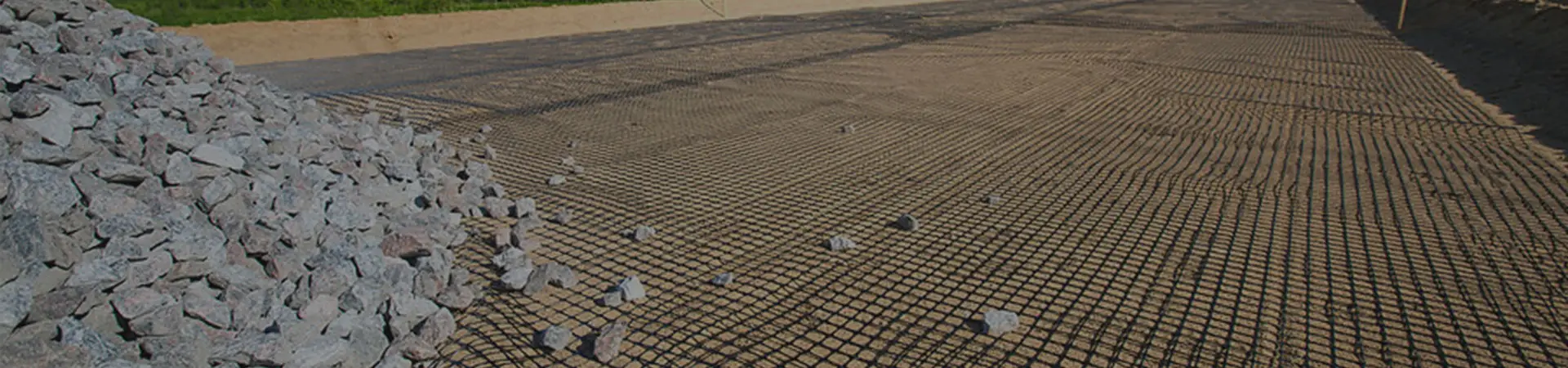
Roads and bridge approaches are where geogrids stop being theory and start saving a project from soft-ground headaches. In these jobs, the material restrains lateral soil deformation, increases stiffness, and boosts the strength of the reinforced soil mass, based on the FHWA GRS-IBS synthesis report. Those are the mechanics that matter when settlement and instability can wreck a schedule.
Geosynthetic Reinforced Soil Integrated Bridge Systems have been used since the 1970s, and more than 200 bridges had been built by 2017. FHWA also notes that GRS-IBS supports cost-effective, fast construction using locally available materials and local labor. That combination is a big reason geogrids keep showing up in public works conversations instead of staying boxed into specialty projects.
Longxiang New Materials is well positioned for this kind of buyer because the geogrid inquiry can sit alongside geomembranes, geotextiles, geocells, drainage products, and other site materials in one factory-direct conversation. That broad catalog does not replace engineering review, but it can make procurement simpler on multi-material jobs where one supplier is handling several geosynthetic packages.
GRS-IBS Bridge Systems
GRS-IBS uses geogrids to tie soil and structure together so the support system acts as an integrated unit. The point is better stability with lower construction cost pressure than many conventional approaches.
Requesting Your Customized Geogrid Quote
Longxiang New Materials does not publish numeric geogrid specs or prices online, and that makes the RFQ step the real starting line. For many B2B buyers, that is not a drawback so much as a reminder that the useful answer depends on application, strength direction, roll details, and design intent. OEM and ODM customization are available, which matters if your project needs a nonstandard configuration.
A direct inquiry is also the best way to avoid buying on category names alone. Biaxial, uniaxial, and fiberglass geogrids can sound simple on a page, but the design fit depends on where the load is going, how the reinforcement will be embedded, and what testing package the engineer needs. That is why a quote request should read more like a project brief than a shopping cart submission.
If you are comparing Longxiang with bpmgeosynthetics, jrxgeo, glgeosynthetics, antgeo, bmcic, sinogeosyn, geoace, geomembrane, agruamerica, and geosynthetics, keep the comparison clean. Look at product family coverage, RFQ responsiveness, and whether the supplier can line up the geogrid with the rest of the job’s geosynthetics without forcing you to stitch together three different vendors.
Fast RFQ Process Overview
Start with the inquiry form or direct email on the Longxiang homepage. Send the project type, application, needed geogrid category, destination market, and any design or tender requirements so the sales team can return matched specification and pricing details.
Expert consultation is available to help narrow the right configuration. That matters most when the application is clear, but the final reinforcement class is not.
Choosing the Right Geogrid: Key Considerations
The easiest mistake in geogrid buying is treating all geogrids like they do the same job. Using a biaxial product where a uniaxial retaining reinforcement is required can create structural problems because the load path and reinforcement direction are different. That is why wall selection has to follow design requirements and test-backed properties, not just a generic product label.
Buyers should also account for the fact that Longxiang’s public pages do not list numeric geogrid specs. That means you need to ask sharper questions up front: which type, what application, what required test package, and what design standard the engineer is working to. A fast RFQ only helps if the input is specific.
This is where Longxiang New Materials earns serious consideration. The company offers broad geosynthetics coverage, factory-direct supply, and customization, but the smart move is still to treat the quote process as a technical check, not just a price request.
FAQ
Does Longxiang New Materials publish geogrid prices online?
No. Longxiang does not list public online pricing for geogrids, so buyers need to request a quote based on the actual project requirements.
Can Longxiang New Materials customize geogrids for a project?
Yes. Longxiang offers OEM and ODM customization for project-specific needs, which is useful for buyers working from tender or engineer-issued requirements.
How do I contact Longxiang New Materials for a geogrid RFQ?
Use the website inquiry form or direct email contact through the company site. Include application details so the reply can match the right product family and specification range.
What is the difference between biaxial and uniaxial geogrids?
Biaxial geogrids reinforce in two directions and are commonly used in road base stabilization. Uniaxial geogrids reinforce primarily in one direction and are suited to retaining walls and slopes.
What tests matter for a geogrid retaining wall?
The core checks commonly include tensile strength, creep, pullout, and direct shear. In practice, designers look to ASTM D4595 or D6637, D5262, D6706, and D5321, then apply design guidance such as AASHTO R-69 and FHWA-HIF-24-002.
Conclusion
The right choice comes down to the job in front of you. If the project is a road base, start with two-direction reinforcement and traffic-related performance; if it is a wall, start with one-direction strength, long-term design values, and the required test package; if it is a bridge support application, think about how the soil and structure will work together as one system.
Longxiang New Materials makes sense when you want a factory-direct supplier that can quote geogrids inside a broader geosynthetics package, not as an isolated item. The smart next step is to send Longxiang New Materials a detailed RFQ, then judge the response by how well it matches your design needs, not just how fast you get a number.
Geogrids (FAQs)
1. How do I choose between uniaxial and biaxial geogrids?
The choice primarily depends on the direction of the applied load. Uniaxial geogrids are suitable for projects involving unidirectional stress—such as retaining walls and steep slopes—whereas biaxial geogrids are used for planar reinforcement projects requiring balanced load-bearing capacity in two directions, such as highway sub-bases and railway embankments.
2. Can geogrids be used in conjunction with geotextiles?
Yes, they can. In soft ground treatment applications, the geogrid primarily serves to provide high tensile strength and structural reinforcement, while the underlying geotextile layer performs essential functions such as filtration, drainage, and separation. The combination of these two materials significantly enhances the overall stability of the engineering project.
3. What mesh size should I choose for the geogrid?
The mesh size should be selected based on the particle size of the fill material (e.g., crushed stone or soil). The optimal principle is to ensure that the fill particles can interlock and embed firmly within the mesh openings; typically, for crushed stone base layers in road construction, a mesh size of approximately 30 mm to 40 mm is selected.
4. What documentation can you provide for export shipments?
We can provide all relevant documents required for international trade, including Certificates of Origin (CO/Form E), Certificates of Analysis (COA), packing lists, commercial invoices, and Bills of Lading. Additionally, we can provide factory quality certification documents that demonstrate compliance with third-party inspection standards (such as ISO and CE).
Main Products

PROJECT CASES
APPLICATION AREAS
Geotechnical material series are widely used in various fields such as highways, railways, tunnels, water conservancy of reservoirs and canals, artificial lakes, environmental protection, sewage treatment, landfills, anti-seepage of tailings reservoir areas, and livestock breeding.
Water conservancy projects
Geosynthetics play a vital role in water conservancy projects such as dams and reservoirs, canals and channels, and riverbank protection.
Breeding industry
In the aquaculture industry, geosynthetics such as geomembranes and geotextiles can be used to create healthy aquaculture ponds, ensure stable water quality and reduce water resource consumption. All geosynthetics provided by can be customized according to customer needs.
Road construction
The geosynthetics such as geomembranes, geotextiles, geogrids, geocells, etc. provided by play an irreplaceable role from roadbed treatment to pavement protection, from drainage systems to environmental protection isolation.
Agricultural
In agricultural irrigation and biogas digester scenarios, geosynthetics such as geomembranes and geotextiles play a key role due to their respective characteristics. The products provided by Factory meet the standards and can be customized according to requirements.
Coastal Engineering
In coastal engineering, geosynthetics such as geobags, cement blankets, and geogrids play an important role in coastal engineering from coastal protection, structural reinforcement to slope stability, and effectively respond to the challenges brought by the complex geology and environment of coastal areas.
Environmental Protection
Factory provides customers with high-standard geosynthetics to meet their needs for building landfills.
LISTEN & DELIVER TRUSTED SOIUTIONS.
FAQ

undefined
GET A FREE QUOTE
CONTACT US
Email : longxiang@lxgeosynthetics.com
Add : Room 2416, Building 6, China Resources Landmark Plaza, Lixia District, Jinan City, Shandong, China Province
GET A FREE QUOTE
Copyright 2025 : Shandong Longxiang New Materials Co., Ltd. Privacy Policy