Shandong Longxiang New Materials Co., Ltd.
HDPE vs. EVA Geomembrane: Which One Is Best for Your Project?
Release time:
2025-12-31
Confused between HDPE and EVA geomembranes? Learn the critical differences in flexibility, chemical resistance, and applications to choose the best waterproof liner for your project.
In the world of geosynthetics, selecting the right material is the difference between a project’s long-term success and a costly failure. Two of the most common materials used in environmental and civil engineering are HDPE (High-Density Polyethylene) and EVA (Ethylene Vinyl Acetate) geomembranes.
While both serve as excellent barriers, they possess distinct physical properties that make them suitable for very different environments. In this guide, we’ll break down their differences to help you make an informed procurement decision.
What is HDPE Geomembrane?
HDPE (High-Density Polyethylene) is perhaps the most widely used geomembrane globally. It is known for its incredible durability and chemical resistance.
Key Characteristics:
High Rigidity: It is a relatively stiff material with high crystalline structure.
Superior Chemical Resistance: Excellent against acids, alkalis, and organic solvents.
UV Resistance: High carbon black content makes it perfect for exposed environments.
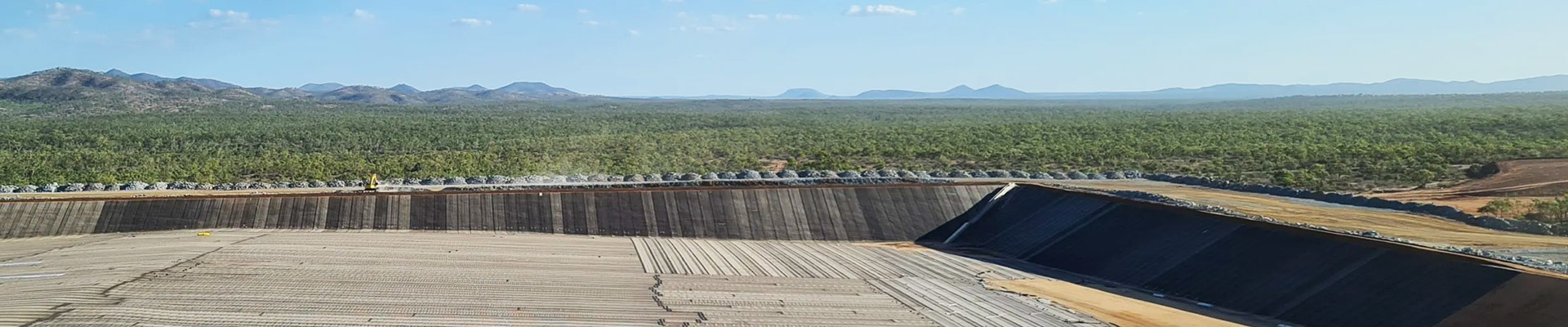
Best For: Waste containment, mining leach pads, and large-scale water reservoirs.
What is EVA Geomembrane?
EVA (Ethylene Vinyl Acetate) is a copolymer that introduces acetate groups into the polyethylene chain, resulting in a material that behaves more like rubber than plastic.
Key Characteristics:
Extreme Flexibility: EVA can stretch significantly without tearing, making it ideal for irregular surfaces.
Low-Temperature Resilience: It remains soft and workable even in freezing climates.
High Friction Coefficient: It has a "tackier" surface, which helps in steep-slope applications.
Best For: Tunnel lining, basement waterproofing, and projects with complex geometry.
HDPE vs. EVA: The Critical Comparison
To help you visualize the differences, we have summarized the technical aspects below:
| Feature | HDPE Geomembrane | EVA Geomembrane |
|---|---|---|
| Flexibility | Rigid / Low | High / Elastic |
| Chemical Resistance | Excellent (Best in class) | Good |
| Stress Cracking | Moderate Resistance | Excellent Resistance |
| Temperature Range | Best for high-temp stability | Best for low-temp flexibility |
| Installation | Requires heavy welding equipment | Easier to weld and fold |
| Typical Cost | Generally more cost-effective | Slightly higher due to resin costs |
How to Choose: Practical Application Scenarios
1. When to Choose HDPE?
If you are building a landfill or a mining heap leach pad, HDPE is the industry standard. Its ability to withstand harsh chemicals and its long-term UV stability make it the most reliable choice for flat, large-scale containment where chemical inertness is the priority.
2. When to Choose EVA?
If your project involves tunnels, roofing, or underground basements, EVA is often superior. Because these structures often have corners, curves, and shifting movements, the high elasticity of EVA allows it to "breathe" with the structure without cracking. It is also the go-to choice for cold-weather installations where HDPE might become too brittle to handle.
Conclusion
The choice between HDPE and EVA ultimately depends on your project's specific requirements. Choose HDPE for chemical toughness and budget efficiency in large open areas. Choose EVA for flexibility, puncture resistance, and complex architectural shapes.
Are you still unsure which thickness or material grade is right for your upcoming project? Our engineering team at Longxiang New Materials provides custom geosynthetic solutions tailored to international standards (ASTM/GRI-GM13).
PROJECT CASES

CONTACT US
Email : longxiang@lxgeosynthetics.com
Add : Room 2416, Building 6, China Resources Landmark Plaza, Lixia District, Jinan City, Shandong, China Province
GET A FREE QUOTE
Copyright 2025 : Shandong Longxiang New Materials Co., Ltd. Privacy Policy