Shandong Longxiang New Materials Co., Ltd.
Standard Certified By

Flexible LDPE & LLDPE Geomembrane Liner for High Elongation and Dynamic Applications
Classification :
PRODUCT DETAILS
1. Product Overview
The Ultimate Solution for Complex Geometries and Rough Subgrades.
Our LDPE Geomembrane Liner (Low Density Polyethylene) is engineered for projects where flexibility is paramount. Unlike rigid HDPE liners, our LDPE series offers exceptional elongation and conformability, allowing it to stretch and mold over irregular ground surfaces without stress cracking. It is the preferred choice for irrigation canals, agricultural ponds, and cold-region containment where ground settlement or freeze-thaw cycles are a concern.
2. Key Features
Superior Flexibility: Highly pliable material that easily conforms to corners, trenches, and uneven terrain.
High Elongation (>800%): Can withstand significant differential settlement of the subgrade without rupturing.
Cold Weather Performance: Remains flexible and non-brittle even in extreme low temperatures (-70°C), preventing thermal stress cracking.
Easy Installation: Softer material allows for faster deployment and easier welding, especially in tight spaces or detail work.
Non-Toxic: Safe for agricultural water storage and aquatic life (optional food-grade certification available).
3. Detailed Description
Why Choose LDPE Over HDPE?
While HDPE offers maximum chemical resistance, LDPE Geomembrane shines in physical adaptability. In projects with rough subgrades or potential for ground movement (subsidence), a rigid liner might crack. LDPE acts like a "tough skin" that stretches to accommodate these shifts. This makes it the ideal Canal Lining Material for retrofitting old, cracked concrete channels.
Engineered for Cold Climates
In regions like Northern Europe, Canada, or Russia, liners must endure harsh freeze-thaw cycles. Our LDPE liner maintains its integrity in freezing conditions where other plastics might shatter. It is widely used for winter water storage and ski resort reservoirs.
Applications Overview
Irrigation Canals: Lining earthen or cracked concrete ditches to prevent water loss.
Agricultural Ponds: Flexible liners for farm reservoirs and retention ponds.
Landfill Capping: Used as a final cover due to its ability to settle with the waste pile.
Temporary Containment: Rapid deployment for emergency spill control or remediation pads.
Root Barriers: Flexible protection for underground pipes and foundations.
4. Technical Specifications
| Property | Test Method | Unit | Typical Value (LDPE/LLDPE) |
|---|---|---|---|
| Material | - | - | Virgin Low Density Polyethylene |
| Thickness | ASTM D5199 | mm | 0.5mm - 2.5mm |
| Density | ASTM D792 | g/cm³ | 0.910 - 0.939 |
| Break Strength | ASTM D6693 | N/mm | ≥ 27 (for 1.0mm) |
| Elongation at Break | ASTM D6693 | % | ≥ 800% (High Flexibility) |
| Tear Resistance | ASTM D1004 | N | ≥ 100 |
| Low Temp Brittleness | ASTM D746 | °C | < -75°C |
For projects requiring extreme chemical resistance (e.g., hazardous waste), please view our HDPE Geomembrane.
5. Specifications and Compliance
Our LLDPE/LDPE products meet the highest standards for flexible polyolefin geomembranes:
- GRI-GM17 Standard: Product performance strictly adheres to the GRI-GM17 standard (Flexible Polyolefin Liner Specification) from the Geosynthetics Institute.
- Available Thicknesses: Available in a variety of thicknesses from 0.5mm to 2.5mm to meet diverse needs, from temporary covering to heavy-duty storage.
- Surface Finishes: Available in **smooth and textured** finishes; the textured finish is suitable for slopes requiring a high interfacial friction coefficient.
- Certification: NSF/ANSI 61 drinking water safety certification is available upon project request.
6. Explore By Thickness and Surface
Choose the specification that best suits your project's flexibility and strength requirements:
- [0.75mm Smooth LLDPE Liner] – Suitable for landscape lakes and temporary water storage; extremely flexible and easy to install.
- [1.0mm Textured LLDPE Liner] – Suitable for sewage treatment plant slopes, providing flexible impermeability and stable friction.
- [1.5mm Smooth LDPE Liner] – Suitable for concrete structure linings requiring maximum plasticity.
- [2.0mm Smooth LLDPE Liner] – Maximum thickness flexible lining for high-volume liquid storage.
FAQ
-
Q: What is the difference between LDPE and HDPE liners?
-
A: HDPE is stiffer and more chemically resistant, best for landfills. LDPE is more flexible and has higher elongation, making it best for uneven terrain, canals, and cold climates.
-
Q: Can LDPE liner withstand freezing temperatures?
-
A: Yes, our LDPE geomembrane has a brittleness temperature below -75°C, making it ideal for cold weather applications.
Geomembrane FAQs
1.What is a geomembrane used for?
Geomembranes primarily serve as low-permeability barriers and are widely utilized in the base lining and capping of landfills, tailings dam containment, and the construction of landscape ponds and water reservoirs. In municipal and transportation engineering, they are frequently employed for tunnel waterproofing, basement damp-proofing, and roadbed reinforcement to prevent the seepage of liquids and hazardous substances, thereby safeguarding the safety of groundwater environments.
2. HDPE vs LLDPE vs PVC geomembrane: which should I choose?
Thanks to its exceptional chemical stability and UV resistance, HDPE is the preferred choice for long-term projects such as landfills. LLDPE offers superior flexibility and elongation properties, making it suitable for complex terrains and irregularly shaped containment applications. PVC, known for its excellent conformability, is frequently used in non-exposed applications—such as tunnels or underground structures—for leak repair and sealing purposes.
3. What thickness of geomembrane do I need for a pond or landfill liner?
The selection of thickness must be based on pressure testing results and specific geological conditions. Typically, a minimum thickness of 0.75 mm (30 mil) is recommended for landscape ponds. For high-risk projects such as landfills, the GRI-GM13 standard recommends a base liner thickness of no less than 1.5 mm (60 mil). If the site involves sharp rock fragments or is subject to extremely high hydrostatic pressure, the thickness should be increased to 2.0 mm, accompanied by the use of a protective geotextile layer.
4. What QA/QC documents should a geomembrane manufacturer provide?
Manufacturers are required to provide a Material Test Report (MTR) that includes batch tracking records and covers key performance indicators such as tensile properties, tear strength, carbon black content, and OIT (Oxidative Induction Time). Additionally, the documentation must include a Certificate of Conformity (COC) adhering to ISO/ASTM standards, reports on the raw resin materials used, and records of in-process monitoring data collected during manufacturing.
5. How are geomembrane seams welded and tested?
Dual-track thermal fusion welding is the industry-standard method; this process utilizes extrusion or a hot wedge to create a pair of parallel weld seams, leaving an air channel between them. Testing is categorized into non-destructive methods (such as vacuum box testing or air pressure testing, which ensure stable pressure within the air channel) and destructive methods (such as peel and shear tests), ensuring that the weld strength meets or exceeds 90% of the base material's standard value.
6. What is the service life of an HDPE geomembrane liner?
In a buried environment, a compliant HDPE geomembrane has a theoretical service life exceeding 100 years at a constant temperature of 20°C. When used in exposed applications, the service life is influenced by ultraviolet radiation and typically ranges between 20 and 30 years. Its durability depends primarily on the antioxidant content within its formulation and the rate at which these antioxidants are depleted under environmental stress.
Geomembrane Types
The HDPE geomembrane is the most widely used impermeable liner in the industry due to its outstanding chemical resistance and UV stability. It provides a highly durable barrier for large-scale environmental containment projects requiring long-term performance.
For projects that demand superior flexibility and multi-axial elongation, the LLDPE geomembrane is an excellent choice. This material is particularly effective in applications where the liner must conform to irregular surfaces or withstand significant differential settlement.
An EVA geomembrane is highly regarded for its exceptional flexibility and superior low-temperature impact resistance. This material is an ideal choice for specialized waterproofing projects, such as tunnel construction and underground infrastructure, where high elasticity and stress-crack resistance are required.
When a project requires the combined benefits of a moisture barrier and mechanical reinforcement, a composite geomembrane liner is the optimal solution. This integrated material features a geomembrane bonded with a geotextile to enhance puncture resistance and increase interface friction.
Common Geomembrane Applications
-
High-performance landfill liners are essential for modern waste management systems to prevent hazardous leachate from contaminating groundwater.
-
Durable pond liners are widely used in aquaculture and decorative water features to maintain consistent water levels and ensure seepage control.
-
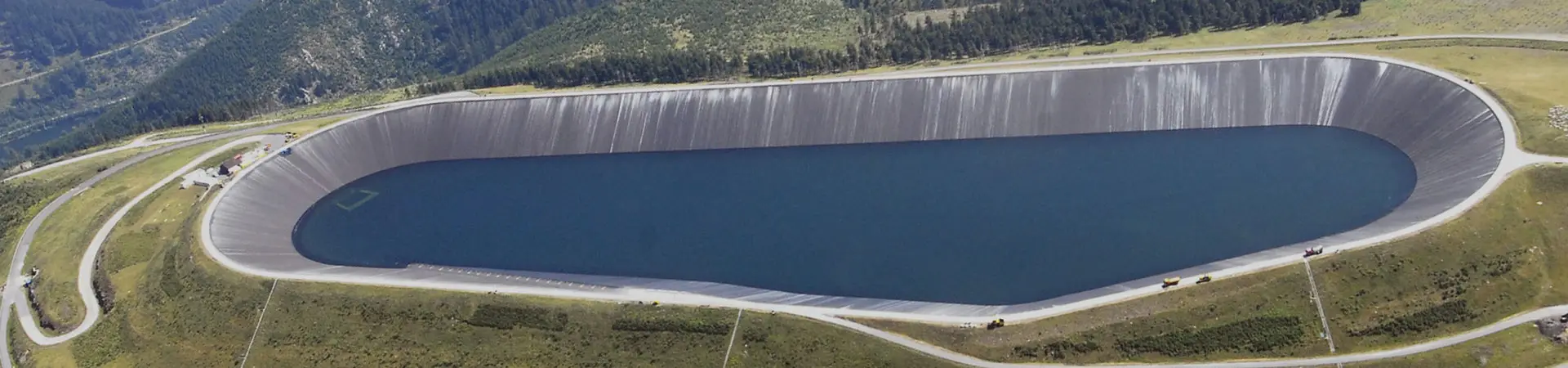
Reliable reservoir liners provide a secure containment solution for agricultural irrigation and industrial water storage, preventing valuable water loss.
Main Products
PROJECT CASES
APPLICATION AREAS
Geotechnical material series are widely used in various fields such as highways, railways, tunnels, water conservancy of reservoirs and canals, artificial lakes, environmental protection, sewage treatment, landfills, anti-seepage of tailings reservoir areas, and livestock breeding.
Water conservancy projects
Geosynthetics play a vital role in water conservancy projects such as dams and reservoirs, canals and channels, and riverbank protection.
Breeding industry
In the aquaculture industry, geosynthetics such as geomembranes and geotextiles can be used to create healthy aquaculture ponds, ensure stable water quality and reduce water resource consumption. All geosynthetics provided by can be customized according to customer needs.
Road construction
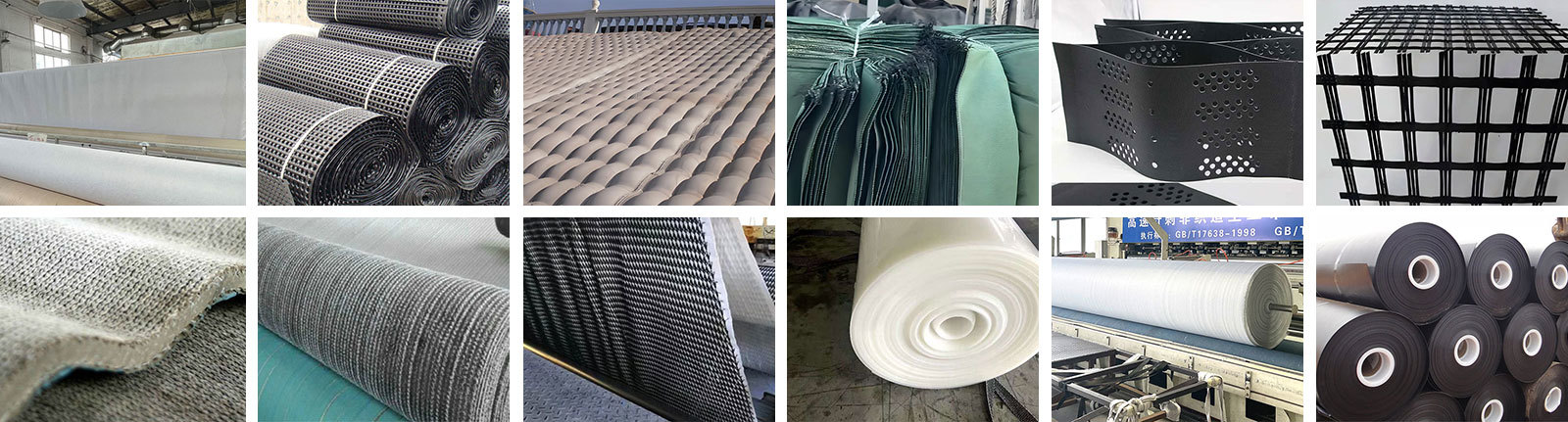
The geosynthetics such as geomembranes, geotextiles, geogrids, geocells, etc. provided by play an irreplaceable role from roadbed treatment to pavement protection, from drainage systems to environmental protection isolation.
Agricultural
In agricultural irrigation and biogas digester scenarios, geosynthetics such as geomembranes and geotextiles play a key role due to their respective characteristics. The products provided by Factory meet the standards and can be customized according to requirements.
Coastal Engineering
In coastal engineering, geosynthetics such as geobags, cement blankets, and geogrids play an important role in coastal engineering from coastal protection, structural reinforcement to slope stability, and effectively respond to the challenges brought by the complex geology and environment of coastal areas.
Environmental Protection
Factory provides customers with high-standard geosynthetics to meet their needs for building landfills.
LISTEN & DELIVER TRUSTED SOIUTIONS.
FAQ

undefined
GET A FREE QUOTE
CONTACT US
Email : longxiang@lxgeosynthetics.com
Add : Room 2416, Building 6, China Resources Landmark Plaza, Lixia District, Jinan City, Shandong, China Province
GET A FREE QUOTE
Copyright 2025 : Shandong Longxiang New Materials Co., Ltd. Privacy Policy