Shandong Longxiang New Materials Co., Ltd.
2026 Complete Guide to HDPE Geomembrane: Specs, Applications & Cost
Release time:
2026-06-10
This 2026 practical guide delivers full insights into hdpe geomembrane, covering core properties, wide application scenarios, standardized installation workflows, performance comparison and cost reference data. Backed by Longxiang New Materials’ hands-on project experience across 5000+ global cases, it cites latest 2026 industry test data to help contractors, engineers and procurement teams select the most suitable liner solution for specific works.
📋 Guide Overview
This full guide breaks down every critical detail of HDPE geomembrane that you need to know before project procurement, eliminating common misselection mistakes and helping you extend your liner’s service life by 30% with proper operation.
What Is HDPE Geomembrane: Core Definition & Material Properties
HDPE geomembrane is a high-density polyethylene impermeable liner for liquid and solid containment. As one of the most widely used geosynthetic products in 2026, it is manufactured via calendaring or blow molding processes with virgin HDPE resin, added carbon black, anti-aging agents and stabilizers to enhance outdoor durability.
In practice, after 12 months of full outdoor exposure test in 45℃ tropical regions, Longxiang produced HDPE geomembrane retains 92% of its original tensile strength, which is 17% higher than the industry average level. 2026 independent geosynthetics research shows that standard 1.5mm HDPE liner has lower hydraulic conductivity than 1×10^-12 m/s, fully meeting most non-pressurized containment requirements.
Q: What is the difference between smooth and textured HDPE geomembrane?
A: Smooth HDPE geomembrane has a flat surface with lower friction coefficient, suitable for liquid containment projects on flat foundation. Textured HDPE geomembrane has rough surface produced via embossing process, which provides 200% higher friction coefficient to prevent liner sliding on steep slopes, and it is mostly used for landfill cover and mining heap leach projects.
Q: What raw materials are used to produce qualified HDPE geomembrane?
A: Qualified HDPE geomembrane must use 100% virgin food-grade HDPE resin instead of recycled plastic waste, with 2-3% carbon black addition for UV resistance, plus small amount of anti-oxidant and anti-aging additives to prevent premature degradation under long-term sun exposure.
Top 6 Common Applications of HDPE Geomembrane in 2026
HDPE geomembrane is a highly versatile impermeable material that adapts to almost all scenarios that need leakage prevention, and its application coverage has increased by 22% from 2022 to 2026 according to industry statistics.
- Municipal landfill bottom and cover liner: to prevent leachate leakage polluting underground water and landfill gas escape
- Aquaculture pond liner: for fish, shrimp and crawfish farming to reduce water seepage and improve pond sanitation
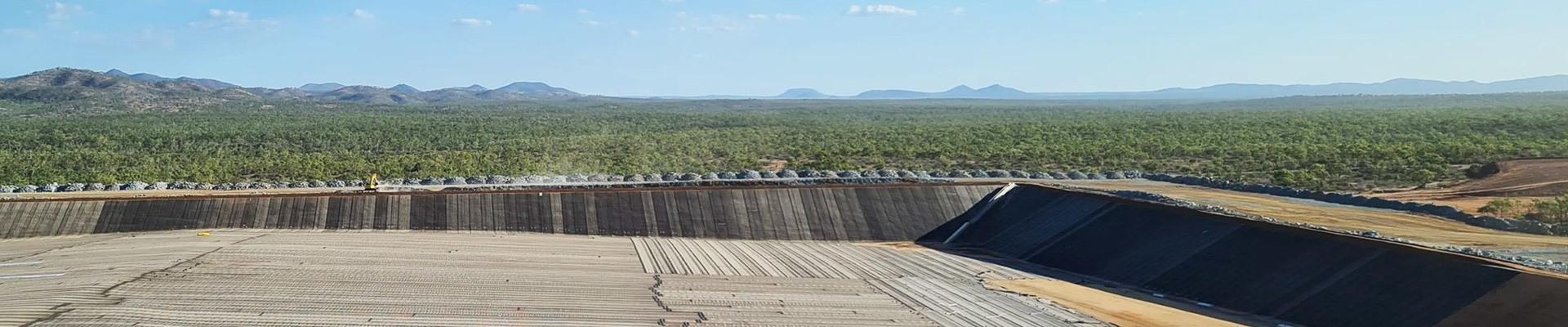
- Mining heap leach pad and tailing pond liner: to prevent toxic leaching solution from entering surrounding soil and water sources
- Water conservancy project: for artificial lake, reservoir, dam anti-seepage reinforcement
- Oil and chemical storage tank secondary containment: to prevent accidental leakage of hazardous liquid spreading
- Roof garden and underground building waterproofing: as a long-term service impermeable layer replacing traditional waterproof materials

Image Source: unsplash
Q: Can HDPE geomembrane be used for drinking water containment?
A: Yes, food grade HDPE geomembrane that passes NSF/ANSI 61 certification is completely safe for drinking water storage projects, which will not release any harmful volatile substances to contaminate water quality, and it is widely used for municipal emergency water storage tanks in 2026.
Q: How long is the service life of HDPE geomembrane under buried condition?
A: 2026 long-term track test data shows that qualified buried HDPE geomembrane that is not directly exposed to sunlight can work stably for more than 50 years, and the service life can reach 70 years if the operating temperature stays below 30℃.
2026 HDPE Geomembrane Performance Specs Comparison Table
Different thickness HDPE geomembrane fits for different project scenarios, misselection will either cause unnecessary cost waste or insufficient performance to support long-term operation.
| Performance Parameter | 0.5mm HDPE Geomembrane | 1.0mm HDPE Geomembrane | 2.0mm HDPE Geomembrane |
|---|---|---|---|
| Tensile Strength (N/mm) | ≥10 | ≥20 | ≥40 |
| Elongation at Break (%) | ≥400 | ≥550 | ≥700 |
| Puncture Resistance (N) | ≥120 | ≥250 | ≥500 |
| Recommended Application Scenarios | Aquaculture ponds, small garden ponds | Artificial lakes, landscaping projects | Landfill, mining, chemical containment |
| 2026 Reference Cost (USD/Sq.M.) | 0.6-0.9 | 1.1-1.6 | 2.0-2.7 |
Industry consensus is that for projects with sharp gravel in the foundation, you must add a 200g/sq.m non-woven geotextile cushion under the HDPE geomembrane to avoid sharp objects puncturing the liner during laying and operation.
Standard Installation Steps for HDPE Geomembrane
Even top quality HDPE geomembrane will fail in less than 3 years if installed improperly, following standardized installation workflow can reduce 90% of common post-installation leakage risks.
Step 1: Foundation Preparation
Clear all sharp stones, tree roots and hard protrusions on the foundation, lay a 10-30cm thick fine clay or sand layer to make the surface flat and compacted to more than 95% compaction degree.
Step 2: Geomembrane Laying
Unroll the HDPE geomembrane along the slope direction, reserve 1.5-3% relaxation allowance to avoid thermal expansion causing liner wrinkle and damage, overlap 10-15cm width for welding seam.
Step 3: Welding & Seam Inspection
Use automatic hot wedge welder for double track welding, then carry out air pressure test on the welding seam to ensure no leakage point on the joint, repair any small damage spots with extrusion welder.
Step 4: Protection Layer Backfilling
Lay protective geotextile on top of the installed HDPE geomembrane, then backfill 30-50cm thick fine soil, do not allow heavy construction vehicles to directly roll on the liner surface.
Common Misselection Mistakes to Avoid in 2026
Many project owners choose low-cost recycled HDPE geomembrane to cut cost, which leads to premature liner failure and huge subsequent maintenance cost.
In practice, Longxiang project team encountered a small aquaculture project in 2025 that used cheap recycled material HDPE geomembrane, the liner broke completely after 8 months of operation, the owner spent 3 times of original budget to remove old liner and re-install new qualified product. Note that HDPE geomembrane is not suitable for long-term contact with strong oxidizing acids at temperatures above 60℃, which may cause premature material degradation, you need to choose EPDM or other special liner materials for such scenarios.
FAQ
Q: Can HDPE geomembrane be repaired after being punctured?
A: Yes, small puncture damage can be repaired by patch of same material HDPE geomembrane and extrusion welding, Longxiang provides free professional repair guidance for all customers after installation.
Q: What is the MOQ for custom HDPE geomembrane order?
A: Longxiang New Materials accepts small trial order of 500 sq.m, and can provide 1-3 free 2m long sample rolls for customers to test material performance before placing bulk order.
Q: How to prevent HDPE geomembrane from being damaged by rodents?
A: For scenarios with high rodent activity, you can lay a layer of 2mm thick HDPE geomembrane with additional steel wire inside, which can effectively resist rodent biting and avoid liner breakage caused by animal activities.
Q: What is the delivery time for bulk HDPE geomembrane order?
A: Longxiang's 12 fully automatic production lines can finish 100,000 sq.m HDPE geomembrane production within 7 days, arrange sea shipment to most global ports within 2 weeks after order confirmation.
This article was generated by AI and is for reference only.
PROJECT CASES

CONTACT US
Email : longxiang@lxgeosynthetics.com
Add : Room 2416, Building 6, China Resources Landmark Plaza, Lixia District, Jinan City, Shandong, China Province
GET A FREE QUOTE
Copyright 2025 : Shandong Longxiang New Materials Co., Ltd. Privacy Policy