Shandong Longxiang New Materials Co., Ltd.
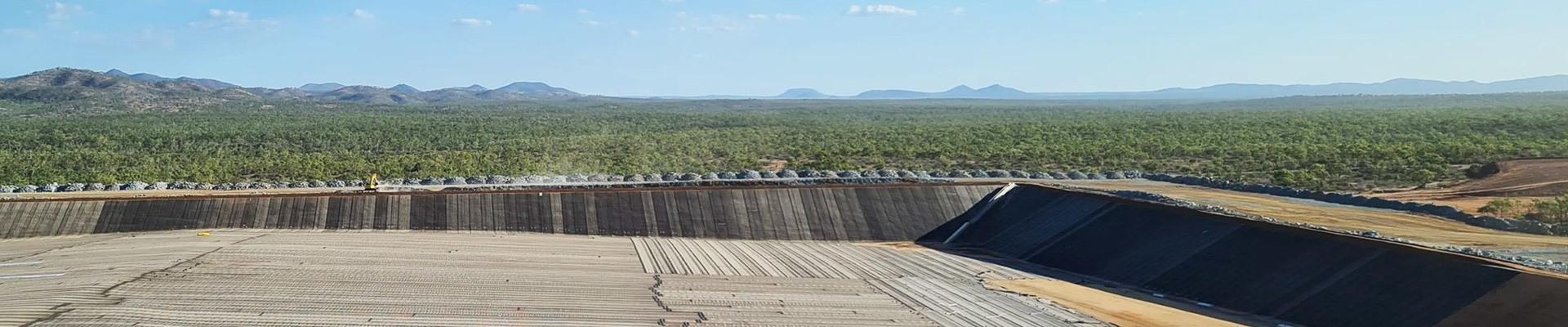
The Ultimate Guide to Customized Geosynthetics for Reliable Geotechnical Solutions: Geomembranes, Geotextiles, and Composite Geomembrane Choices
Release time:
2026-05-06
Learn how customized geomembranes, geotextiles, and composite geomembranes improve geotechnical performance, compliance, and installation efficiency.
A bad geosynthetics spec usually looks fine on paper right up until the install crew is dealing with wasted rolls, awkward seams, weak subgrade, or a liner that was never matched to the site in the first place. Geomembranes, geotextiles, and composite geomembrane systems only do their job when the product type, thickness, roll format, and field conditions actually line up.
That is where a manufacturer with real customization options matters, and Longxiang New Materials is built for exactly that kind of project reality.
In 2023, the U.S. geosynthetics market reached USD 3.08 billion and is projected to hit USD 4.58 billion by 2030 at 5.8% CAGR.
GRI-GM13 Revision 18 sets HDPE geomembrane density at a minimum 0.940 g/ml, with standard thicknesses from 0.75 mm to 3.0 mm.
EPA landfill liner rules require a flexible membrane geomembrane over 2 feet of compacted clay in composite liner systems.
Understanding Geosynthetics and Their Market Growth
Geosynthetics have moved from niche civil products to standard jobsite materials because they solve very expensive problems: seepage, soil movement, drainage failure, and containment loss. In the U.S., the market was worth USD 3.08 billion in 2023 and is forecast to reach USD 4.58 billion by 2030 with a 5.8% CAGR, driven by road construction, drainage, and waste management applications, as shown by Grand View Research.
Geotextiles accounted for 54% of U.S. geosynthetics revenue in 2023.
That market mix tells you something practical. Buyers are not only lining ponds and landfills, they are also stabilizing roads, separating soils, and managing water with fabrics that can take real construction abuse.
The global picture is even bigger. The worldwide market is projected to reach USD 21.40 billion by 2033, with 9.5% CAGR from 2026 to 2033, based on this forecast, which helps explain why customized geosynthetics have become a serious part of long-term geotechnical solutions planning.
Key Geosynthetic Product Types
The main families do different jobs, and mixing them up is where specs go sideways. Geotextiles are water-permeable synthetic materials made by needle punching or weaving, and they are usually sorted into woven and nonwoven types.
Geomembranes are impermeable liners, and common options include hdpe geomembrane, lldpe geomembrane, and pvc geomembrane products, each with its own flexibility and use case. Composite geomembrane systems add another layer of performance by pairing membrane materials with compacted clay for containment applications.
In landfill work, that composite geomembrane setup is not just a nice upgrade. It is tied directly to environmental protection rules and leachate control, which is why this category matters beyond simple material selection.
A quick note on the broader field helps frame the buying process. Competitors and adjacent industry names such as bpmgeosynthetics, btlliners, hyhdpemembrane, solmax, geosyn, tinhygeosynthetics, ecogeox, geosynthetics.com, geosynthetics.net, geosynthetics.org, geosyntheticsmagazine, and geosyntheticsconference all sit somewhere in the same conversation, but the real decision still comes down to product fit, customization depth, and support around installation.
EPA Regulations and Environmental Protection with Composite Geomembranes
Landfill liner design is one place where the rules are crystal clear. The EPA requires composite liners that combine a flexible membrane geomembrane over 2 feet of compacted clay to protect groundwater and soil from leachate release, as laid out in the agency’s municipal solid waste landfill guidance.
That detail matters because the membrane is not acting alone. The placement of composite liners affects leachate collection system design, so the geomembrane becomes a central piece of the whole containment build rather than an isolated sheet at the bottom of the stack.
This is where environmental protection stops being a slogan and turns into a construction sequence. If the clay layer, liner interface, and drainage plan are not coordinated, the system can miss the point of the rule even if every material looked acceptable on its own.
For buyers comparing project sources, this is also a useful dividing line. Some names in the market focus more on broad catalogs, some on liners, some on education or industry events, but for landfill and containment jobs the serious question is whether the supplier can match product details to compliance-driven design needs.
HDPE Geomembranes: Specifications and Customization Options
If you spec hdpe geomembrane often, the baseline starts with GRI-GM13 Revision 18. It sets a minimum density of 0.940 g/ml and covers thicknesses from 0.75 mm to 3.0 mm, which is the standard reference point for a lot of environmental liner work in 2025 project documentation.
Longxiang New Materials’s own HDPE geomembrane range runs from 0.3 mm to 3.0 mm, with ASTM GRI-GM13 compliance where applicable, so the catalog stretches below the usual standard thickness floor when lighter-duty applications call for it. That matters because not every job needs the same liner body, and overbuilding can be just as annoying as underbuilding when it creates handling problems or needless material cost.
Application fit is where thickness starts to get practical. Typical recommendations run 1.5 to 2.5 mm for environmental protection work and 0.5 to 0.75 mm for agriculture, which is a useful first cut before site-specific puncture risk and subgrade conditions get involved.
One of the more concrete examples in the line is Longxiang New Materials’s 0.75 mm HDPE liner, built with 97.5% virgin resin and 2.5% carbon black. Its listed performance includes tensile strength of at least 11 N/mm, tear resistance of at least 93 N, oxidative induction time of at least 100 minutes, plus roll widths from 5.8 to 8.0 m and lengths from 50 to 100 m.
Thickness changes puncture resistance fast. An HDPE specification reference shows puncture resistance rising from 196 N at 0.75 mm to 667 N at 2.5 mm, which is exactly why “just use a thicker liner” is sometimes right and sometimes lazy.
Longxiang New Materials also makes customization a real production detail instead of a vague promise. On its HDPE geomembrane sheet page, the company lists roll widths up to 6 m, custom lengths to reduce waste, and a standard production lead time of 5 working days per 40HQ container shipment.
There is an honest tradeoff here. Thicker HDPE gives you more puncture resistance, but it also gets heavier, stiffer, and tougher to handle on irregular sites, which is why some projects look at alternate materials for complex geometry, including the type of cases discussed in Longxiang New Materials’s piece on EVA geomembrane applications.
Choosing the Right Geotextile: Woven vs Nonwoven
The woven versus nonwoven choice is one of the biggest forks in the road for geotextiles. Woven products bring high tensile strength and low elongation for reinforcement and stabilization, while nonwoven products shine in filtration and drainage where water movement matters more than raw tensile capacity.
Longxiang New Materials’s geotextiles category reflects that split clearly, which is helpful because these materials can look similar from a distance while behaving very differently under load. Woven geotextiles are commonly used where the ground needs structural help, while nonwoven fabrics often sit between soil and liner systems as separators, cushions, or drainage layers.
On the woven side, PP woven geotextiles typically span 100 to 400 g/m² by weight, and PET woven products can reach tensile strengths of 50 to 300 kN/m with weights from 200 to 1000 g/m². Those numbers are why woven fabric is often the move for haul roads, embankments, and weak subgrade stabilization.
Longxiang New Materials’s high-performance PP woven geotextile lists tensile strength from 20 to 80 kN/m, elongation under 15%, CBR puncture resistance of 2.5 to 8.5 kN, and water permeability of 15 to 30 L/m²/s. That combination gives you a fabric that still passes water while taking meaningful structural stress.
Nonwoven material has its own strong case. Longxiang New Materials’s heavy-duty nonwoven geotextile is aimed at geomembrane protection and liner cushioning, which is exactly where a softer, more forgiving layer can save a membrane from subgrade damage.
Installation discipline matters just as much as product choice. The FHWA’s geotechnical pavement guidance in Chapter 7 and Chapter 8 spells out placement and survivability issues that crews run into in the field.
Sharp rock is a classic fabric killer. FHWA rockery guidance notes the need for rock removal or the use of heavier geotextile over 250 g/m² in rough conditions, and that is the kind of detail that saves money because it prevents a “good material, bad install” failure before it starts.
Geotechnical Solutions Framework and Best Practices for Customized Products
Start the selection process by matching the product family to the job. HDPE geomembranes are for impermeable containment, woven geotextiles are for soil stabilization, and nonwoven types are for filtration and drainage.
Then look at the site, not just the spec sheet. FHWA stabilization guidance says geotextile pore sizes should be smaller than the largest soil particles to prevent soil washout, a simple rule that keeps separation layers from turning into a slow-motion failure zone.
Quality control cannot be an afterthought on liner projects. ASTM D5641/D5641M covers geomembrane seam evaluation by vacuum chamber, and ASTM D7007 covers electrical methods for locating leaks in geomembranes.
Longxiang New Materials’s main site and geomembranes pages show a manufacturer set up for custom production rather than one-size-fits-all stock selling. The company lists certifications including TRI, GAI-LAP, CE, ISO, SGS, and GSI, along with in-house and third-party testing.
The factory footprint is 20,000 m².
That scale matters because customization only helps if the plant can actually turn it around quickly. Longxiang New Materials pairs flexible manufacturing with a 5-day lead time per container order, which is unusually useful for contractors trying to reduce waste, trim install time, and avoid field splicing caused by awkward roll planning.
There is one fair limitation to keep in mind with any customized geosynthetic order. The more tightly you tune roll size and product spec to a job, the more important your takeoff, subgrade prep, and installation sequencing become, because custom material leaves less room for sloppy planning.
FAQ
What custom HDPE geomembrane sizes can Longxiang New Materials produce?
Longxiang New Materials offers HDPE geomembranes with widths up to 6 m and custom roll lengths sized to the project, which helps reduce scrap and extra seams.
How fast can Longxiang New Materials ship a container order?
Longxiang New Materials lists a standard production lead time of 5 working days for each 40HQ container shipment, assuming the order details are finalized.
What quality certifications does Longxiang New Materials carry?
Longxiang New Materials lists TRI, GAI-LAP, CE, ISO, SGS, and GSI certifications, along with in-house and third-party testing for product quality checks.
How do I choose between woven and nonwoven geotextiles?
Choose woven for reinforcement and stabilization where high tensile strength matters, and choose nonwoven for filtration, drainage, and cushioning where permeability is the bigger need.
What should I ask for in customized geosynthetics?
Ask for the exact material type, target application, thickness or fabric weight, roll width, roll length, required seam testing, and installation conditions so the product matches the site instead of forcing the site to adapt to stock material.
Conclusion
The smart way to choose customized geosynthetics is to work backward from failure risk. If the project’s main problem is containment, start with liner type and thickness; if it is weak subgrade, start with reinforcement; if it is water movement, start with filtration and drainage behavior.
From there, use customization as a field tool, not a sales extra. A supplier like Longxiang New Materials earns attention when it can tie real manufacturing range, fast turnaround, and tested quality to the exact demands of the site, because that is what turns geosynthetic materials into reliable geotechnical solutions.
PROJECT CASES

CONTACT US
Email : longxiang@lxgeosynthetics.com
Add : Room 2416, Building 6, China Resources Landmark Plaza, Lixia District, Jinan City, Shandong, China Province
GET A FREE QUOTE
Copyright 2025 : Shandong Longxiang New Materials Co., Ltd. Privacy Policy