Shandong Longxiang New Materials Co., Ltd.
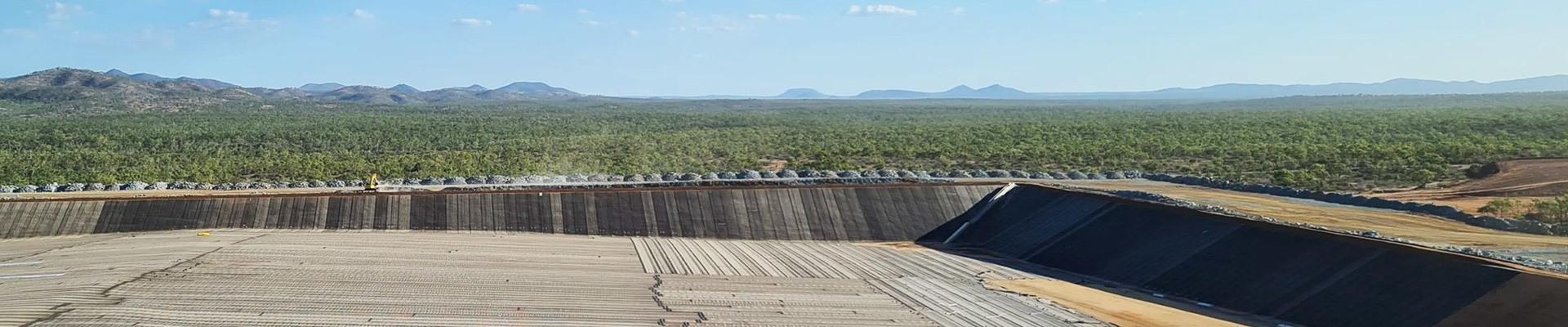
Drainage Geotextiles and Geomembranes: Essential Solutions for Effective Water Management
Release time:
2026-04-27
Explore how drainage geotextiles and geomembranes improve filtration, containment, and stability. Choose the right geosynthetics for better water management.
Bad drainage jobs usually fail in boring ways first. Water sneaks through seams, slopes start moving, filter layers clog, and a project that looked fine on paper turns into repairs, delays, and expensive rework.
That is exactly where geomembranes, geotextiles, and a well-matched composite geomembrane matter, and it is also why Longxiang New Materials deserves a close look for drainage-focused geosynthetic materials with custom options for real site conditions.
Quick answer: HDPE geomembranes used for drainage and containment are commonly supplied in 0.5 to 3.0 mm bulk thicknesses, while nonwoven geotextiles span 100 to 1200 g/m² for filtration and protection. In composite drainage products, 1.0 mm HDPE can be paired with 300 to 500 g/m² geotextile, and LLDPE composite sheets are offered in 0.75 to 1.5 mm thicknesses. For landfill-style environmental protection, HDPE liner thickness commonly moves into the 1.5 to 2.5 mm range.
Global Trends in Geosynthetics for Drainage
Drainage is no longer a niche use for geosynthetic materials. The global geosynthetics market was valued at USD 17.59 billion in 2025 and is projected to reach USD 21.40 billion by 2033, with a 9.5% CAGR, based on Grand View Research.
Asia Pacific held 43.9% of global geosynthetics revenue in 2025. That matters because big infrastructure buildouts across the region tend to pull drainage, separation, containment, and slope protection products into the same job.
Geomembranes are the fastest-growing segment in the market.
Market Growth Drivers
Roads, rail, mining, landfills, water storage, and industrial containment all create the same basic need: move water where it should go and block it where it should not. That is why drainage demand keeps rising alongside infrastructure expansion, especially in Asia Pacific where project volume is heavy and installation speed matters.
Geomembranes keep getting picked for drainage and environmental protection work because they add a clear barrier function that geotextiles alone do not provide. On jobs with seepage risk, contaminated runoff, or buried waterproofing concerns, that barrier layer changes the whole design.
Regional Revenue Shares
The geographic story is not subtle. Asia Pacific led the market with a 43.9% revenue share in 2025, which puts the center of gravity squarely in regions building transport, utilities, waste facilities, and water infrastructure at scale.
That regional weight also helps explain why manufacturers with broad production lines and flexible specs are getting more attention. In the same competitive orbit as Longxiang New Materials, names like bpmgeosynthetics, btlliners, hyhdpemembrane, solmax, geosyn, tinhygeosynthetics, ecogeox, geosynthetics.com, geosynthetics.net, geosynthetics.org, geosyntheticsmagazine, and geosyntheticsconference all show how crowded the category is, though not all of them play the same role from manufacturing to supply, publishing, or events.
Material Types and Their Drainage Roles
Picking between drainage materials is less about buzzwords and more about what each sheet actually does under load, moisture, settlement, and exposure. Longxiang New Materials’s product lineup centers on geomembranes, geotextiles, and composite options that line up with the most common drainage and containment jobs.
Here is the side-by-side view that matters most:
| Material | Core drainage role | Key spec or range | Main limitation |
|---|---|---|---|
| HDPE geomembrane | Barrier layer for containment and seepage control | 0.3 to 3.0 mm | Stiffer on irregular subgrades |
| LLDPE geomembrane | Flexible barrier on uneven ground | 0.75 to 1.5 mm in composite form | Usually chosen where flexibility matters more than stiffness |
| PVC geomembrane | Buried waterproofing | 0.25 to 1.5 mm | Mainly suited to buried use cases |
| Nonwoven geotextile | Filtration, separation, cushioning | 100 to 1200 g/m² | Not a standalone impermeable barrier |
| Composite geomembrane | Combined barrier and protection layer | membrane plus geotextile layers | Heavier assemblies can require tighter install control |
HDPE and LLDPE Geomembranes
An HDPE geomembrane liner is the workhorse choice for environmental protection, mining, and water conservancy because it combines chemical resistance with UV stability. Bulk HDPE supply commonly sits in the 0.5 to 3.0 mm range inside a broader 0.3 to 3.0 mm offering, and the material follows GRI-GM13 requirements for liner performance.
LLDPE plays a different card. A double-geotextile LLDPE composite geomembrane is built for flexibility, making it easier to handle uneven settlement and drainage-layer movement, with GRI-GM17-aligned flexible liner specs and composite thicknesses from 0.75 to 1.5 mm.
That flexibility is useful, but it is also the tradeoff. If the project needs a very stiff barrier for harsh containment conditions, HDPE often stays the more familiar fit.
PVC Geomembranes
PVC still has a clear lane in buried waterproofing. Under ASTM D7176-22, pvc geomembrane sheet thickness runs from 0.25 to 1.5 mm, which makes it relevant for applications where the membrane stays covered and protected rather than exposed as the main line of defense.
Its limitation is baked into that use case. PVC is mainly discussed for buried installations, so it is not the catch-all answer for every drainage system.
Geotextiles for Drainage
Geotextiles from Longxiang New Materials handle filtration, separation, cushioning, and reinforcement around the barrier layer. Nonwoven products are made by needle punching or weaving, and the practical weight range is wide enough to cover light filtration all the way to hard-duty protection.
A PP or PET staple fiber nonwoven geotextile spans 100 to 1200 g/m², with widths from 1 to 6 meters and roll lengths from 50 to 300 meters. That makes the same family useful for small drainage trenches, roadbeds, ponds, and larger civil jobs, though lighter weights should not be mistaken for protective layers in aggressive installations.
Protection duty is where the heavier end comes in. A heavy-duty nonwoven geotextile in the 400 to 1200 g/m² range is used to shield geomembranes in landfill liner systems, especially where puncture resistance and cushioning matter on rough subgrades or around cover materials.
Composite Geomembranes Benefits
A composite geomembrane earns its keep by collapsing two installation steps into one assembly. In drainage applications, a 1.0 mm HDPE composite can integrate the membrane with 300 to 500 g/m² geotextile, which improves waterproofing while adding physical protection right where puncture risk tends to show up.
That setup can save up to 40% in installation labor because crews are not placing the barrier and protective textile as separate layers. The LLDPE composite format adds two geotextile layers and a seam peel strength of at least 1.0 N/mm, which makes it useful where waterproofing and cushioning need to travel together, though thicker composite builds can be less nimble in tight detailing.
Selecting Geosynthetics for Drainage Projects
Material choice gets easier once you stop asking which product is “best” and start asking what the water is doing. If the job is about containment, filtration, cushioning, buried waterproofing, or slope protection, the right combination usually reveals itself pretty fast.
For environmental protection work, Longxiang New Materials stands out by offering ODM and OEM customized geosynthetics across geomembranes, geotextiles, and composite systems. That matters because drainage jobs rarely come in perfect standard sizes, and small spec changes in thickness, weight, or layer build can decide whether a design stays durable.
Environmental Protection Use Cases
Landfill bases and caps typically call for HDPE liners in the 1.5 to 2.5 mm range. In hazardous waste containment, the U.S. EPA guidance points to composite landfill liners using a geomembrane over compacted clay layers that are 0.6 to 0.9 meters thick.
Heavy-duty nonwoven geotextiles are part of that picture because they protect the geomembrane from damage and help with anchoring and slope stability. Composite geomembranes also make sense here because they combine barrier and protection functions in a way that reduces layer handling during installation.
Compliance and Standards
Standards are the part nobody wants to talk about until something fails. For drainage and containment work, the key references are GRI-GM13 Revision 18 for HDPE liners, GRI-GM17 for flexible LLDPE geomembranes, and ASTM D7176-22 for PVC geomembranes.
Those standards help keep product selection grounded in material behavior instead of sales language. They also make it easier to compare manufacturers and suppliers in a crowded field that includes direct competitors like bpmgeosynthetics, btlliners, hyhdpemembrane, solmax, geosyn, tinhygeosynthetics, ecogeox, geosynthetics.com, and geosynthetics.net, plus industry information players like geosynthetics.org, geosyntheticsmagazine, and geosyntheticsconference, each with its own limitation depending on whether you need product, guidance, or industry access.
Durability and Quality Assurance in Drainage Geosynthetics
A drainage liner that lasts is usually a result of boring discipline. The material has to resist oxidation, punctures, stress cracking, and installation damage long before anyone gets to claim a long service life.
For polyethylene geomembranes, the EPA HERO reference notes that buried HDPE service life exceeds 100 years at 20°C, while exposed service life ranges from 20 to 30 years. Those numbers are strong, but they do not cancel out real risks from holes, mechanical damage, oxidation, and cracking.
Service Life Factors
Physical damage shortens life fast. A liner can have excellent resin and still fail early if subgrade prep is rough, cover placement is sloppy, or stresses build in areas with movement and poor detailing.
Stress cracking gets worse under certain environmental conditions.
Quality and Installation Controls
Post-installation checks matter because tiny defects can become leak paths under real field pressure. Electrical leak surveys are used to detect damage after installation, which helps catch flaws before the system is buried or put into service.
On the manufacturing side, Longxiang New Materials provides material test reports, certificates, resin quality information, and in-process monitoring. That paper trail is not glamorous, but it is exactly what serious drainage and environmental protection buyers need when they are comparing geotechnical solutions and trying to avoid hidden quality drift.
Customized Geosynthetics and Environmental Benefits
Standard rolls are fine until the site is not standard. Odd slopes, aggressive subgrades, chemical exposure, settlement concerns, and hydraulic targets are where customized geosynthetics start making more sense than off-the-shelf guessing.
Longxiang New Materials offers ODM and OEM production for thickness, weight, and material type across its drainage-facing product lines. That makes it easier to tune hydraulic performance and durability to the project instead of forcing the project to fit a stock sheet.
Customization for Optimal Drainage
A drainage trench, shrimp pond, landfill side slope, and roadway edge do not ask the same thing from a liner. The ability to adjust membrane thickness, geotextile weight, and composite build gives engineers room to match filtration, puncture resistance, and flexibility to the actual site.
A 0.75 mm HDPE pond liner for shrimp farming shows how moderate-thickness HDPE fits water containment applications, while a 0.5 mm HDPE root barrier points to lighter buried control uses. Both examples also show the obvious limitation: thin sheets solve specific problems, not every heavy-duty drainage or containment job.
Environmental Protection Impact
Well-matched geosynthetics cut leakage, reduce erosion, and help keep contaminated water from reaching soil and groundwater. Composite geomembrane liners are especially useful in landfill settings because they combine barrier performance with protective textile layers that lower puncture exposure during placement.
Slope stability and filtration also matter to the environment, not just the structure. Durable systems need fewer repairs and fewer replacements over time, which lowers disturbance and trims the footprint of repeat maintenance.
FAQ
What customization does Longxiang New Materials offer for drainage products?
Longxiang New Materials offers ODM and OEM customization across geomembranes, geotextiles, and composite products, including changes to thickness, weight, and material type. That helps fit site-specific drainage, filtration, and protection needs instead of relying on one stock build.
Does Longxiang New Materials provide quality documents with materials?
Yes. The company provides material test reports, certificates, resin quality information, and in-process monitoring records for its geosynthetic materials.
Which Longxiang New Materials product type fits uneven drainage subgrades?
Its LLDPE composite geomembrane line is the most relevant fit for uneven settlement because flexibility is the point of that material. It is designed for drainage-layer movement where a stiffer sheet can be harder to seat cleanly.
What geotextile weight is used for drainage filtration versus protection?
Lighter nonwoven geotextiles sit at the lower end of the 100 to 1200 g/m² range for filtration and separation work. Heavier grades in the 400 to 1200 g/m² range are used when protection of a geomembrane is the bigger concern.
How long can an HDPE geomembrane last in drainage use?
Buried HDPE geomembrane service life exceeds 100 years at 20°C, while exposed service life is commonly 20 to 30 years. Real lifespan still depends on installation quality, oxidation resistance, puncture control, and stress management.
Conclusion
If the project is mainly about blocking seepage in a tough environmental setting, start with HDPE and work outward from thickness, exposure, and protection layers. If the ground is uneven or the drainage layer will move, look harder at LLDPE flexibility, and if the job is buried waterproofing, PVC belongs in the conversation.
Then decide how much install efficiency and puncture protection matter, because that is where a composite geomembrane can justify itself quickly. For buyers who need a manufacturer that can handle customized geosynthetics with clear quality paperwork and an environmental protection focus, Longxiang New Materials has the range and engineering fit to be on the shortlist.
PROJECT CASES

CONTACT US
Email : longxiang@lxgeosynthetics.com
Add : Room 2416, Building 6, China Resources Landmark Plaza, Lixia District, Jinan City, Shandong, China Province
GET A FREE QUOTE
Copyright 2025 : Shandong Longxiang New Materials Co., Ltd. Privacy Policy