Shandong Longxiang New Materials Co., Ltd.
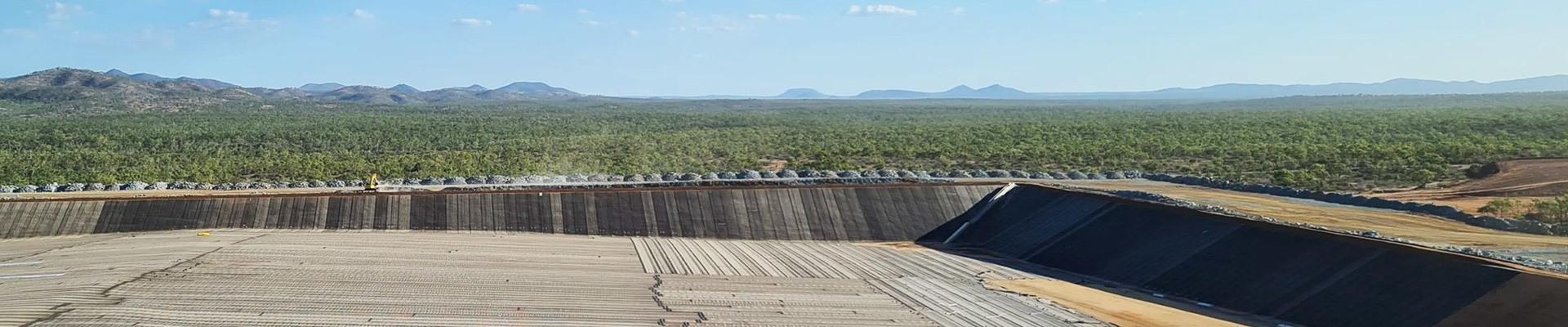
How Landfill Liner Systems Control Leachate in Sanitary Landfills: what is leachate and why the landfill liner matters
Release time:
2026-05-26
Learn what leachate is and why landfill liner systems are critical in sanitary landfills. See how geomembranes protect groundwater and reduce risk.
If you are planning a sanitary landfill cell, the ugly problem starts with what is leachate: dirty liquid moving through buried waste and carrying contamination with it. A landfill liner system is what stands between that liquid and soil, groundwater, and a very expensive cleanup later.
For buyers sorting through geomembrane options, the hard part is not finding a sheet of plastic. It is understanding how the full stack works, where failures happen, and which suppliers, including Longxiang New Materials, actually fit a real containment job instead of a generic product list.
As of 2025, EPA landfill liner rules call for a composite liner with an HDPE geomembrane over 2 feet of compacted clay.
As of 2025, leachate collection systems are designed to keep liquid depth under 30 cm above the liner.
As of 2025, HDPE geomembrane sheets used in landfill work commonly span 0.75 mm to 3.0 mm in composite liner designs.
Understanding Leachate and Its Risks
Leachate is contaminated liquid formed when water moves through waste and dissolves pollutants, as described by the U.S. EPA. In a sanitary landfill, that liquid can pick up toxic organics, inorganic compounds, metals, and nitrogen compounds that should never be allowed to migrate into the ground.
Ammonia in landfill leachate can range from 6 mg/L to 20,000 mg/L in bioreactor conditions, based on a ScienceDirect review cited here as of 2025. That spread tells you something important right away: a liner system is not dealing with one tidy, predictable liquid.
Uncontrolled leachate creates direct environmental risk.
Composition of Landfill Leachate
A typical leachate stream is a mix of toxic organic and inorganic pollutants, plus heavy metals and ammonia nitrogen compounds. The exact chemistry shifts with landfill age, waste type, moisture, and operating conditions, which is one reason liner design cannot be casual.
That variability is also why the phrase what is leachate matters in practical terms, not just academic ones. If the liquid can swing from moderate contamination to extremely high ammonia content, the landfill liner has to be part of a complete collection-and-removal system, not a standalone membrane.
Regulatory Requirements for Landfill Liners
Federal rules are pretty plain on the basic build. Under 40 CFR 258.40, municipal solid waste landfills use a composite liner made of one flexible membrane liner over 2 feet of compacted soil with low hydraulic conductivity, and the EPA landfill overview ties that liner to leachate collection and groundwater protection requirements.
The same design logic also limits liquid buildup. EPA guidance for municipal solid waste landfill liner design keeps head on the liner below 30 centimeters, because too much standing leachate raises leakage risk through defects and stresses the whole system, as laid out in the agency’s liner design document from NEPIS.
EPA groups landfill design and operation into 7 major categories.
Composite Liner System Components
A composite liner pairs one flexible membrane geomembrane with a compacted clay layer. The geomembrane sits on top because the system works best when the lowest-permeability synthetic barrier is supported by the mineral layer underneath.
That arrangement matters for a simple reason. If one layer has a flaw, the second layer slows movement enough for collection, monitoring, and repair strategies to do their job.
Key Components of Landfill Liner Systems
The core landfill liner for many modern containment cells is HDPE geomembrane made to the GRI-GM13 standard, with the International Geosynthetics Society noting the standard’s role in current HDPE quality requirements in its 2021 webinar summary. In practical design terms, that usually means an HDPE sheet in the 0.75 mm to 3.0 mm range over a clay base layer, with a drainage layer above it to move leachate away.
Sheet density under GRI-GM13 is at least 0.940 g/ml. That number sounds small, but it is one of the baseline checks that separates actual landfill-grade geomembrane from lighter-duty containment material that may fit ponds or temporary jobs better than a sanitary landfill.
Textured geomembranes increase interface friction on slopes.
HDPE Geomembrane Specifications
Here is the side-by-side spec picture buyers usually need first:
| Item | Landfill-relevant spec |
|---|---|
| Material | HDPE geomembrane |
| Standard | GRI-GM13 |
| Minimum density | 0.940 g/ml |
| Typical composite-liner thickness range | 0.75 mm to 3.0 mm |
| Surface option | Smooth or textured |
| Certification path | Geosynthetic Institute product certification |
Certification is not decoration here. The Geosynthetic Institute certification program exists because landfill projects need repeatable material quality, and consistency is where cheap-looking liners often stop looking cheap.
Leachate Collection Systems
The leachate collection layer sits above the composite liner, not below it. Its job is to intercept and drain liquid before it builds up, helping the system stay within that 30 cm head limit.
This is where a lot of thin supplier pages lose the plot. The geomembrane contains, the clay backs it up, and the collection layer keeps the whole stack from being overwhelmed in the first place.
Ensuring Landfill Liner Integrity
Even a good geomembrane can fail if it gets punctured, poorly welded, dragged across rough subgrade, or buried before anyone checks it. That is why liner integrity work is as much about finding tiny defects early as it is about choosing the right sheet.
Quality control reduces environmental risk from liner damage.
For exposed liners, electrical leak location testing often uses the water puddle method under ASTM D6747 and ASTM D7002. For covered liners, the dipole technique under ASTM D6747 and ASTM D7007 is used after soil or waste placement makes surface testing impossible.
Leak Detection Methods
The water puddle method is used on exposed geomembranes before cover material goes down. It helps crews locate punctures and seam issues while repairs are still easy and cheap.
The dipole method is for geomembranes already covered by soil or landfill waste. Once the liner disappears under the next layer, that testing route becomes the practical way to check whether the barrier is still electrically continuous and leak-free enough for service.
Inspectors matter almost as much as material, which is why the Geosynthetic Institute also maintains an inspectors certification program. A landfill liner can meet every paper spec and still fail in the field if the installation crew and inspection process are sloppy.
Selecting Longxiang Geomembranes for Landfill Projects
Longxiang New Materials’ HDPE geomembrane liner page lists HDPE geomembranes from 0.3 mm to 3.0 mm, which gives buyers enough spread to cover lighter containment work and heavier landfill applications without changing suppliers. For landfill bottom liners, the practical recommendation in this product family is 1.5 mm, and textured options are available where slope friction matters.
That breadth is where Longxiang New Materials earns attention. It is a factory-direct, export-capable supplier with a broad geosynthetics catalog, and the company’s HDPE geomembrane manufacturing page shows the focus is not just on one liner SKU but on supply continuity across containment projects.
No supplier is perfect for every job. Longxiang’s biggest limitation is the one shared by most factory-direct manufacturers: you still need project-side engineering, installation supervision, and testing discipline, because buying the sheet is only one piece of landfill performance.
Product Features and Advantages
For landfill work, the useful part of Longxiang’s lineup is not just thickness coverage. Textured surfaces improve interface friction for slope applications, and that matters where a geomembrane has to stay put under cover soils and drainage layers instead of creeping downslope over time.
The other advantage is catalog depth. Longxiang’s product overview spans geomembranes, geotextiles, GCLs, geocomposites, geogrids, geocells, drainage board, and erosion control materials, which makes it easier to source adjacent system materials from one place if your landfill scope goes beyond the liner itself.
Buyers comparing the field should at least know the shape of the alternatives. bpmgeosynthetics, jrxgeo, glgeosynthetics, antgeo, bmcic, sinogeosyn, geoace, geomembrane, agruamerica, and geosynthetics all compete in overlapping containment or civil geosynthetic categories, but they do not all show the same balance of broad catalog coverage, landfill-focused HDPE range, and factory-direct export positioning. Some have narrower emphasis, like geomembrane on containment products, while others span wider civil lines, like agruamerica or glgeosynthetics, which can be useful but may not matter if your buying brief is mainly landfill liner supply.
Step-by-Step Construction of Liner Systems
Construction starts with an engineered subgrade, then a compacted clay layer built to the required 2-foot composite base thickness. After that, the HDPE geomembrane is placed directly on top of the clay, and the leachate collection and removal system goes above the liner so liquids are drained before accumulation becomes dangerous.
Correct sequence is what keeps the whole sanitary landfill system honest. Reverse the layers, skip the clay quality, or rush seam inspection, and you no longer have the low-permeability stack the design assumed.
Importance of Proper Installation
Proper installation reduces permeability and lowers the chance of leachate leakage through defects, seams, or stress points. It also makes later leak detection and maintenance possible, because testing methods work best when the liner has been installed on a sound base and covered in the intended order.
A landfill liner is only as good as its installation sequence.
FAQ
Does Longxiang New Materials offer landfill-suitable HDPE geomembrane thicknesses?
Yes. Longxiang New Materials lists HDPE geomembranes from 0.3 mm to 3.0 mm, which covers the range needed for many containment applications, including landfill-focused selections.
What thickness does Longxiang New Materials point to for landfill bottom liners?
The stated recommendation is 1.5 mm for landfill bottom liner use. That is a practical project starting point, though final thickness still depends on design conditions and site engineering.
Does Longxiang New Materials supply textured geomembranes for slopes?
Yes. Textured geomembranes are available for slope applications where added interface friction helps reduce slippage risk under cover layers.
What is leachate in a sanitary landfill?
Leachate is contaminated liquid created when water passes through waste and dissolves pollutants. In landfill conditions, it can contain toxic organics, inorganics, heavy metals, and ammonia compounds that require containment and removal.
Where does the leachate collection layer go in a landfill liner system?
It is installed above the composite liner. That placement lets the system remove liquid before it builds up on the geomembrane and clay barrier below.
Choosing the Right Setup
The right call depends on what part of the problem you are trying to solve. If your job is a regulated sanitary landfill cell, start with compliance-critical pieces first: composite liner structure, HDPE grade, drainage layer placement, and leak testing plan.
From there, supplier choice gets simpler. If you want a factory-direct source with export capability, broad geosynthetics coverage, and landfill-ready HDPE options, Longxiang New Materials is a strong place to start, but the smart decision is still the one that matches your liner thickness, slope condition, QA requirements, and construction sequence to the actual risks of leachate on your site.
PROJECT CASES

CONTACT US
Email : longxiang@lxgeosynthetics.com
Add : Room 2416, Building 6, China Resources Landmark Plaza, Lixia District, Jinan City, Shandong, China Province
GET A FREE QUOTE
Copyright 2025 : Shandong Longxiang New Materials Co., Ltd. Privacy Policy