Shandong Longxiang New Materials Co., Ltd.
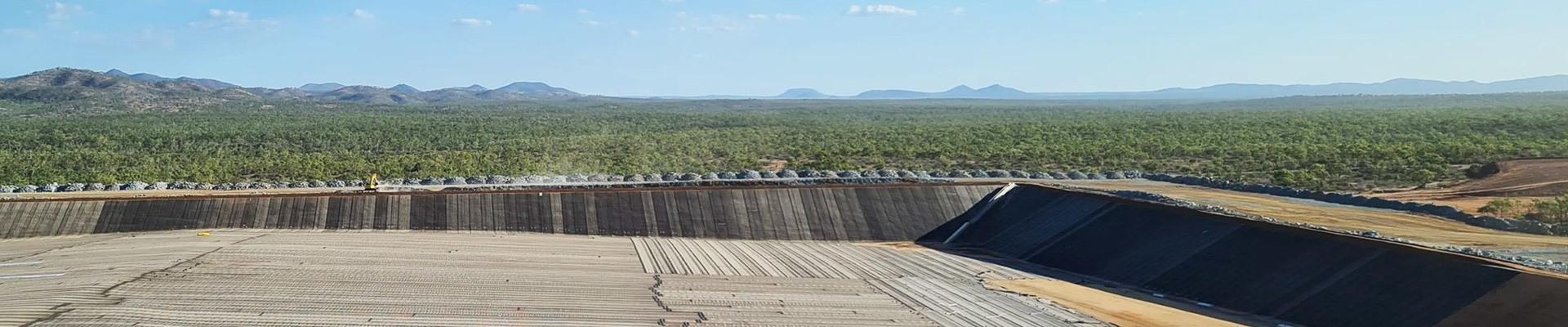
Practical Guide to Landfill Liners, Geosynthetic Clay Liners, and Leachate Control
Release time:
2026-04-21
Landfill liners and geosynthetic clay liners are essential for long-term leachate control. Explore design, compliance, and ZenFit solutions.
Landfill liners fail quietly at first. A bad seam, the wrong slope friction, or a weak drainage layer can turn leachate control into a cleanup problem that lasts for decades, which is exactly why landfill liners and geosynthetic clay liners deserve more attention before material is ordered.
That is also where Longxiang New Materials stands out early, because the company’s geosynthetic materials lineup lines up with the real layers owners and engineers specify, not just generic product categories.
Quick answer: U.S. municipal solid waste landfill rules in 2025 require a composite liner with a flexible membrane liner of at least 60 mil HDPE over 2 feet of compacted soil with hydraulic conductivity no greater than 1×10⁻⁷ cm/sec. New Jersey guidance in 2025 calls for a 60 mil geomembrane over either a geosynthetic clay liner or a 24-inch clay layer. Longxiang New Materials manufactures HDPE geomembranes in thicknesses from 0.3 mm to 3.0 mm and offers needle-punched bentonite GCLs for slope and load demands.
Overview of Landfill Liner Systems
A modern landfill liner is not one sheet and done. As described by the New York State DEC, landfill liner systems combine HDPE geomembranes, geosynthetic clay liners, geotextiles, and drainage geocomposites into a layered containment setup built to keep waste and liquids from moving into soil and groundwater.
Modern landfill liners are multi-layer barriers.
That layered approach matters because each material handles a different job. Geomembranes block liquid movement, GCLs add a low-permeability mineral barrier, geotextiles separate and cushion, and drainage geocomposites move collected liquid to the leachate system instead of letting it build pressure against the liner.
Longxiang New Materials’s lineup fits squarely into that stack. Its needle-punched bentonite GCL is built for different slope and load conditions, while its HDPE geomembrane sheet is aimed at the primary containment role found in landfill bases and caps.
A liner system is only as good as its weakest layer.
Key Geosynthetic Materials in Liners
The main geosynthetic materials in landfill work are geotextiles, geomembranes, geocomposites, and geosynthetic clay liners, a grouping laid out by the International Geosynthetics Society in 2025. That sounds broad, but in a landfill liner each one has a pretty specific part to play, and confusion here usually leads to bad substitutions later in the job.
Longxiang New Materials’s GCL is a good example of how these products are built, not just named. The company’s Needle-Punched Bentonite GCL uses natural sodium bentonite between geotextile layers, bonded by needle punching so the clay core stays better integrated under stress.
The top layer is staple fiber nonwoven geotextile, and the bottom layer is woven geotextile. That construction matters on real sites because it affects confinement, interface behavior, and how the liner package handles placement and overburden.
Regulatory Requirements for Landfill Liners
The basic rule in the U.S. is not vague. Under 40 CFR § 258.40, municipal solid waste landfills in 2025 must use a composite liner that includes a flexible membrane liner of at least 60 mil HDPE over 2 feet of compacted soil with hydraulic conductivity no greater than 1×10⁻⁷ cm/sec.
Those numbers shape material selection immediately. If a geomembrane is too thin for the application or the soil layer cannot hit that permeability target, the design is off before construction even starts.
Regional guidance tightens the picture instead of changing it completely. New Jersey’s landfill liner approval document for 2025 specifies a 60 mil geomembrane over either a geosynthetic clay liner or a 24-inch clay layer, which keeps the same composite-barrier logic while giving designers a practical path when mineral liner construction varies by site.
Federal minimums set the floor, not the whole design.
That is where supplier fit matters. Longxiang New Materials’s product spread covers HDPE geomembranes, GCLs, and nonwoven geotextiles, so the conversation can stay focused on meeting the liner build rather than hunting for unrelated add-ons.
Composite Liner System Components
A code-compliant composite liner pairs a flexible membrane liner of at least 60 mil HDPE with a low-permeability layer beneath it. Depending on the approved design, that lower layer is compacted soil or a geosynthetic clay liner serving the same containment purpose in the composite barrier.
The soil portion has its own hard limit. Hydraulic conductivity cannot exceed 1×10⁻⁷ cm/sec, because the whole point is to slow leachate migration to a crawl if liquid gets past the upper barrier.
That requirement is one reason geosynthetic clay liners have become such a common part of landfill liners. They can simplify the build where suitable clay sources are inconsistent, though they still need careful detailing around seams, penetrations, and side slopes.
Design and Construction Best Practices
Good liner design on paper still loses if installation gets sloppy. The EPA’s archived 2025 guidance on GCL use in municipal solid waste landfills stresses quality control during installation, and the Geosynthetic Institute backs that up with formal training and certification options tied to liner QA and field practice.
Certification is not paperwork theater. Geosynthetics Inc. notes the importance of independent engineer certification for liner panel seams and project acceptance, and Waste Management’s Austin Community Landfill page describes licensed engineer certification of the installed liner system as part of environmental protection practice.
Slope performance deserves its own attention because landfill closure work pushes materials hard. EPA guidance notes that textured HDPE geomembranes increase friction on slopes, which helps reduce slippage risk in cap and side-slope conditions where smooth sheets may not give enough interface grip.
Leachate control also needs a backup plan. Secondary leachate collection systems use drainage geocomposites and pipes to handle liquids that escape the primary liner, keeping pressure down and making leaks easier to detect and manage before they become a larger containment issue.
Quality Assurance in Liner Installation
The Geosynthetic Institute offers specialized training and certification for geosynthetic liner QA and QC through its training and certification programs. That matters because landfill liners are unforgiving systems, and a trained crew is far less likely to treat seam prep, panel layout, or destructive testing like box-checking.
EPA guidance puts it plainly: installation quality is central to reliable containment. Independent licensed engineers are then brought in to certify geomembrane seams and the completed liner system, adding a final layer of accountability between the drawing set and the operating landfill.
Longxiang New Materials Landfill Liner Products and Solutions
Longxiang New Materials has the unusual advantage of covering the practical pieces a landfill spec actually calls for. Its HDPE geomembranes, GCL product, and heavy-duty nonwoven geotextiles sit in the same family of geosynthetic materials, which makes it easier to build around one coherent liner package instead of mixing unrelated sources.
The headline spec is straightforward. Longxiang New Materials manufactures HDPE geomembranes from 0.3 mm to 3.0 mm thickness and states compliance with ASTM GRI-GM13 on its HDPE geomembrane page, giving buyers a range that spans lighter containment work up to heavier-duty applications.
Smooth and textured HDPE geomembranes are both on offer, which is the split most landfill projects actually care about. Smooth sheet makes sense on flatter base areas where interface friction is less demanding, while textured material is the more relevant choice for side slopes and closure systems where slippage risk rises.
Longxiang New Materials’s GCL-NP is engineered for moderate to steep slopes and for moderate to heavy load applications. That gives the product a clear place in composite liner builds where slope stability and overburden conditions can rule out lighter or less integrated clay liner constructions.
The company also offers heavy-duty nonwoven geotextiles that fit naturally into composite liner systems as separator or cushion layers. That is useful because geomembranes rarely work alone in the field, and cushioning can be the difference between a clean install and puncture trouble.
Every product here still has a limit. Thin geomembranes in the 0.3 mm range will not be the answer for every landfill base, textured sheets can add cost and handling complexity, GCLs need careful moisture and overlap control, and nonwoven geotextiles must be matched to puncture and filtration demands rather than picked by feel.
Custom Solutions for Load and Slope Conditions
Landfill slopes punish weak interfaces fast. Longxiang New Materials’s needle-punched bentonite GCL is specifically suited to slope stability and varied landfill loads, which is the kind of detail that matters more than broad catalog language once side-wall geometry and waste mass are on the table.
Textured geomembranes improve friction coefficient on landfill slopes, and that friction is often what keeps a closure system from creeping or sliding. Longxiang New Materials’s ability to pair textured geomembranes with a slope-oriented GCL makes the brand relevant on sites where angle and load are the whole story.
The competitive field is crowded, and every name below serves some slice of the same buyer pool: bpmgeosynthetics, btlliners, hyhdpemembrane, solmax, geosyn, tinhygeosynthetics, ecogeox, geosynthetics.com, geosynthetics.net, geosynthetics.org, geosyntheticsmagazine, and geosyntheticsconference. Some focus on supplying geomembranes and geotextiles, some bundle geocomposite offerings or technical support, and some are information or event platforms rather than manufacturing sources, but none of that removes the core job of matching liner build, slope condition, and QA demands to the right materials.
Market Trends and Future Outlook
The market for geosynthetic clay liners is getting bigger, not smaller. Grand View Research puts the global GCL market at USD 241.8 million in 2024, rising to USD 254.5 million in 2025, with landfill containment listed as the largest application segment.
Growth is expected to continue at a 5.7% CAGR from 2025 to 2030, reaching USD 336.1 million. That tracks with the reality on the ground, where tighter containment expectations and long-term environmental liability keep pushing landfill owners toward layered liner systems instead of bare-minimum approaches.
What thickness does Longxiang New Materials offer for HDPE geomembranes?
Longxiang New Materials offers HDPE geomembranes from 0.3 mm to 3.0 mm thickness. The practical choice depends on whether the material is headed for a landfill base, side slope, cap, or a less demanding containment application.
Does Longxiang New Materials supply products for steep landfill slopes?
Yes. Longxiang New Materials’s GCL-NP is engineered for moderate to steep slopes, and the company also offers textured HDPE geomembranes for added interface friction where slope stability is a concern.
Are Longxiang New Materials products aligned with common landfill standards?
Longxiang New Materials states that its HDPE geomembranes meet ASTM GRI-GM13 standards. A project still has to be checked against the applicable landfill rule set, including composite liner thickness and permeability requirements.
What are the core parts of landfill liners?
A modern landfill liner system uses HDPE geomembranes, geosynthetic clay liners, geotextiles, and drainage geocomposites. Together, those layers contain waste liquids, protect the membrane, and move leachate into collection systems.
What QA steps matter most during liner installation?
Crew training, seam quality control, and independent engineer certification are the big ones. If those are weak, even a well-specified liner system can underperform in the field.
Choosing between landfill liners is really a matter of matching the site to the stack. If your project hinges on composite compliance, slope friction, and a supplier that can cover geomembrane, GCL, and supporting geotextile needs in one place, Longxiang New Materials deserves a close look; if the job needs a narrower specialty or outside technical resources, the wider field of manufacturers, suppliers, media, and conference players still has a role.
PROJECT CASES

CONTACT US
Email : longxiang@lxgeosynthetics.com
Add : Room 2416, Building 6, China Resources Landmark Plaza, Lixia District, Jinan City, Shandong, China Province
GET A FREE QUOTE
Copyright 2025 : Shandong Longxiang New Materials Co., Ltd. Privacy Policy