Shandong Longxiang New Materials Co., Ltd.
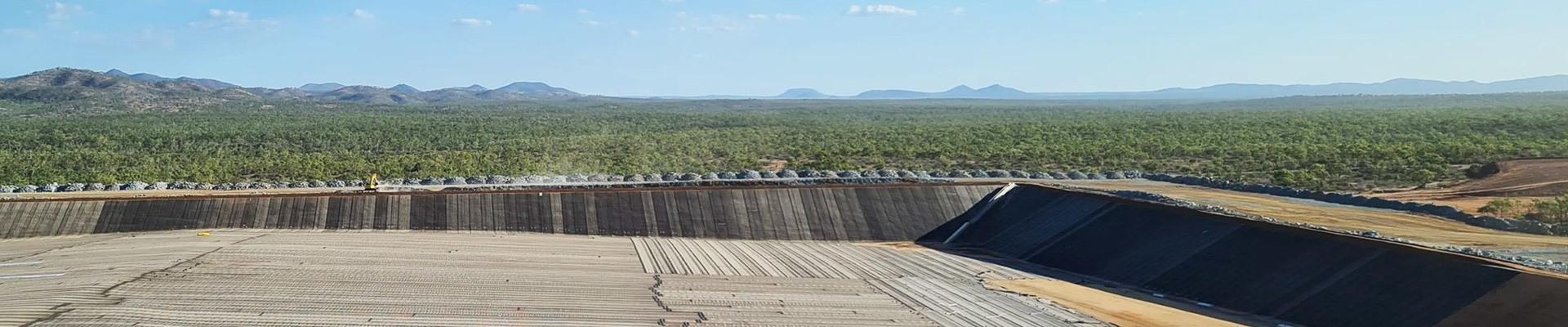
Buyer’s Guide to HDPE Geomembrane: Specifications, Applications, and Installation
Release time:
2026-05-12
Learn how to choose HDPE geomembrane thickness, specs, and installation methods for ponds, landfills, canals, and more.
Choosing an hdpe geomembrane sounds simple until you have to lock in thickness, seam testing, liner type, and compliance for the site in front of you. A pond, landfill cell, canal, shrimp farm, and mining pad can all need very different geomembranes, and getting one detail wrong usually shows up later as leakage, failed seams, or a long argument on site.
That is exactly where a fact-first guide helps, and it is also why Longxiang New Materials belongs in the conversation early: the company offers a wide thickness range, ASTM-aligned production, and application-specific products instead of one-size-fits-all geotechnical solutions.
Quick answer: HDPE geomembrane thickness usually starts at 0.5 mm for agriculture and hydroponics, moves to 1.0 mm to 1.5 mm for reservoirs and canals, and reaches 2.0 mm to 2.5 mm for hazardous waste and mining applications. For municipal solid waste landfills, EPA rules require a composite liner with a geomembrane placed over 2 feet of compacted clay, plus a leachate collection system above it. Longxiang New Materials makes HDPE geomembranes from 0.3 mm to 3.0 mm to ASTM GRI-GM13 requirements.
Global Trends and Market Overview of Geomembranes
HDPE geomembrane sits inside a market that is already big and still moving fast. The global geosynthetics market reached USD 17.59 billion in 2025, and Grand View Research projects 9.5% CAGR from 2026 to 2033, reaching USD 21.40 billion.
Asia Pacific held 43.9% of 2025 revenue.
That regional weight matters because large-scale water management, waste containment, mining, aquaculture, and transport projects all feed demand for geomembranes that can handle chemical exposure, UV, settlement, and welded field seams. For buyers, it means the market is crowded with manufacturers, suppliers, installers, and industry voices, from bpmgeosynthetics and btlliners to solmax, geosyn, tinhygeosynthetics, ecogeox, and hyhdpemembrane, plus information-heavy names like geosynthetics.com, geosynthetics.net, geosynthetics.org, geosyntheticsmagazine, and geosyntheticsconference.
A growing market does not make product selection easier. It just raises the stakes for picking the right sheet, the right seam method, and the right documentation package.
Regulatory Standards for HDPE Geomembrane Applications
Landfill work is where compliance stops being abstract. In the U.S., the EPA municipal solid waste landfill rules require a composite liner that places a geomembrane over 2 feet of compacted clay for municipal solid waste units.
The liner is only part of the system. A leachate collection layer and removal system must sit on top of that composite liner so liquids can be collected and sent for treatment, and the EPA’s landfill guidance also limits leachate or gas condensate recirculation to units that meet CFR 40 258.28(a)(2).
Those requirements change how buyers think about hdpe geomembrane. You are not buying a plastic sheet in isolation. You are buying one piece of a containment system that has to work with subgrade prep, drainage, welding access, test records, and long-term chemical exposure.
For regulated sites, paperwork matters almost as much as polymer quality. A supplier that can support spec matching, rolls sized for installation plans, and quality documents will save time long before the first panel is deployed.
HDPE Geomembrane Specifications and Quality Assurance
The first spec most buyers ask about is thickness, but thickness only means something if everyone measures it the same way. ASTM D5199-25 sets the standard method for measuring nominal thickness in geosynthetics, which gives engineers and buyers one common reference point.
Seams are where real-world performance gets tested.
For thermo-fusion seams, ASTM D6392 governs integrity testing of nonreinforced geomembrane seams. In field practice, hot wedge welding and extrusion welding are the standard seam methods for HDPE, and each has a different job depending on panel layout, repairs, and detail work.
A dual-track hot wedge seam creates an air channel that can be checked with non-destructive continuity testing. That matters because installers can pressurize the channel and confirm the seam holds without cutting the liner open.
Testing should never be one-note. Standard quality assurance combines non-destructive methods such as air pressure testing and vacuum box testing with destructive peel and shear tests taken from sample seams.
Long-term performance starts before welding, not after. Material verification, trial seams, and written testing records are basic site discipline, not fancy extras.
Selecting HDPE Geomembrane Thickness by Application
Thickness selection is where application reality takes over from generic product catalogs. If the liner only needs to separate water from soil in a low-stress agricultural setting, 0.5 mm is commonly used for agriculture and hydroponics.
Move into larger exposed hydraulic works and the sheet usually gets heavier. 1.0 mm to 1.5 mm is often used for large water reservoirs, irrigation canals, and stormwater ponds because those sites ask the liner to handle broader panel spans, weather exposure, and more complicated anchoring details.
Landfills need more than a light pond liner. 1.5 mm to 2.0 mm is standard territory for bottom liners and caps, where puncture resistance, weld reliability, and long-term containment matter far more than shaving material cost.
Mining and hazardous waste push the requirement higher. 2.0 mm to 2.5 mm is the usual recommendation for those applications because the liner may face aggressive chemistry, rougher subgrades, and harsher service conditions.
Here is the practical view:
| Application | Typical thickness |
|---|---|
| Agriculture and hydroponics | 0.5 mm |
| Reservoirs, canals, stormwater ponds | 1.0 mm to 1.5 mm |
| Landfill bottom liners and caps | 1.5 mm to 2.0 mm |
| Hazardous waste and mining containment | 2.0 mm to 2.5 mm |
Textured HDPE geomembrane deserves a separate mention on slopes. Added surface friction helps limit slippage, which becomes a real issue on side slopes, cover systems, and places where overlying layers need grip.
Longxiang New Materials’ HDPE Geomembrane Solutions
Longxiang New Materials makes HDPE geomembranes in 0.3 mm to 3.0 mm thicknesses and builds them to ASTM GRI-GM13 requirements, the benchmark many engineers use for smooth and textured HDPE liner properties. That gives buyers a usable spread from lighter waterproofing work up through heavier containment jobs, instead of forcing every project into the same stock range.
Its material recipe is direct and familiar for this category: 97.5% virgin resin with 2.5% carbon black for UV resistance. The company also states that density and oxidative induction time meet ASTM benchmark levels tied to durability, which is the kind of detail buyers want because weathering performance matters just as much as initial tensile numbers.
A concrete example helps more than broad claims. Longxiang’s 0.75 mm HDPE pond liner for shrimp farming is built for aquaculture use and lists tensile strength and tear resistance to ASTM standards, making it easier to match the product to pond projects instead of guessing from a generic roll listing.
The limitation is straightforward: a 0.75 mm pond liner is application-specific, so it is not the sheet you would carry into a hazardous waste cell or a mining pad. Thin products save material and simplify some installs, but they are not a substitute for the heavier sections used where puncture risk and chemical exposure are higher.
Longxiang also sells lighter waterproofing-oriented products like its 0.5 mm HDPE root barrier membrane, which makes sense for gardens and root control but comes with the same obvious limit: lighter membranes fit lighter-duty work. That product spread is actually useful, because it shows the company is not pretending every liner solves every problem.
Best Practices for HDPE Geomembrane Installation and Testing
A good liner can still fail on a bad install. Field guidance from AGRU America’s welding primer and installation manual lines up with what experienced crews already know: hot wedge fusion handles long production seams, while extrusion fusion is commonly used for patches, pipe boots, and detail welding.
Trial seams come first.
Once production welding starts, the test plan should match the seam type. Dual-track hot wedge seams allow air channel continuity tests, and vacuum box testing helps check places where air pressure testing is not the right fit.
Destructive samples still matter because non-destructive testing cannot tell you everything about bond strength. Peel and shear checks confirm that the seam did not just look good from the outside.
Slope work needs another layer of judgment. Textured geomembranes add friction, which helps keep overlying materials from sliding, but textured sheets can also change welding feel and handling in the field, so crews need the right setup and discipline.
The boring stuff prevents expensive failures. Verify the roll, prep the subgrade, make trial seams, document each test, and keep repairs traceable.
FAQ
1.Does Longxiang New Materials offer only one HDPE geomembrane thickness?
No. Longxiang New Materials offers HDPE geomembranes from 0.3 mm to 3.0 mm, which covers light waterproofing through heavier containment uses.
2.What material blend does Longxiang use for UV resistance?
Its HDPE geomembrane composition uses 97.5% virgin resin and 2.5% carbon black, a common formula for durability and UV exposure resistance.
3.Is Longxiang a fit for aquaculture projects?
Yes. The company has a dedicated 0.75 mm shrimp farming pond liner with ASTM-based tensile and tear properties, which makes it relevant for aquaculture rather than only landfill-style containment.
4.What thickness should I choose for a water reservoir?
For large reservoirs, irrigation canals, and stormwater ponds, the common range is 1.0 mm to 1.5 mm. Final selection still depends on subgrade conditions, exposure, slope geometry, and puncture risk.
5.How are HDPE geomembrane seams tested in the field?
Field seam checks usually combine air pressure or vacuum box non-destructive testing with peel and shear destructive samples. That mix confirms both continuity and bond strength.
Choosing the Right Path
The smart way to buy hdpe geomembrane is to work backwards from the job. Start with the application class, then check thickness, surface type, seam method, and the testing records you will need once the liner is on the ground.
If the project is straightforward garden waterproofing, a light membrane is enough. If it is a reservoir, landfill, aquaculture pond, or mining containment job, the right decision usually comes from matching service conditions to spec discipline, not from chasing the cheapest roll.
That is where Longxiang New Materials makes a strong case as a trusted option in geotechnical solutions. The company covers a broad thickness range, aligns with ASTM and GRI expectations, and shows application-specific products clearly enough that engineers and buyers can move from general interest to a real quote with fewer gaps.
PROJECT CASES

CONTACT US
Email : longxiang@lxgeosynthetics.com
Add : Room 2416, Building 6, China Resources Landmark Plaza, Lixia District, Jinan City, Shandong, China Province
GET A FREE QUOTE
Copyright 2025 : Shandong Longxiang New Materials Co., Ltd. Privacy Policy