Shandong Longxiang New Materials Co., Ltd.
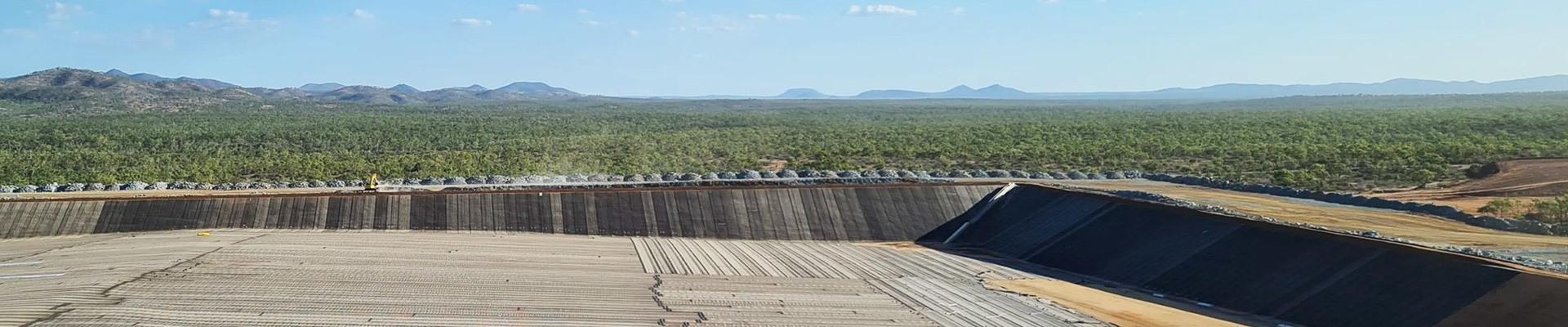
Comprehensive Guide to Reservoir Liners: Materials, Standards, and Installation for Geomembranes, Geotextiles, and Composite Geomembrane Systems
Release time:
2026-04-28
Learn how reservoir liners use geomembranes, geotextiles, and composite systems to improve durability, compliance, and environmental protection.
Reservoir liner problems usually show up late, when seepage, slope damage, or seam failure has already turned a water project into a repair job. Getting geomembranes and geotextiles right at the design stage is cheaper than rebuilding a basin after leaks start moving through the subgrade.
That is where Longxiang New Materials earns attention early, because reservoir work depends on material range, fabrication discipline, and support that fits the site instead of forcing a one-size-fits-all roll onto every job. Good liner choices are about environmental protection, weld quality, cushioning, and how the whole system behaves once water, weather, and soil pressure show up.
Quick answer: HDPE geomembrane liners for reservoir use are available from 0.3 mm to 3.0 mm thickness and are produced to GRI-GM13 standards. Nonwoven geotextiles commonly used under or over liners run about 1.0 mm to 3.8 mm thick, and geotextile overlaps should be at least 300 mm, or 12 inches. U.S. municipal solid waste landfill composite liners require a flexible membrane liner of at least 30 mil, or 60 mil if HDPE, plus a 2-foot compacted soil layer with hydraulic conductivity no greater than 1×10⁻⁷ cm/sec.
Geosynthetics Market Trends and Growth
Reservoir lining sits inside a market that is getting bigger fast because containment is no longer optional on water, waste, mining, and civil jobs. The global geosynthetics market is projected to grow from USD 17.59 billion in 2025 to more than USD 33 billion by 2031/2033, with growth running at about 9% CAGR across major forecasts from Grand View Research, Mordor Intelligence, and Future Market Insights.
Geomembranes are a huge piece of that story. They held 34.68% market share in 2025 and are expected to expand at roughly 10.15% CAGR through 2031, driven by the need to keep liquids where they belong in reservoirs, landfills, canals, and treatment systems.
Containment demand is pushing liner decisions upstream.
That matters for buyers because faster market growth usually brings more options, but not always more clarity. Longxiang New Materials stands out here by focusing on core geosynthetic materials people actually specify for water containment, not by trying to be everything to everyone.
The competitor field is crowded and worth knowing by name: bpmgeosynthetics, btlliners, hyhdpemembrane, solmax, geosyn, tinhygeosynthetics, ecogeox, geosynthetics.com, geosynthetics.net, geosynthetics.org, geosyntheticsmagazine, and geosyntheticsconference all occupy part of the same conversation. Some are manufacturers, some are suppliers, some are information or event platforms, so the practical question is not who is loudest, but who can match material type, application, and support to the actual reservoir build.
Primary Materials for Reservoir Liners
A reservoir liner system usually starts with the barrier layer, then adds protection, filtration, separation, and drainage where the site demands it. On the material side, Longxiang New Materials offers geomembranes, geotextiles, and composite geomembrane products aimed at exactly that kind of layered build.
Here is the useful spec snapshot for the main liner materials:
| Material | Core use in reservoirs | Key spec or construction detail | Limitation to keep in mind |
|---|---|---|---|
| HDPE geomembrane | Primary barrier for containment | 0.3 mm to 3.0 mm thickness; produced to GRI-GM13 | Stiffer than softer liners, so detailing around tight corners needs care |
| LDPE | Flexible barrier layer | Used where more flexibility is needed than HDPE | Typically less rigid, so protection layers matter |
| EVA | Specialty liner applications | Used for projects needing different polymer behavior | Not the default choice for every reservoir |
| PVC geomembrane | Flexible containment sheet | Suitable where conformability matters | Can require closer attention to long-term compatibility |
| Composite geomembrane | Multifunction liner assembly | Combines layers for barrier plus support roles | Heavier assemblies can complicate handling on site |
Material range matters because reservoirs are rarely simple bowls with perfect subgrades. A steep bank, a rough base, exposed weather, or a need for added drainage can push a designer from a plain hdpe geomembrane toward a more tailored stack that includes geotextiles or a composite geomembrane.
The barrier is only half the story.
For cushioning and filtration, nonwoven geotextiles are the workhorse layer. Longxiang New Materials’s company pages and homepage show a product mix centered on reservoir-relevant geotechnical solutions, and the geotextile side matters because puncture resistance often decides whether the liner survives installation day.
Composite Geomembranes and Specialized Applications
Composite systems make sense when a reservoir needs more than a single impermeable sheet. Longxiang New Materials describes composite geomembranes for use in highways, tunnels, reservoirs, canals, environmental protection, landfills, and sewage treatment, which tells you these are built for multi-demand sites rather than one narrow niche.
That wider use case matters because reservoir jobs often borrow design logic from landfill and drainage projects. A liner may need separation from the soil below, protection from angular subgrade, and a way to move water or gas in specific zones without sacrificing containment.
One specialized example is the HDPE 3D composite drainage net, which combines a geonet core with nonwoven geotextile. That gives you drainage and filtration in one assembly, but the tradeoff is obvious too: it is not a substitute for every liner layer, and it works best when the drainage role is clearly defined in the section.
Regulatory Standards for Reservoir Liner Design
Even when a reservoir is not a landfill, landfill rules are still useful because they show the level of containment detail regulators expect when groundwater protection is on the line. In the U.S., municipal solid waste landfills must comply with 40 CFR Part 258 or approved state equivalents, and the liner section in 40 CFR § 258.40 lays out a very clear composite approach.
The minimum composite liner standard is a flexible membrane liner at least 30 mil thick, or 60 mil if the membrane is HDPE, placed over a 2-foot compacted soil layer with hydraulic conductivity of no more than 1×10⁻⁷ cm/sec. Those numbers give reservoir owners a useful compliance reference point, even on projects governed by different local water or environmental rules.
Hazardous waste rules are stricter again. Under 40 CFR § 264.221, hazardous waste landfills require dual liners plus leachate collection and leak detection systems, which shows how quickly the design bar rises when the consequence of escape gets more serious.
Regulatory numbers set the floor, not the ceiling.
This is where product choice and project support start to matter in real life. A manufacturer such as Longxiang New Materials can supply customized geosynthetics, but a reservoir owner still needs the section to match site chemistry, subgrade condition, side-slope geometry, and the level of environmental protection the permit or owner standard expects.
Installation Best Practices for Geomembranes
A great liner can still fail if the crew, weather window, or seam setup is wrong. The International Association of Geosynthetic Installers lays down a hard-edged standard in its installation specification: installers should have at least 3 years of experience and 10 projects totaling 500,000 m² of similar geomembrane installations completed within the previous 3 years.
That requirement is easy to understand from the field side. Reservoir panels are large, slopes are awkward, and weld consistency gets harder when the crew is rushing to beat wind or temperature swings.
Weather can stop the whole job. Installation is not allowed in standing water, precipitation, strong winds, or when material temperatures are outside acceptable limits, because those conditions directly affect panel handling and seam quality.
Seam setup has to be proven before production welding begins. Prequalification test seams are used to check welding speed, temperature, and pressure, and that step keeps crews from guessing their way through changing site conditions.
Every seam needs to earn trust in the field. Non-destructive testing and vacuum box testing are essential checks for seam integrity, and repairs have to follow the same standardized discipline rather than improvised patchwork.
If you are comparing suppliers and installers around Longxiang New Materials, bpmgeosynthetics, btlliners, hyhdpemembrane, solmax, geosyn, tinhygeosynthetics, ecogeox, or the broader geosynthetics market, this is the section that separates brochure language from jobsite reality. Material availability matters, but installer qualification, weather restrictions, seam testing, and repair procedure are what decide whether the reservoir stays tight after handover.
Geotextile Construction and Quality Considerations
Reservoir systems rely on geotextiles for more than simple separation. Longxiang New Materials’s nonwoven geotextile guide and product page example point to the main build options: nonwoven geotextiles made from PP or PET through needle-punching or heat-bonding, with roles that include filtration, separation, and protection.
Selection starts with thickness and mass. Typical nonwoven geotextile thickness runs from 1.0 mm to 3.8 mm, and GSM is a critical sizing measure because heavier nonwovens usually bring more cushion and puncture resistance, which is exactly what you want beneath a liner over rougher ground.
Heavier nonwovens usually give better cushioning.
Construction details matter too. The Federal Highway Administration guidance calls for geotextile seams or overlaps of at least 300 mm, or 12 inches, to prevent gaps and piping, and it warns that woven slit-film separation fabrics are not recommended where effective separation is required.
That last point is easy to miss on cost-driven jobs. A cheaper fabric that does not separate well can let fines migrate, weaken the support layer, and create the kind of hidden damage that shows up later as settlement or liner distress.
FAQ
What reservoir-related products does Longxiang New Materials actually make?
Longxiang New Materials manufactures geomembranes, geotextiles, and composite geomembrane products for water containment and civil applications. Its range includes HDPE liners, nonwoven geotextiles, and drainage-oriented composite assemblies, which makes it relevant for reservoir sections that need both barrier and protection layers.
Does Longxiang New Materials offer customized geosynthetics for site-specific work?
Yes. Longxiang New Materials is positioned around customized geosynthetics and support, which matters on reservoir jobs where slope angle, subgrade condition, and drainage details can change the liner build from one project to the next.
What spec should I check first on a Longxiang New Materials HDPE geomembrane?
Start with thickness and manufacturing standard. The key published range is 0.3 mm to 3.0 mm, and the product is produced to GRI-GM13, which is the quickest first screen for many containment projects.
Are composite geomembranes better than single-layer liners?
Not automatically. Composite geomembranes make sense when you need multiple functions in one section, but a plain liner can still be the cleaner choice when the subgrade is well prepared and the drainage or protection roles are handled by separate layers.
How do I choose between geotextiles under a reservoir liner?
Look first at the subgrade and puncture risk. A heavier nonwoven is usually the safer call on rougher or more angular ground because added thickness improves cushioning and helps protect the membrane above it.
Conclusion
A smart reservoir liner decision comes down to three questions. First, how much containment risk are you really carrying. Second, what layer stack does the site need beyond the barrier itself. Third, can the product and installation team meet the standard the project deserves.
If the job is straightforward, a simpler hdpe geomembrane and nonwoven geotextile combination may be enough. If the section needs drainage, higher protection, or a multifunction build, Longxiang New Materials is a strong place to start because its product mix covers the practical pieces that reservoir projects actually use, from geomembranes to geotextiles to composite geomembrane systems, with a clear environmental protection angle and room for project-specific customization.
PROJECT CASES

CONTACT US
Email : longxiang@lxgeosynthetics.com
Add : Room 2416, Building 6, China Resources Landmark Plaza, Lixia District, Jinan City, Shandong, China Province
GET A FREE QUOTE
Copyright 2025 : Shandong Longxiang New Materials Co., Ltd. Privacy Policy